
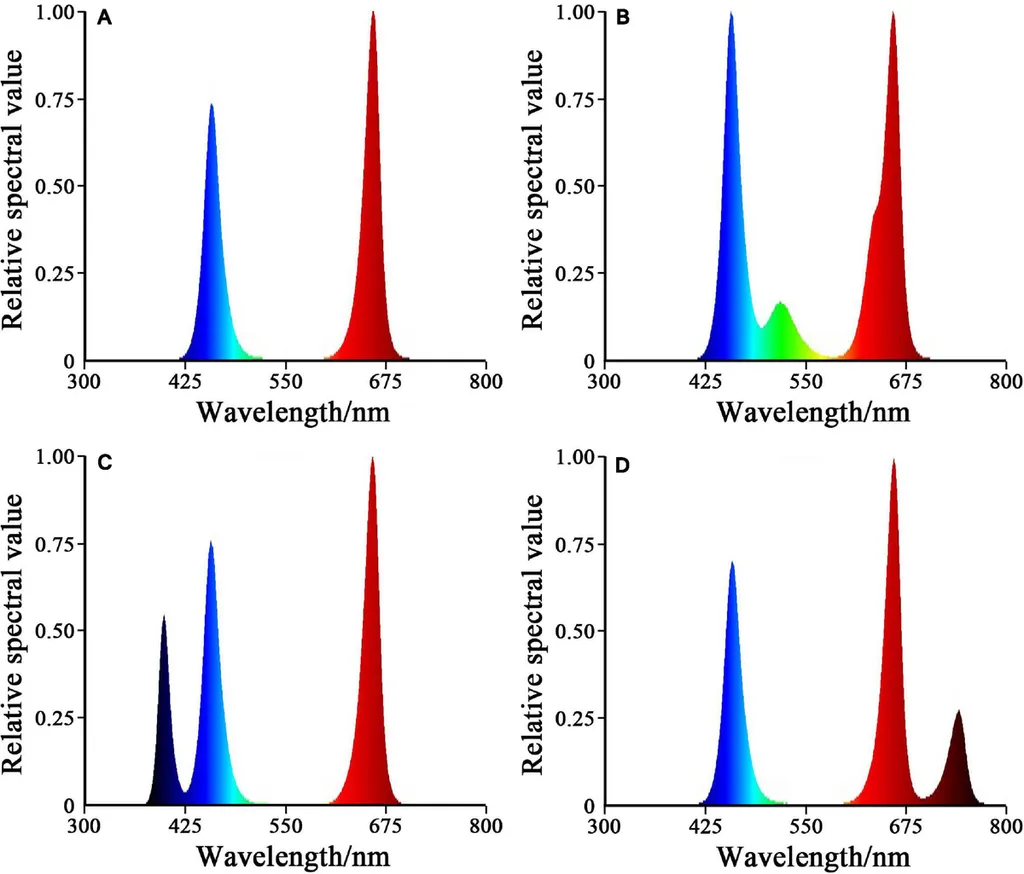
In the quest for sustainable and efficient agricultural practices, researchers are turning to controlled environment agriculture (CEA) and hydroponics as promising alternatives. A recent study published in the journal *Agriculture* sheds light on how different light spectra can influence the growth and nutritional quality of Swiss chard (*Beta vulgaris* var. *cicla*) in a hydroponic system. The findings could have significant implications for the agriculture sector, particularly in vertical farming and urban agriculture.
The study, led by Cristal Yoselin Moreno-Aguilera from the División de Estudios de Posgrado e Investigación at the Tecnológico Nacional de México/IT de Celaya, explored the impact of two different LED light spectra on the morphological and nutritional parameters of Swiss chard. The experiment was conducted in a growth room chamber, monitored and controlled under an IoT scheme, focusing primarily on the lighting treatments.
Two treatments were defined: T1 using the LED Barina 42W and T2 using the LED MURFURN 70W. The results revealed no significant differences between the two treatments in most morphological aspects. However, the foliar area was significantly larger in treatment T1 compared to treatment T2. This finding suggests that the light spectrum composition can influence the physiological responses of the plants.
Moreover, the nutritional quality of the Swiss chard under treatment T1 showed higher concentrations of carbohydrates, proteins, minerals, calcium, and potassium. “The light spectrum composition provided by the lighting system influences the chard physiology, favoring the nutrient concentration under red–blue spectrum combinations,” noted Moreno-Aguilera. This indicates that specific light spectra can enhance the nutritional value of crops, which is a crucial factor for consumers and the food industry.
The commercial impacts of this research are substantial. As the demand for locally grown, nutrient-rich produce increases, farmers and agribusinesses can leverage these findings to optimize their CEA systems. By fine-tuning the light spectra, they can potentially increase yield and improve the nutritional quality of their crops, making their products more attractive to health-conscious consumers.
The study also highlights the importance of IoT in agriculture. The use of IoT for monitoring and controlling growth conditions ensures precision and efficiency, which are key to the success of CEA systems. This integration of technology can lead to more sustainable and resource-efficient farming practices, addressing some of the challenges faced by conventional agriculture.
Looking ahead, this research could shape future developments in the field of controlled environment agriculture. As more studies explore the interplay between light spectra and plant physiology, we may see the development of tailored lighting solutions that maximize both yield and nutritional quality. This could revolutionize the way we grow crops, particularly in urban settings where space is limited.
In conclusion, the study by Moreno-Aguilera and her team provides valuable insights into the role of LED light spectra in hydroponic systems. The findings not only advance our understanding of plant physiology but also offer practical solutions for the agriculture sector. As we strive for more sustainable and efficient farming practices, such research is invaluable in guiding the future of agriculture.