
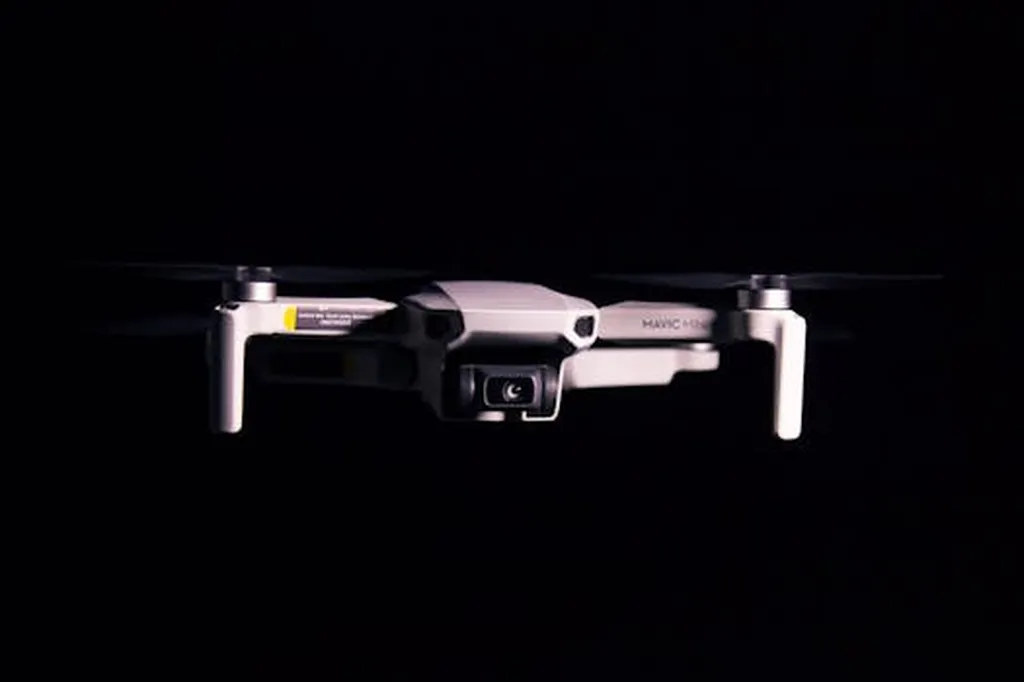
In the rapidly evolving world of autonomous Unmanned Aerial Vehicles (UAVs), precise trajectory prediction is a critical factor for safety and efficiency, particularly in sectors like smart agriculture, logistics, and warehouse management. Traditional methods of trajectory prediction often involve complex physical modeling, which can be a significant barrier for custom-built UAVs. However, a recent study published in *Future Internet* offers a promising solution to these challenges.
The research, led by Disen Jia from the School of Information Technology at Deakin University, introduces a lightweight Long Short-Term Memory (LSTM) model designed specifically for flight trajectory prediction in autonomous UAVs. This innovative approach addresses the limitations of existing methods, which are primarily designed for motion forecasting from dense historical observations. “Existing trajectory prediction methods are unsuitable for scenarios lacking historical data, such as takeoff phases, or requiring trajectory generation from sparse waypoint specifications,” Jia explains. “Our segmented LSTM framework is optimized for spatial interpolation rather than temporal extrapolation, making it more versatile and practical for real-world applications.”
The segmented LSTM framework decomposes flight operations into different maneuver types and predicts the complete trajectory based on target waypoints. This data-driven approach avoids the need for complex parameter configuration, making it an attractive solution for edge computing environments. The system consists of a global duration predictor and five segment-specific trajectory generators, with a total size of just 5.98 MB, making it lightweight and deployable on various edge devices.
The implications for the agriculture sector are particularly significant. Autonomous UAVs equipped with this technology can enhance precision farming by enabling more accurate and efficient crop monitoring, irrigation management, and pesticide application. “This technology can revolutionize the way we approach agricultural operations,” says Jia. “By providing reliable arrival time predictions and high accuracy in trajectory planning, we can improve the overall efficiency and safety of UAV operations in the field.”
The study’s findings were validated using real data from the Crazyflie 2.1 UAV, demonstrating high accuracy with an Average Displacement Error ranging from 0.0252 m to 0.1136 m. This level of precision is crucial for applications requiring multi-UAV coordination and mission planning, where even minor deviations can have significant impacts.
As the agriculture industry continues to embrace technological advancements, the adoption of lightweight, data-driven models like the one proposed by Jia and his team could pave the way for more sophisticated and efficient UAV applications. The research not only addresses current challenges but also opens up new possibilities for future developments in the field of autonomous flight trajectory prediction.