
In the sun-drenched orchards of Hainan Island, litchi farmers are facing an uncertain future. Climate change is disrupting the delicate balance of weather patterns that have long sustained this tropical fruit’s production. But a new study, published in the journal *Agriculture*, offers a beacon of hope, demonstrating how machine learning can unlock the secrets of litchi yield formation and guide climate-smart adaptation strategies.
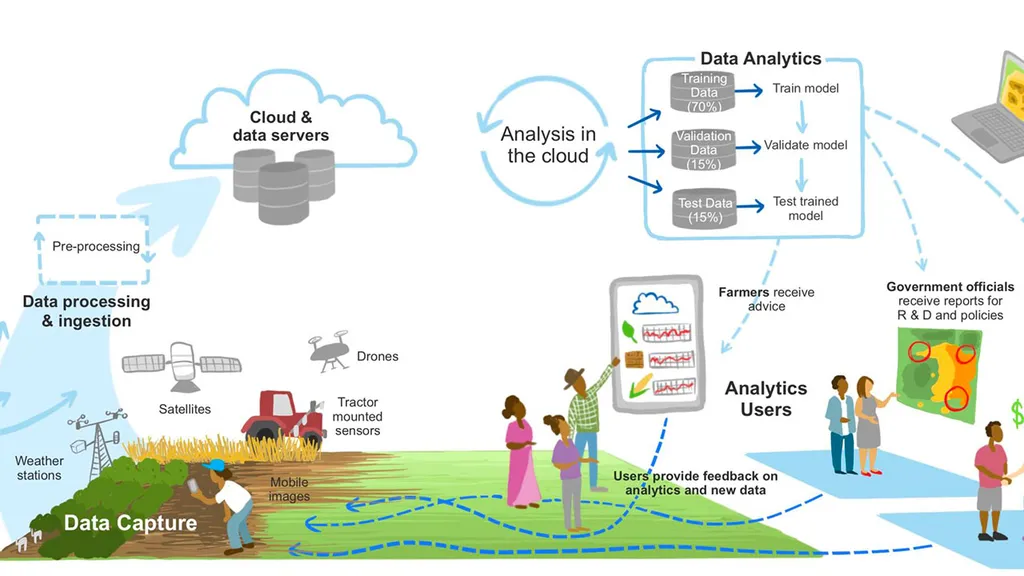
Traditional agronomic models often fall short when it comes to capturing the intricate, non-linear relationships between weather and yield in perennial fruit trees like litchi. Enter Linyi Feng, a researcher from the School of Ecology at Hainan University, who has developed an innovative approach to tackle this challenge. By harnessing the power of an optimized Random Forest model integrated with interpretable machine learning (SHAP), Feng and his team have constructed a yield prediction framework that could revolutionize tropical agriculture.
The model, trained on a comprehensive dataset spanning 23 years (2000–2022) from 17 major production regions in Hainan Province, has demonstrated remarkable predictive capability at both the provincial and regional scales. “The model’s robustness and consistency across regions give us confidence that it can be a valuable tool for farmers and policymakers,” Feng explains.
The study’s feature importance analysis revealed that heat accumulation, specifically growing degree days above 20 °C, is the dominant driver of litchi yield, explaining over 85% of variability. However, the relationship between temperature and yield is far from straightforward. Scenario simulations uncovered asymmetric climate risks across different phenological stages, with moderate warming generally enhancing yield but acting as a stressor during the Fruit Development stage.
“Our findings highlight the need for phenology-aligned adaptation strategies,” Feng emphasizes. “For instance, securing irrigation during flowering and deploying cooling interventions during fruit development could significantly improve yield stability in the face of climate change.”
The commercial implications of this research are substantial. Litchi is a pillar of the tropical agricultural economy in southern China, and its production faces increasing instability due to climate change. By providing a data-driven basis for climate-smart management, this study could help secure the livelihoods of countless farmers and contribute to the resilience of the broader agricultural sector.
Moreover, the innovative approach demonstrated in this study could have far-reaching applications beyond litchi and Hainan Island. As Feng notes, “The methodology we’ve developed can be adapted to other perennial fruit trees and regions, offering a powerful tool for understanding and mitigating the impacts of climate change on tropical agriculture.”
In an era of climate uncertainty, this research offers a glimpse into a future where machine learning and data-driven insights guide agricultural practices, ensuring the stability and prosperity of tropical fruit production. As the world grapples with the challenges of a changing climate, studies like this one provide a roadmap for building resilience and securing the future of agriculture.