
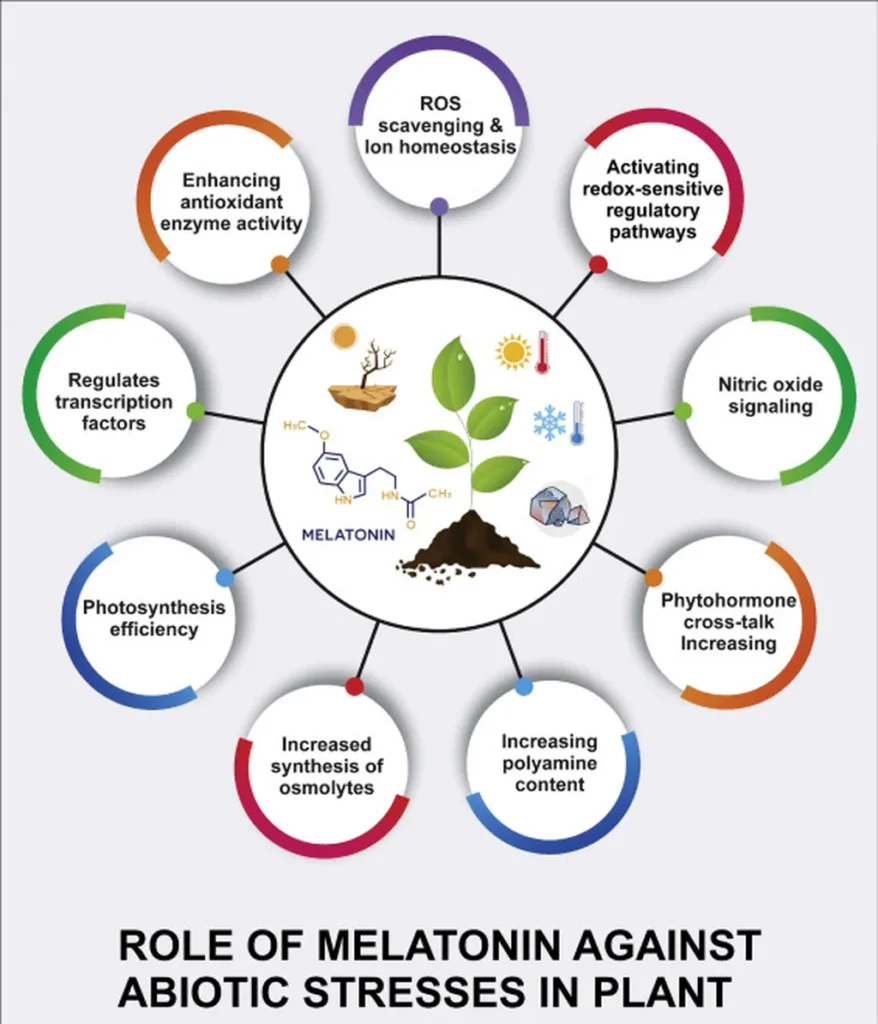
In the face of escalating climate change, crops are increasingly subjected to a cocktail of abiotic stresses—drought, salinity, extreme temperatures, and more—that threaten global food security. Amidst this challenge, a powerful plant biostimulant, melatonin (MLT), is emerging as a potential game-changer. A recent review published in *GM Crops & Food* delves into the intricate web of MLT-enabled omics responses, offering a roadmap for developing stress-resilient crops.
The review, led by Ali Raza from the Guangdong Key Laboratory of Plant Epigenetics at Shenzhen University, synthesizes a wealth of research to illustrate how MLT regulates plant responses to stress at multiple biological levels. “Melatonin’s role in enhancing stress tolerance is not just skin-deep,” Raza explains. “It’s a complex orchestration of changes across the plant’s entire biological landscape—from genes to metabolites, and even the microbiome.”
The study highlights the crosstalk between different omics layers—genomics, transcriptomics, proteomics, metabolomics, and more—and advocates for integrated multi-omics (panomics) approaches to unravel the complex regulatory networks underlying MLT-enabled stress tolerance. This holistic understanding could pave the way for advanced genetic engineering and synthetic biology platforms to develop crops that are not just resilient but also productive under stress conditions.
The commercial implications of this research are substantial. As climate change intensifies, so does the need for crops that can withstand multiple stresses without compromising yield. MLT-enabled crops could offer a significant advantage in this arena, opening up new markets and opportunities for the agriculture sector. Moreover, the insights gleaned from this review could accelerate the development of climate-smart crops, contributing to global food security.
The review also underscores the importance of translating omics insights into actionable strategies. “We’re not just looking at the biology,” Raza notes. “We’re looking at how we can apply this knowledge to create real-world solutions.” This focus on application is a beacon for the agriculture industry, signaling a shift towards more targeted, science-backed approaches to crop development.
As we grapple with the realities of climate change, research like this offers a glimmer of hope. By harnessing the power of melatonin and multi-omics, we stand on the brink of a new era in climate-smart agriculture. The journey is complex, but the potential rewards—resilient crops, food security, and a more sustainable future—are well worth the effort.