
In the heart of Pakistan, a team of researchers led by Muhammad Murad from the FAST School of Computing at the National University of Computer and Emerging Sciences (FAST-NUCES) in Karachi is revolutionizing traditional farming practices through an innovative agentic AI framework. This cutting-edge technology, detailed in a recent study published in *AgriEngineering*, promises to transform conventional agriculture into a smart, data-driven process, aligning with the United Nations’ sustainable development goals (SDGs).
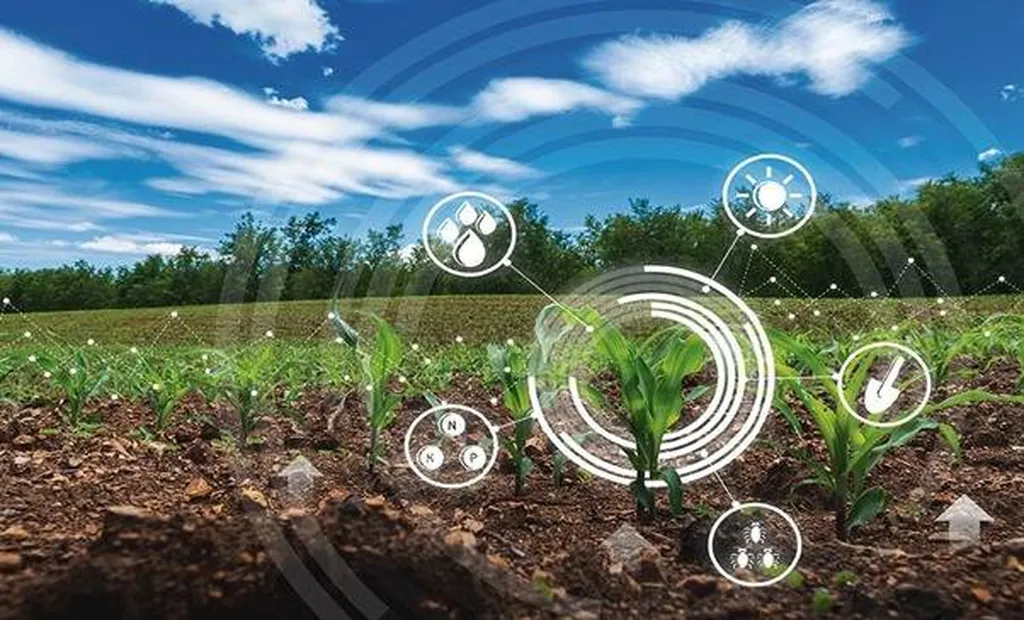
The research introduces a multi-agent AI system designed to monitor and analyze various aspects of farming land, providing real-time data and predictive insights to farmers. The framework consists of four specialized agents: Agent A for soil property monitoring, Agent B for weather sensing, Agent C for disease detection in rice crops, and Agent D, a supervisory chatbot that integrates and manages the data from the other agents.
“Our goal was to create a comprehensive system that could autonomously collect and analyze data, enabling farmers to make informed decisions,” Murad explained. “By integrating these agents, we aim to support climate-smart agriculture and enhance the sustainability of farming practices.”
The predictive models deployed in this framework have shown impressive accuracy. For soil properties such as nitrogen, phosphorus, and potassium, the models achieved accuracies ranging from 93.4% to 96%. Similarly, the weather sensing agent demonstrated a mean absolute error (MAE) of 0.27 for temperature and 2.9 for humidity. The disease detection models, including vision transformer (ViT), MobileViT, and RiceNet, achieved accuracies of up to 98.5% during training.
The commercial implications of this research are substantial. By automating traditional farming practices, the agentic AI framework can significantly reduce the need for manual labor and increase the efficiency of agricultural operations. Farmers can access real-time data on soil conditions, weather patterns, and crop health, allowing them to take proactive measures to optimize yields and minimize losses.
“This technology has the potential to revolutionize the agriculture sector by making it more efficient, sustainable, and resilient to climate change,” Murad noted. “It can help farmers adapt to changing environmental conditions and improve their overall productivity.”
The research also highlights the broader impact of agentic AI in supporting the UN’s SDGs, particularly those related to sustainable agriculture and climate action. By promoting climate-smart practices, the framework contributes to the global effort to mitigate the effects of climate change and ensure food security for future generations.
As the agriculture sector continues to evolve, the integration of AI and other advanced technologies will play a crucial role in shaping its future. The agentic AI framework developed by Murad and his team represents a significant step forward in this direction, offering a glimpse into the possibilities of smart agriculture.
“This is just the beginning,” Murad said. “We are excited about the potential of this technology and its ability to transform the way we farm. We hope that our work will inspire further research and innovation in the field of agritech.”
With its focus on sustainability, efficiency, and data-driven decision-making, the agentic AI framework has the potential to reshape the agriculture sector, making it more resilient and adaptable to the challenges of the 21st century. As researchers continue to explore the capabilities of AI in agriculture, the future of farming looks increasingly promising, with technology playing a central role in shaping its evolution.