
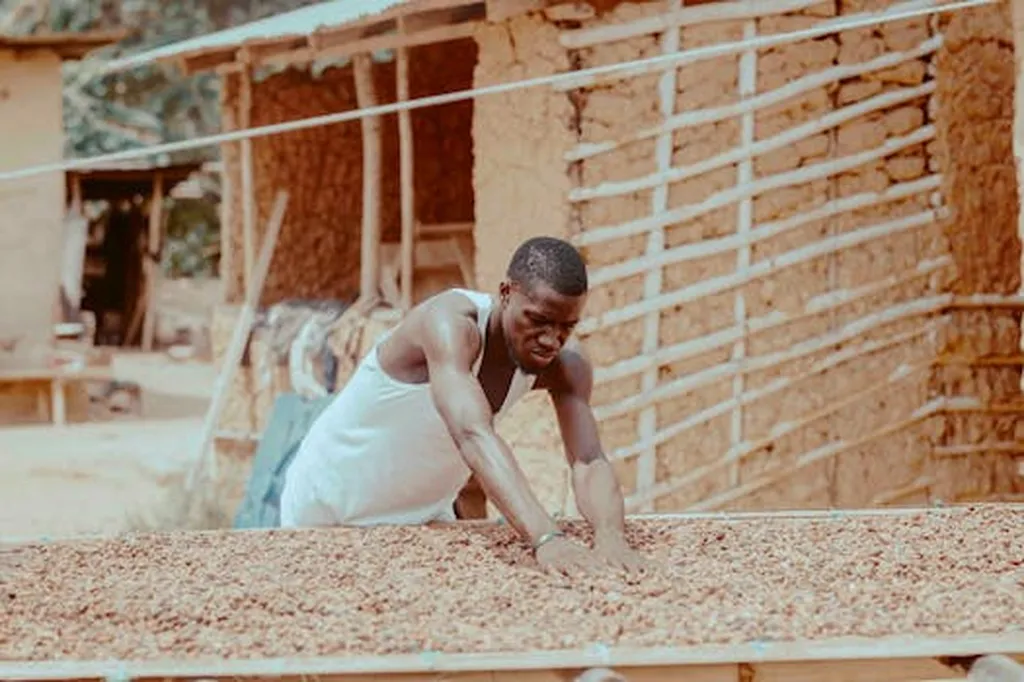
In the heart of West Africa, where the majority of the world’s cocoa beans are cultivated, a crisis is brewing. Aging tree stocks, declining soil fertility, climate volatility, and persistent pest and disease pressure are straining the production system. Millions of smallholder farmers are trapped in low-productivity cycles, even as global demand for cocoa continues to rise and sustainability requirements tighten across international supply chains. Policymakers, industry groups, and development agencies have promoted regenerative agriculture as a pathway out of this impasse, but uneven results have raised questions about scalability and long-term impact.
A new synthesis of two decades of research, published in the journal Drones, argues that the future of sustainable cocoa production in the region depends on integrating regenerative agriculture with unmanned aerial systems and artificial intelligence. The study, titled “Harnessing Regenerative Agriculture, Unmanned Aerial Systems, and AI for Sustainable Cocoa Farming in West Africa,” diagnoses the underlying causes of cocoa yield stagnation in the region. Rather than attributing low productivity to insufficient fertilizer or farmer effort, the reviewed literature consistently points to long-term soil degradation, declining organic matter, nutrient imbalances, and the cumulative effects of climate stress.
Regenerative agriculture emerges in the review as a credible response to these challenges. Practices such as agroforestry, mulching, organic amendments, composting, and shade management are repeatedly shown to improve soil structure, enhance moisture retention, and support biodiversity. Across multiple countries in the region, these practices are associated with more stable yields and greater resilience to drought and temperature extremes. However, the study makes clear that regenerative agriculture does not deliver uniform outcomes. Cocoa landscapes in West Africa are highly variable, even within the same village. Differences in soil type, slope, shade density, tree age, and farm management history mean that identical interventions can produce sharply different results.
This variability creates a structural bottleneck. Regenerative agriculture works best when interventions are matched to local conditions, but traditional extension systems lack the tools to assess those conditions at scale. The study argues that this is where regenerative strategies risk stalling, not because they are ineffective, but because they are insufficiently targeted. Sustainability gains are most pronounced when regenerative practices are adapted to specific farm zones rather than applied wholesale. Without spatial insight, investments in soil health and agroforestry may fail to deliver their full potential, particularly for smallholders operating on thin margins.
Unmanned aerial systems are shown as a bridge between regenerative ambition and practical implementation. By capturing high-resolution multispectral, thermal, and structural data, drones provide a detailed picture of cocoa farm conditions that cannot be obtained through ground surveys alone. Canopy vigor, water stress, nutrient deficiencies, shade distribution, and disease indicators become visible at a fine spatial scale. The review shows that drone-based monitoring has been successfully used across cocoa systems in West Africa to identify stress patterns early, often before visible symptoms appear. This early detection allows for timely, localized interventions, reducing the need for blanket input application and minimizing resource waste.
Artificial intelligence plays a critical role in translating drone data into usable decisions. Machine-learning and deep-learning models are increasingly applied to classify canopy conditions, estimate yields, detect disease risk, and delineate management zones. The study finds that when AI analytics are layered onto aerial data, farmers and extension services gain the ability to prioritize interventions with far greater accuracy. Across the reviewed literature, integrated regenerative–drone–AI approaches are associated with yield stabilization or improvement typically ranging from the low-teens to around thirty percent, particularly where spatial targeting replaces uniform treatment. In addition to yield effects, several studies report reductions in fertilizer and water use, suggesting environmental benefits alongside productivity gains.
The study cautions, however, that technology alone does not guarantee success. AI models depend on data quality, contextual calibration, and institutional capacity. Poorly trained models or weak data governance can undermine trust and limit adoption. The research stresses that digital tools must be embedded within extension systems and adapted to local realities, rather than deployed as standalone solutions. Notably, the study frames drones and AI as enablers rather than drivers. Their value lies in amplifying regenerative practices, not substituting for them. Without sound soil management and agroecological principles, digital precision has little to optimize.
Scaling sustainable cocoa depends on governance and access. The study states that individual ownership of drones and AI systems is neither realistic nor necessary for most smallholder farmers. Instead, cooperative service models, shared platforms, and institutional support are identified as the most viable pathways to adoption. Extension services play a pivotal role in this framework. When aerial data and AI insights are integrated into advisory systems, they can inform planting decisions, rehabilitation strategies, and climate adaptation measures at the community level. The study highlights cases where cooperatives and development programs act as intermediaries, translating digital outputs into practical guidance that farmers can apply without direct exposure to complex technology.
Data governance emerges as another critical factor.