
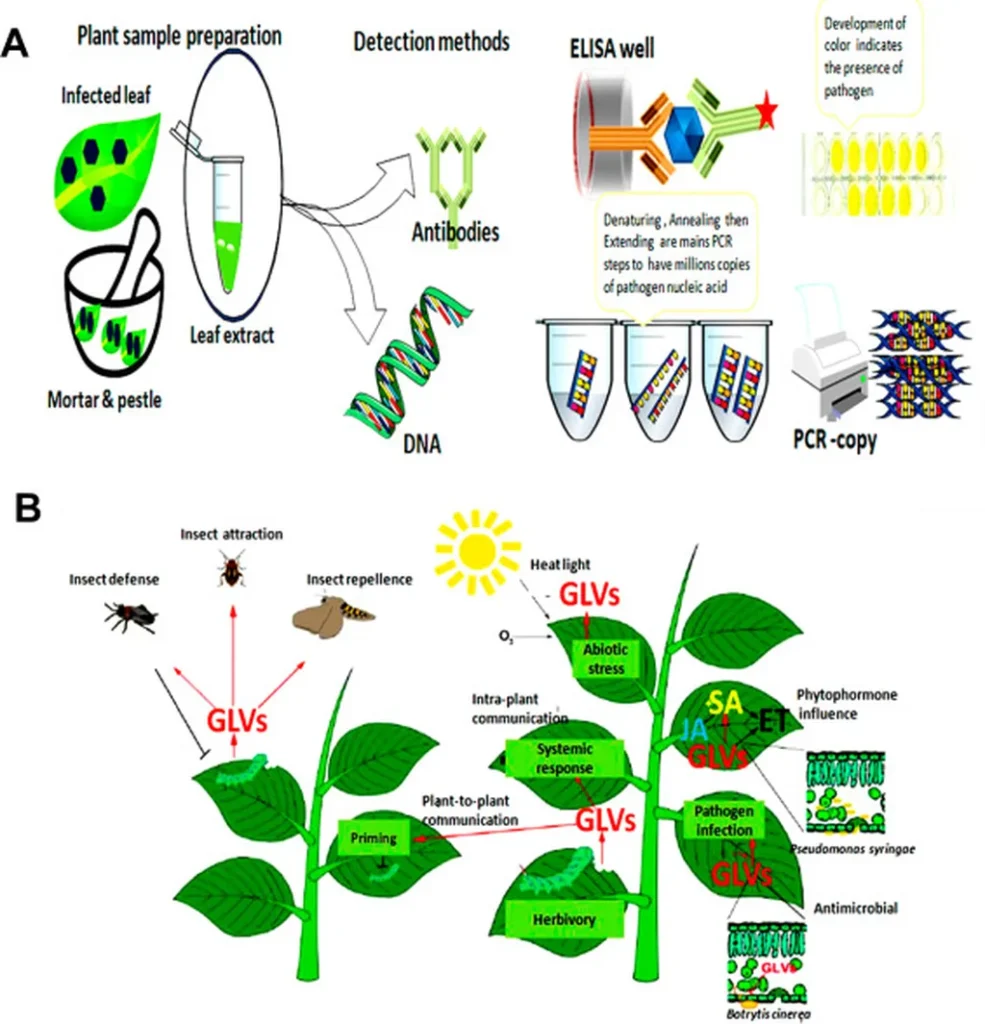
In the ever-evolving landscape of agricultural technology, a groundbreaking study published in *Frontiers in Microbiology* is set to revolutionize the way we detect microbial pathogens in edible plants. Led by Ravinder Kumar of the ICAR-Indian Agricultural Research Institute in New Delhi, the research delves into cutting-edge diagnostic innovations that promise to enhance detection capabilities, ultimately safeguarding our food supply and boosting agricultural productivity.
The study highlights the critical need for advanced diagnostic tools in the agriculture sector. Traditional methods of detecting microbial pathogens in plants are often time-consuming, labor-intensive, and lacking in sensitivity. These limitations can lead to delayed responses to outbreaks, resulting in significant crop losses and economic impacts. “The current diagnostic tools are not always reliable or rapid enough to keep pace with the dynamic nature of plant pathogens,” explains Kumar. “This is where innovative technologies come into play, offering faster, more accurate, and field-deployable solutions.”
One of the key areas of focus in the research is the development of biosensors. These sophisticated devices can detect the presence of pathogens at the molecular level, providing real-time data that can inform immediate action. Biosensors are particularly valuable in the context of edible crops, where early detection of pathogens can prevent contamination and ensure food safety. The integration of Internet of Things (IoT) technology further enhances the capabilities of these diagnostic tools, enabling remote monitoring and data collection.
Portable field diagnostics are another significant advancement highlighted in the study. These tools allow farmers and agricultural workers to conduct on-site testing, reducing the need for laboratory analysis and speeding up the diagnostic process. “The ability to conduct tests in the field is a game-changer,” says Kumar. “It empowers farmers with the information they need to make timely decisions, ultimately improving crop yields and reducing losses.”
The commercial impacts of these innovations are substantial. By enhancing detection capabilities, farmers can minimize crop losses and ensure the quality of their produce. This not only benefits individual farmers but also has broader implications for the agricultural industry, including improved supply chain management and increased consumer confidence in food safety.
Looking ahead, the research suggests that these diagnostic innovations could shape the future of plant pathogen detection. As technology continues to advance, we can expect even more sophisticated tools that offer greater sensitivity, specificity, and ease of use. The integration of artificial intelligence and machine learning could further enhance diagnostic capabilities, providing predictive insights and enabling proactive management of plant health.
In conclusion, the study by Ravinder Kumar and his team represents a significant step forward in the field of plant pathogen diagnostics. By leveraging cutting-edge technologies, we can enhance our ability to detect and manage microbial pathogens in edible plants, ultimately ensuring a more secure and productive agricultural future. As the research continues to evolve, the potential for these innovations to transform the agriculture sector is immense, offering hope for a more resilient and sustainable food supply.