
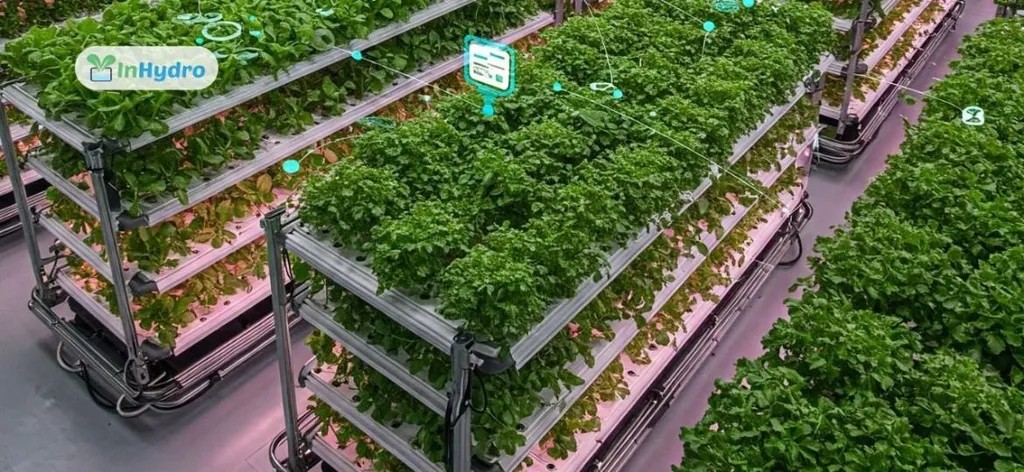
In the quest to make agriculture smarter and more sustainable, researchers have developed a novel way to monitor hydroponic crops using self-powered, noninvasive sensors. Published in the journal *Biosensors*, this innovative approach leverages electric field energy harvesters (EFEHs) to estimate key plant traits, offering a glimpse into the future of precision agriculture.
The study, led by Oswaldo Menéndez-Granizo of the Universidad Católica del Norte in Chile, introduces a method that harnesses the electric field energy generated by hydroponic leafy vegetables. The device operates through electrostatic induction, where an external alternating electric field induces surface charge redistribution on the leaf. This process generates an AC voltage that can be measured and analyzed to determine the plant’s functional traits, such as foliar moisture content (FMC) and fresh mass.
“Our goal was to create a self-powered, eco-friendly system that could provide real-time data on plant health without causing any harm to the crops,” Menéndez-Granizo explained. The prototype was tested on two common hydroponic crops, chard (*Beta vulgaris*) and lettuce (*Lactuca sativa*), with promising results. The researchers found that the electrical output of the EFEHs was strongly correlated with the plants’ functional traits, achieving coefficients of determination of 0.697 and 0.794 for chard and lettuce, respectively.
The implications for the agriculture sector are significant. Traditional methods of monitoring plant health often involve invasive techniques that can stress the crops or require frequent maintenance. In contrast, this new technology offers a noninvasive, scalable solution that can be easily integrated into existing hydroponic systems. The self-powered nature of the EFEHs means they can operate continuously without the need for external power sources, reducing both operational costs and environmental impact.
“By providing real-time, accurate data on plant health, this technology can help farmers make more informed decisions about irrigation, nutrient management, and pest control,” Menéndez-Granizo added. This could lead to increased crop yields, improved resource efficiency, and ultimately, higher profitability for growers.
The potential applications of this research extend beyond hydroponic systems. The principles behind the EFEHs could be adapted for use in soil-based agriculture, greenhouses, and even open-field farming. As the technology evolves, it could become a cornerstone of smart agriculture, enabling farmers to monitor and manage their crops with unprecedented precision.
The study represents a significant step forward in the field of agritech, demonstrating the potential of electric field energy harvesting to revolutionize crop monitoring. As the agriculture sector continues to embrace technology, innovations like this will play a crucial role in shaping the future of farming. With further development and commercialization, this noninvasive sensing technology could become a game-changer for growers worldwide, paving the way for more sustainable and efficient agricultural practices.
The research was published in *Biosensors* and led by Oswaldo Menéndez-Granizo from the Departamento de Ingeniería de Sistemas y Computación at the Universidad Católica del Norte in Antofagasta, Chile.