
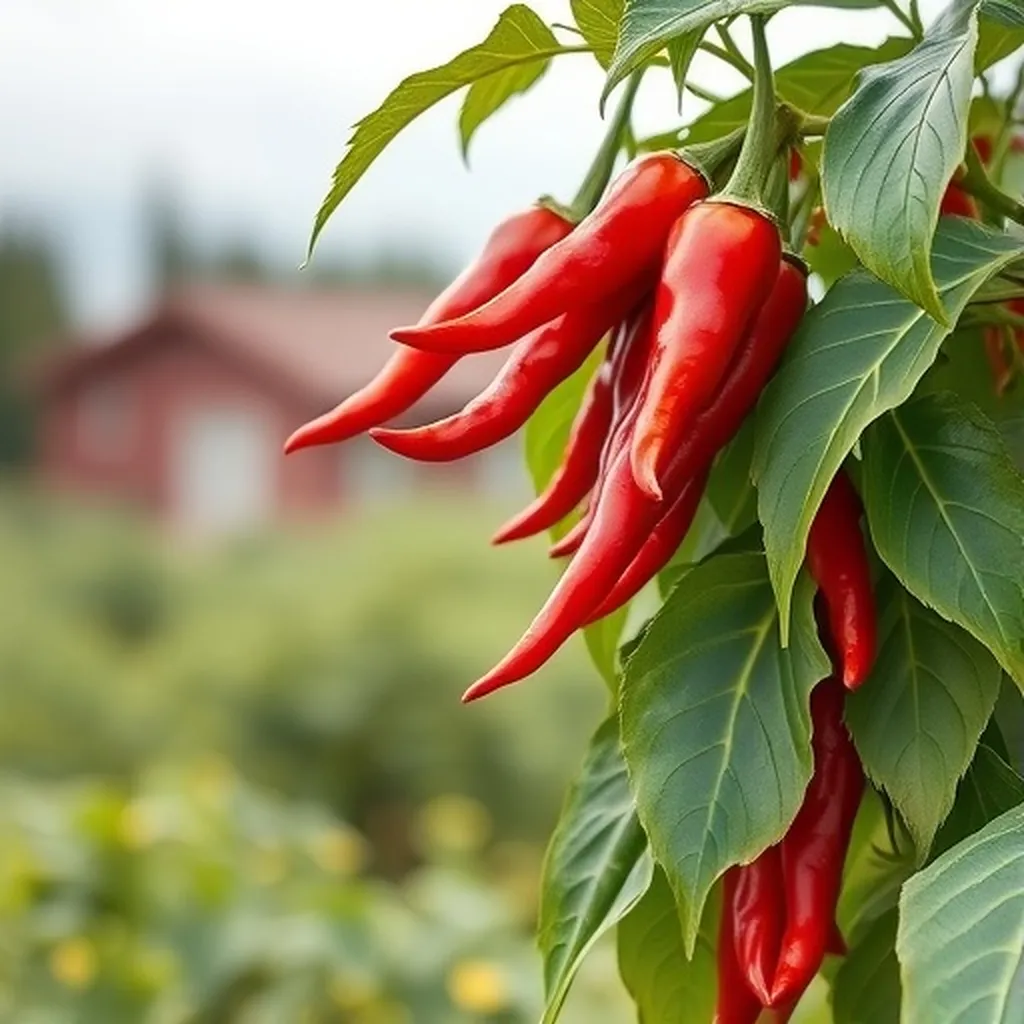
In the heart of South Korea, a team of researchers led by Hoyoung Chung from Hanyang University has developed a groundbreaking, low-cost edge AI system designed to revolutionize pest and disease detection in chili pepper fields. This innovative solution, detailed in a recent study published in the journal *Agriculture*, promises to bring real-time, autonomous monitoring to open-field cultivation, addressing critical challenges faced by farmers, particularly those in resource-limited environments.
The system, dubbed “Leaf-First 2-Stage,” integrates AI-Thinker ESP32-CAM modules for image acquisition with a Raspberry Pi 5-based edge server, creating a plug-and-play IoT pipeline. This setup enables autonomous operation with minimal user intervention, making it accessible even to aging farmers. The system’s lightweight architecture, combining YOLOv8n-based leaf detection with a ResNet-18 classifier, ensures high diagnostic accuracy for small lesions often found in dense pepper foliage.
One of the standout features of this system is its ability to operate effectively despite network instability, a common issue in open-field agriculture. By adopting a dual-protocol communication design—using HTTP for JPEG transmission and MQTT for event-driven feedback—the system ensures robust data transfer. Enhanced by Redis-based asynchronous buffering and state recovery, the system maintains seamless operation even in challenging conditions.
“The system’s end-to-end latency of 0.86 seconds from image capture to LED alert validates its suitability for real-time decision support in crop management,” explains Chung. This rapid response time is crucial for early detection and intervention, potentially saving crops from significant damage.
The commercial implications of this research are substantial. By reducing computational costs by over 60% compared to heavier models like YOLOv11 and ResNet-50, the system offers a cost-effective solution for farmers. This could lead to widespread adoption, particularly in regions where resources are scarce but the need for efficient pest and disease management is high.
The study highlights the practical feasibility of resource-constrained edge AI systems for open-field smart farming. It emphasizes system-level integration, robustness, and real-time operability, providing a framework for future extensions to other crops. As the agriculture sector continues to embrace smart farming technologies, this research could pave the way for more innovative and accessible solutions.
Chung’s work, published in *Agriculture* and affiliated with the Department of Information Systems at Hanyang University, represents a significant step forward in the integration of edge AI and IoT in agriculture. It not only addresses immediate challenges but also sets the stage for future developments in the field, promising a more sustainable and efficient future for farmers worldwide.