
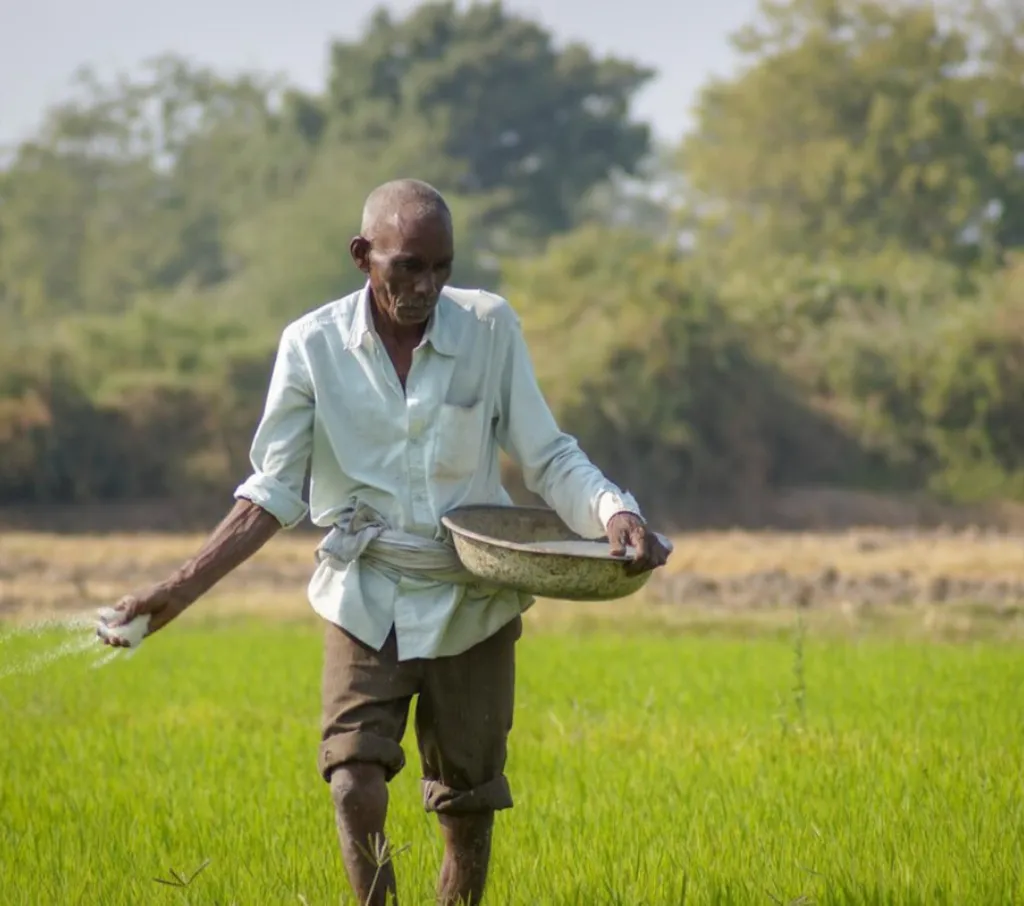
In the heart of Tanzania, where rice paddies stretch across diverse landscapes, farmers face a persistent challenge: how to boost yields sustainably. A recent study published in *Frontiers in Sustainable Food Systems* sheds light on this very issue, offering insights that could reshape agricultural policies and commercial strategies in the sector. The research, led by Ibrahim L. Kadigi from the Department of Business Management at Mbeya University of Science and Technology, delves into the role of fertilizers in Tanzania’s rice production, using data from the 2019/20 National Sample Census of Agriculture.
The study employed a sophisticated stochastic simulation approach to model the impact of fertilizer use on rice productivity. Farmers were categorized into three groups: non-fertilizer users, organic fertilizer users, and inorganic fertilizer users. The results were striking. Inorganic fertilizer users achieved the highest probabilities of exceeding both the national productivity threshold of 3.0 tonnes per hectare (28%) and the global standard of 4.5 tonnes per hectare (11%). Organic fertilizer users were close behind, with probabilities of 26% and 10%, respectively. Non-fertilizer users lagged significantly, with only 19% and 5% probabilities of meeting these benchmarks.
“Our findings underscore the critical role of fertilizers in enhancing rice productivity,” Kadigi noted. “However, the effectiveness varies significantly across different regions and agroecological zones. This variability highlights the need for tailored strategies rather than a one-size-fits-all approach.”
The study also revealed that inorganic fertilizers were more effective in minimizing downside risks, meaning they reduced the likelihood of yields falling below the thresholds. Spatial differences were evident, with farms in Mainland Tanzania generally outperforming those in Zanzibar. The variability across agroecological zones further emphasized the importance of site-specific factors in determining fertilizer effectiveness.
So, what does this mean for the agriculture sector? The commercial implications are substantial. For one, the findings suggest that investing in inorganic fertilizers could yield higher returns for farmers, particularly in regions where these inputs are most effective. However, the study also highlights the potential of organic fertilizers, which could appeal to markets focused on sustainability and organic produce.
Moreover, the research points to the need for policy reforms that prioritize region-specific fertilizer strategies. Integrated Soil Fertility Management (ISFM) and strengthened agricultural extension services could play a pivotal role in advancing climate-resilient rice production. These interventions align with global goals such as Zero Hunger (SDG 2) and Climate Action (SDG 13), offering a pathway to sustainable agricultural development.
As the agriculture sector grapples with the challenges of climate change and food security, this study provides a roadmap for enhancing rice productivity in Tanzania. By leveraging the insights from this research, policymakers, agricultural businesses, and farmers can work together to create a more resilient and prosperous future for the sector.