
In the quest for sustainable agricultural practices, a promising solution has emerged from the ashes, quite literally. Biochar, a carbon-rich product derived from the thermal decomposition of organic material, is gaining traction among farmers and researchers alike for its potential to revolutionize soil management and boost crop yields. A recent review published in the Malaysian Journal of Sustainable Agriculture delves into the intricate interactions between biochar, soil, and crops, offering insights that could reshape the future of agriculture.
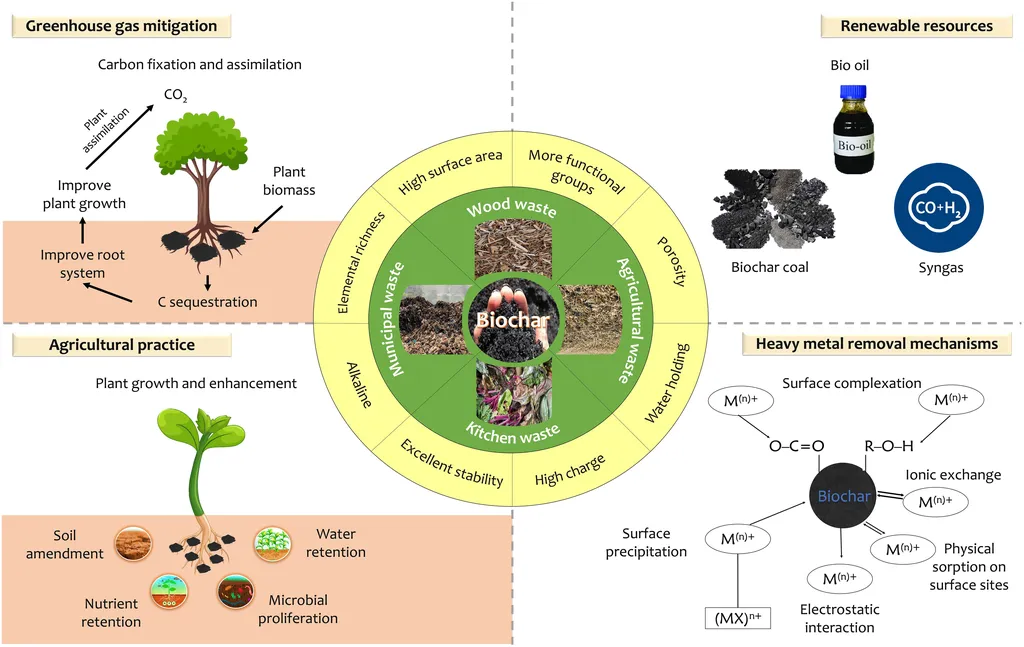
The review, led by Abdullahi Bamidele Olayemi from the Department of Soil Science at Ahmadu Bello University in Nigeria, highlights the multifaceted benefits of biochar. By enhancing soil water holding capacity, biochar ensures that crops receive the moisture they need to thrive. “Biochar proliferates soil water holding sites due to its surface area and numerous water retention pores,” Olayemi explains. This not only nourishes plants but also promotes root growth by lowering soil bulk density.
One of the most significant findings is biochar’s ability to increase soil aggregate stability. By forming stable soil-biochar complexes, it fortifies soil aggregates against erosion and degradation, a critical factor in maintaining soil health and productivity. Additionally, biochar enhances soil nutrient retention through surface oxidation reactions, ensuring that essential nutrients are available for plant uptake.
The environmental benefits are equally impressive. Biochar promotes microbial abundance and diversity, creating a healthier soil ecosystem. Its dark color shields soil microbes from predators, fostering a thriving underground community. Moreover, biochar increases crop resistance to diseases and reduces the bioavailability of heavy metals and contaminants, making it a powerful tool for environmental remediation.
For the agriculture sector, the implications are profound. As the global population grows, the demand for sustainable and efficient farming practices intensifies. Biochar offers a viable solution, promising to increase crop yields while minimizing environmental impact. “By providing a comprehensive analysis of biochar’s interactions with the soil system, this review aims to equip policymakers, farmers, and land users with the information they need to achieve global food security through sustainable soil management,” Olayemi states.
The commercial potential is vast. Farmers can produce biochar on-site using agricultural waste, turning a byproduct into a valuable resource. This not only reduces waste but also lowers the cost of soil amendments. As awareness grows, the market for biochar is expected to expand, creating new opportunities for agribusinesses and entrepreneurs.
The research also opens doors for future developments. Scientists are exploring the use of biochar in combination with other soil amendments to create synergistic effects. Additionally, the potential for biochar to sequester carbon offers a promising avenue for mitigating climate change. By locking carbon in the soil, biochar can help reduce atmospheric carbon dioxide levels, contributing to global climate goals.
In conclusion, the review published in the Malaysian Journal of Sustainable Agriculture sheds light on the transformative potential of biochar. As the agriculture sector seeks sustainable solutions, biochar stands out as a beacon of hope, offering a path to enhanced productivity, environmental safety, and food security. With further research and adoption, biochar could very well become a cornerstone of modern agriculture, shaping the future of farming for generations to come.