
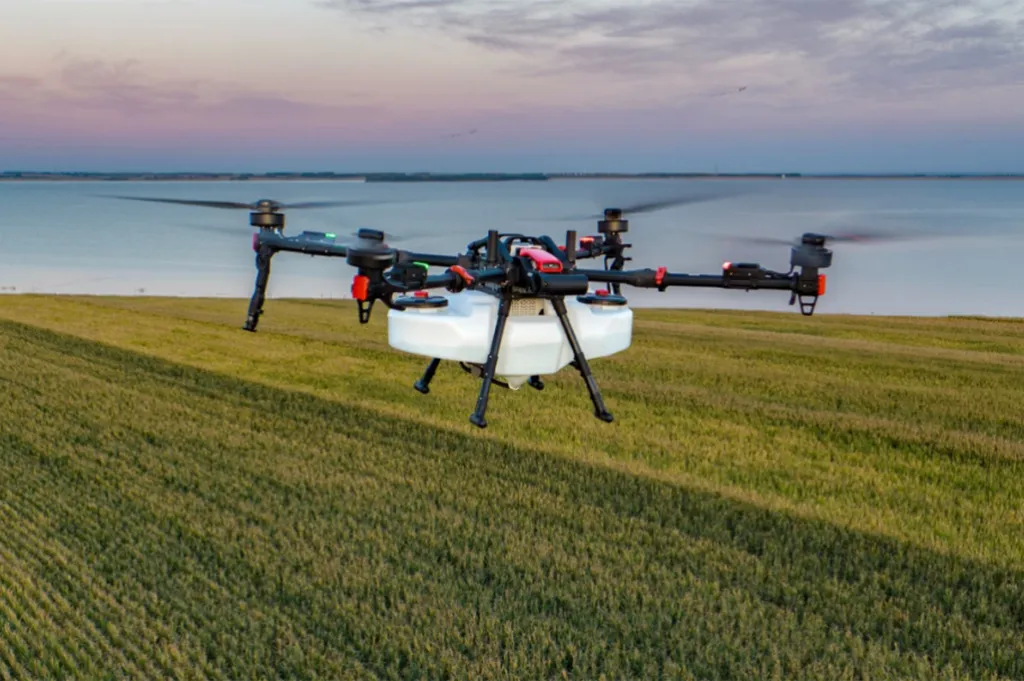
In a significant stride towards revolutionizing agriculture, XAG Co Ltd, one of China’s largest smart agricultural drone makers, unveiled a new generation of agricultural robot products during its annual technology conference in Guangzhou, Guangdong province. This launch is a testament to the rapid transformation of China’s countryside, where digital and smart technologies are reshaping agriculture and laying the groundwork for comprehensive rural revitalization.
China’s smart agriculture market has seen remarkable growth, exceeding 100 billion yuan ($14.35 billion) in 2024 and projected to reach 120 billion yuan in 2025. The integration of artificial intelligence, 5G, and big data into farming practices is accelerating this transformation. For instance, in Zhejiang province, the penetration of agricultural robots surged from 3.2 percent in 2020 to 15.7 percent in 2024. These technological advancements are not only enhancing production efficiency but also redefining governance and industry models in rural areas.
National policy has been a driving force behind this agricultural revolution. China is constructing a comprehensive institutional framework for digital agriculture, embedding technology across the entire value chain. The focus on “digital farmlands + smart management” is accelerating the application of AI, low-altitude drones, and satellite technologies, while upgrading rural telecommunications infrastructure. Phased development goals include raising agricultural informatization rates and establishing digital farms, providing a roadmap for medium- and long-term growth.
Local governments are playing a crucial role in turning national visions into reality. By leveraging regional agricultural strengths, they are developing differentiated models of smart agriculture. In Jiangxi province, a digital platform integrates 68 previously fragmented agricultural systems, linking provincial, municipal, county, township, and village levels. With an annual provincial investment close to 100 million yuan, this system demonstrates “data sharing + precision services” in action. Similarly, in Jiangsu province, the “smart-to-digital transformation” initiative aims to establish 100 smart industrial parks and 200 digital farms, supported by a cloud infrastructure for farmers and innovative financial products.
The impact of smart agriculture extends beyond efficiency gains. In production, digital tools are shifting farming from experience-based judgment to data-driven decision-making. Technologies like Beidou navigation, the internet of things, and big data analytics enable precise planting, real-time monitoring, and optimized harvesting, increasing yields while conserving resources. In Nanchang city of Jiangxi province, fully unmanned planting zones and smart plant protection systems demonstrate how technology stabilizes product quality, lowers costs, and enhances resilience, which is vital for ensuring food security.
Digital agriculture is also transforming industrial and commercial dynamics. By breaking spatial and temporal barriers, it fosters new business models that blend e-commerce, logistics, and rural tourism. By 2025, China had built 346,000 village-level logistics service stations, with express delivery coverage exceeding 95 percent of administrative villages and over 100 million packages handled daily. More than 158,000 village e-commerce service points linked farmers directly to consumers, creating new value chains that reduce losses, streamline distribution, and boost farmers’ income.
Governance is also being upgraded through the use of AI and digital platforms. Systems like Jiangxi’s project to link the villagers and Zhejiang’s “rural brain” integrate administrative services, ecological monitoring, and social welfare, enabling “one-stop” governance. These innovations transform rural administration from coarse, reactive management into targeted, data-driven solutions, improving both efficiency and the quality of public services.
As China continues to advance its digital agriculture initiatives, three priorities will shape the next phase of this transformation. First, infrastructure development must continue, extending 5G, satellite internet, and smart water systems to rural areas, creating a digital backbone for production, commerce, and governance. Second, technological innovation should focus on seeds, intelligent equipment, and data analysis, fostering collaboration among government, industry, and academia to localize key technologies. Third, talent cultivation is essential: training farmers in digital skills, promoting returnee entrepreneurship, and nurturing “new farmers” proficient in agriculture, technology, and market operations.
Digital and smart agriculture is not just a technological upgrade—it is a structural transformation enabling rural China to thrive in the 21st century. By integrating national policy guidance with local innovation and leveraging iterative advances in AI and digital tools, China is breaking through traditional constraints, aligning agricultural modernization with rural revitalization strategies. The result is a vision of rural communities that are productive, well-governed, and prosperous—a model of modern, sustainable, and inclusive development.