
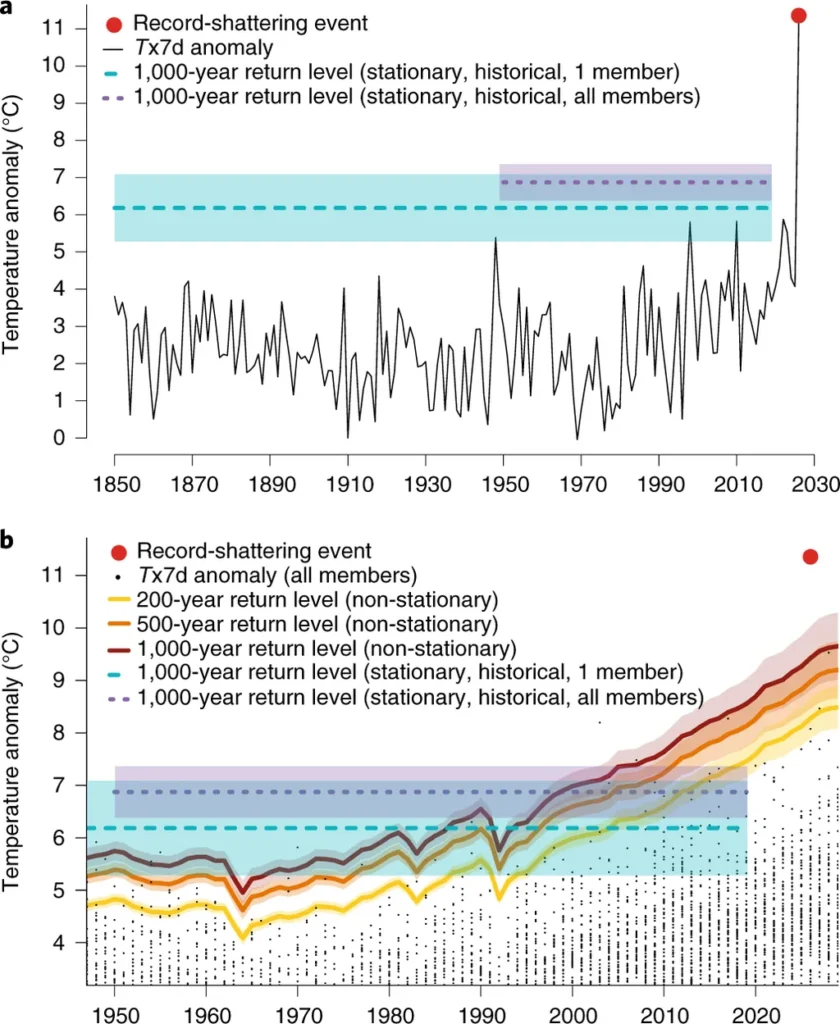
In a world grappling with the escalating impacts of climate change, a recent study published in *Earth’s Future* sheds light on the alarming rise of record-shattering compound drought and heatwave (CDHW) events and their devastating effects on terrestrial ecosystems. Led by Bohao Li from the Joint International Research Laboratory of Catastrophe Simulation and Systemic Risk Governance at Beijing Normal University, the research underscores the urgent need for adaptive measures to mitigate these ecological threats.
The study projects that the annual probability of record-shattering CDHW events—those exceeding historical severity records by more than two standard deviations—will double between 2015 and 2040 and continue to rise throughout the 21st century under the SSP5-8.5 scenario. This scenario, characterized by high greenhouse gas emissions, paints a stark picture of the future if current trends persist.
“These events are not just more frequent; they are more severe and have profound implications for ecosystems and agriculture,” Li explains. The research identifies mean temperature, relative humidity, shortwave radiation, and precipitation as critical drivers of CDHW severity. Regions such as southern North America, northern South America, and southern Europe are particularly vulnerable, facing severe ecological damage.
The study’s findings are based on simulations from nine-member ensembles under three future scenarios, providing a robust framework for understanding the dynamics of these extreme events. Observational data from 1951 to 2022 reveal that record-shattering CDHW events are correlated with weaker water vapor transport, reduced convective activity, and greater ecosystem damage. This damage translates into an additional global mean gross primary productivity (GPP) loss of −2.76 to −3.96 g C m−2 month−1, a critical metric for assessing ecosystem health and productivity.
Between 2080 and 2099, the global average GPP anomalies caused by these events are projected to range from 46% to 119% of the warm season’s monthly average ecosystem carbon sink. This stark projection highlights the urgent need for adaptive measures to mitigate the ecological threats from record-shattering CDHW events.
For the agriculture sector, the implications are profound. CDHW events can lead to significant crop failures, reduced yields, and increased stress on water resources. Farmers and agricultural businesses must adapt to these changing conditions by adopting more resilient crop varieties, improving water management practices, and implementing advanced monitoring systems to predict and mitigate the impacts of these extreme events.
The research also underscores the need for policy interventions to support agricultural communities in adapting to these challenges. Governments and international organizations must invest in research and development to create innovative solutions that can help farmers cope with the increasing frequency and severity of CDHW events.
As the world continues to grapple with the impacts of climate change, this study serves as a wake-up call for the urgent need for adaptive measures to mitigate the ecological threats from record-shattering CDHW events. The findings published in *Earth’s Future* by lead author Bohao Li from the Joint International Research Laboratory of Catastrophe Simulation and Systemic Risk Governance at Beijing Normal University provide a critical foundation for understanding the dynamics of these events and their impacts on ecosystems and agriculture. The research highlights the need for immediate action to ensure ecosystem sustainability and support agricultural communities in adapting to these changing conditions.