
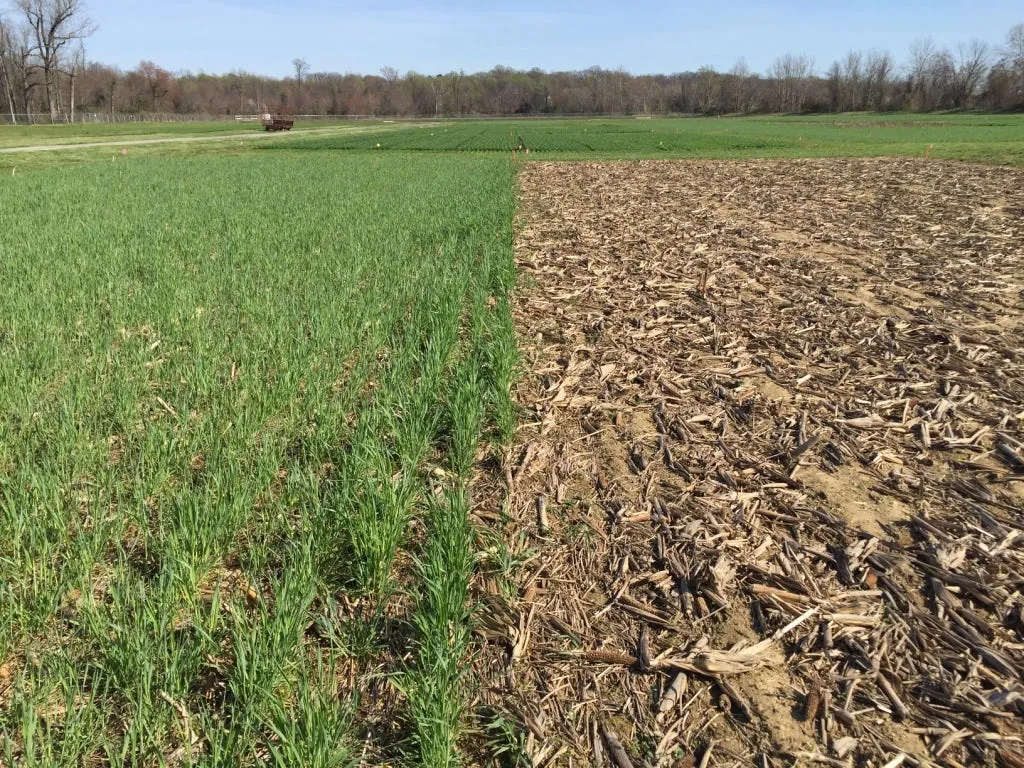
In the heart of America’s breadbasket, a quiet revolution is taking root—one that could help farmers combat climate change while boosting their bottom line. Cover crops, the unsung heroes of sustainable agriculture, are stepping into the spotlight as a nature-based climate solution, according to a comprehensive review published in *Earth’s Future*. Led by Mallory L. Barnes of Indiana University Bloomington, the study synthesizes research from multiple disciplines to shed light on the potential benefits, persistent challenges, and future opportunities of cover cropping in the Midwestern US.
Cover crops—plants grown between cash crop seasons—are known to sequester carbon, improve soil health, and enhance water quality. Yet, despite their promise, less than 6% of US farmlands utilize this practice. The review highlights that farmers often perceive the benefits as uncertain and the management risk as high, which has limited widespread adoption.
The study reveals that carbon outcomes from cover cropping are highly variable across space and time, with water and nutrient dynamics exhibiting context-dependent tradeoffs. “The variability in outcomes is a significant challenge,” Barnes explains. “It makes it difficult for farmers to predict the benefits and manage their expectations.”
Economic returns, too, remain difficult to quantify, adding another layer of complexity to the decision-making process for farmers. The review also underscores the role of social factors, such as norms and identity, in shaping adoption patterns. Farmers’ perceptions of risk and observed outcomes are influenced by system constraints and social dynamics, creating a complex web of factors that impact the widespread adoption of cover cropping.
To tackle these challenges, the review employs Ostrom’s social-ecological systems framework, linking scientific uncertainty to real-world implementation barriers. This approach highlights the need for transdisciplinary work to advance our understanding of cover cropping and its potential as a climate mitigation strategy.
The study culminates in a set of research priorities designed to clarify the climate mitigation potential of cover cropping, improve the design of private and public interventions, and support adaptive management. By addressing these priorities, the agriculture sector can harness the power of cover crops to enhance soil carbon storage, improve resilience to climate change, and boost economic returns for farmers.
As the agriculture sector grapples with the impacts of climate change, the insights from this review offer a roadmap for future developments in the field. By fostering transdisciplinary collaboration and addressing the persistent challenges of cover cropping, farmers and researchers can work together to create a more sustainable and resilient agricultural system. The study, published in *Earth’s Future* and led by Mallory L. Barnes of The O’Neill School of Public & Environmental Affairs at Indiana University Bloomington, serves as a call to action for the agriculture sector to embrace cover cropping as a nature-based climate solution.