
In the heart of Selangor, Malaysia, researchers are unraveling the intricate dance between mung beans and essential micronutrients, with findings that could reshape agricultural practices worldwide. A recent study published in the Malaysian Journal of Sustainable Agriculture has shed light on the delicate balance of zinc (Zn) and iron (Fe) in mung bean (Vigna radiata) cultivation, offering crucial insights for farmers and agronomists alike.
The study, led by Mohamad Izzuddin Mohd Hadir from the Department of Biology at Universiti Putra Malaysia, explored how varying concentrations of Zn and Fe affect the growth of mung beans. The findings reveal a nuanced picture of micronutrient management, highlighting the fine line between essential nourishment and toxic hindrance.
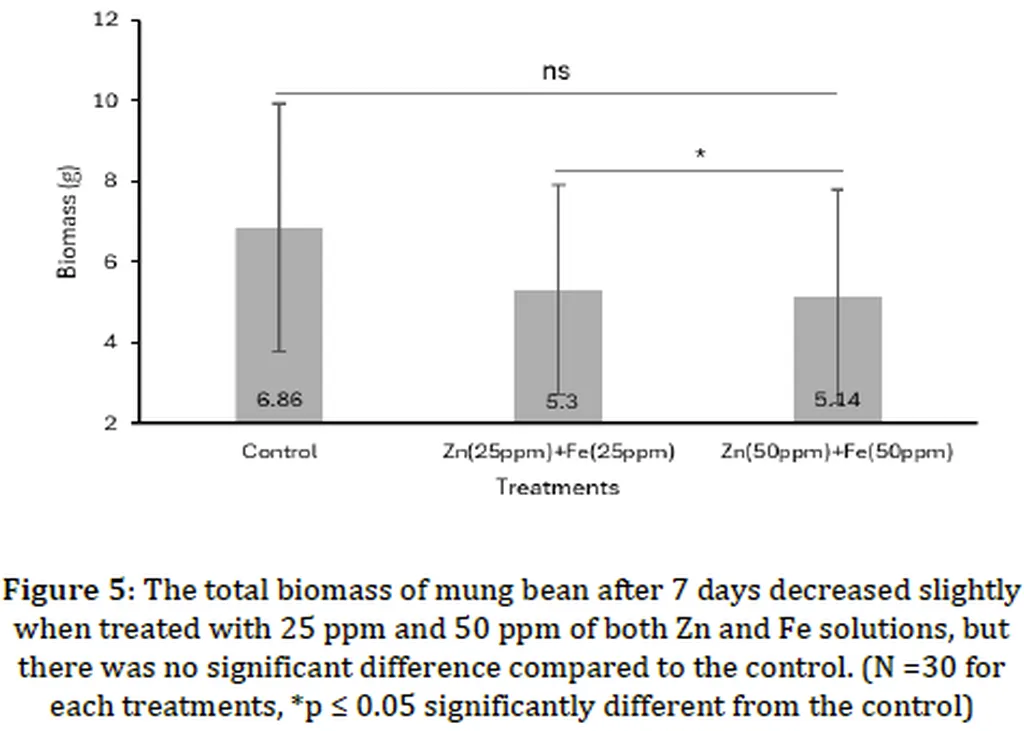
Mung beans were subjected to three treatments: a control group with distilled water, a 25 ppm Zn and Fe solution, and a 50 ppm Zn and Fe solution. The results were telling. At 25 ppm, the plants exhibited restricted growth compared to the control group, with reduced stomatal opening and average length. However, their biomass was slightly higher, suggesting that other limiting factors might be at play. “This indicates that while Zn and Fe are essential for growth, an excess can lead to toxicity, stunting the plant’s development,” Hadir explained.
The 50-ppm treatment produced even more mixed results. Some plants showed stunted growth due to possible nutrient toxicity, while others displayed a tremendous effect on the stem’s stomatal opening. This variability underscores the complexity of micronutrient management and the need for precise, tailored approaches to fertilization.
The commercial implications of this research are significant. Mung beans are a staple crop in many parts of the world, valued for their high protein content and versatility in various cuisines. Ensuring optimal growth conditions can enhance yield and quality, directly impacting farmers’ livelihoods and the agricultural sector’s economic health.
Hadir’s research suggests that balanced micronutrient management is key to optimal plant health and development. “Understanding the precise needs of crops like mung beans can help farmers make informed decisions about fertilization, ultimately leading to better yields and more sustainable practices,” he noted.
As the agricultural sector grapples with the challenges of climate change, soil degradation, and the need for sustainable practices, studies like this one provide a beacon of hope. By fine-tuning our understanding of micronutrient dynamics, we can pave the way for more resilient and productive crops, ensuring food security for future generations.
In the ever-evolving landscape of agritech, this research serves as a reminder of the intricate interplay between science and agriculture. As we continue to unravel the mysteries of plant nutrition, we edge closer to a future where technology and tradition converge to create a more sustainable and bountiful world.