
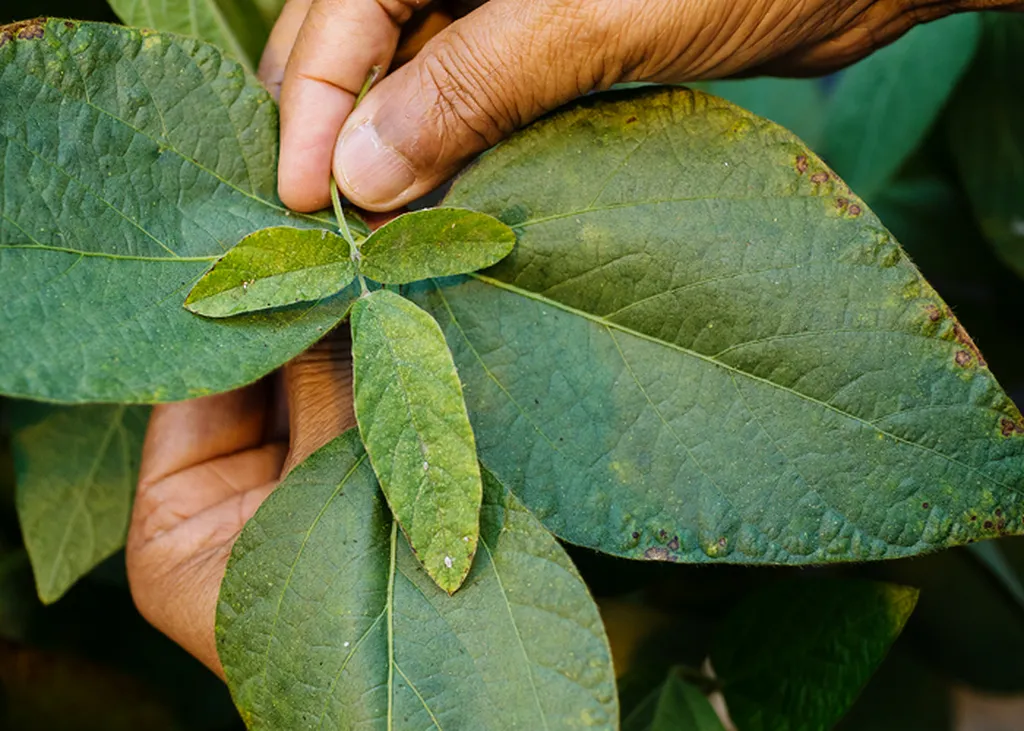
In the relentless pursuit of sustainable agriculture, scientists are constantly seeking innovative ways to bolster crop resilience against devastating pathogens. A recent study published in the Malaysian Journal of Sustainable Agriculture sheds light on the genetic diversity and phenotypic traits of soybean genotypes resistant to soybean rust (Phakopsora pachyrhizi), offering promising avenues for future breeding strategies.
Soybean rust, caused by the fungus Phakopsora pachyrhizi, poses a significant threat to soybean production worldwide, leading to substantial yield losses. The study, led by Olasan Olalekan Joseph from the Department of Plant Science and Biotechnology at Joseph Sarwuan Tarka University in Nigeria, aimed to unravel the genetic basis of rust resistance in soybean genotypes. By employing simple sequence repeat (SSR) markers, the research team assessed the genetic diversity among five soybean varieties, both resistant and susceptible, under controlled conditions.
The findings revealed a remarkable range of plant heights among the genotypes, from 87.3 cm in TGx1951-3F to 60.3 cm in TGx1835-10. Pathological analysis further highlighted the varying degrees of rust resistance among the varieties. “Some varieties, such as TGx1448-2E and TGx1951-4F, exhibited strong resistance to rust, while TGx1904-6F had the highest disease incidence,” noted Joseph. This genetic diversity is crucial for developing robust breeding programs aimed at enhancing rust resistance in soybean crops.
The study’s phenotypic assessments correlated molecular data with resistance traits, providing valuable insights into the genetic mechanisms underlying rust resistance. “Understanding the genetic basis of rust resistance is essential for developing soybean varieties that can withstand this major pathogen,” explained Joseph. The research not only highlights the potential of SSR markers in genetic analysis but also underscores the importance of genetic diversity in breeding programs.
The commercial implications of this research are substantial. Soybean is a vital crop for global agriculture, used in a wide range of products from animal feed to biofuels. Enhancing rust resistance in soybean varieties can significantly improve yield stability and reduce the need for chemical treatments, leading to more sustainable and profitable farming practices. “This research offers valuable insights for future breeding strategies to improve crop resilience against soybean rust,” said Joseph. By leveraging the genetic diversity identified in this study, breeders can develop new soybean varieties with superior resistance and yield potential, ultimately benefiting farmers and the agriculture sector as a whole.
The study published in the Malaysian Journal of Sustainable Agriculture, led by Olasan Olalekan Joseph from the Department of Plant Science and Biotechnology at Joseph Sarwuan Tarka University, represents a significant step forward in the fight against soybean rust. As the agriculture sector continues to grapple with the challenges posed by pathogens, such research provides a beacon of hope for developing resilient and sustainable crop varieties. The findings not only enhance our understanding of the genetic basis of rust resistance but also pave the way for innovative breeding strategies that can shape the future of soybean production.