
In the rapidly evolving landscape of agriculture, technology is playing an increasingly pivotal role, driving demand for skilled professionals and transforming traditional farming practices. This week, we delve into some of the most compelling stories that highlight the intersection of precision agriculture and innovation.
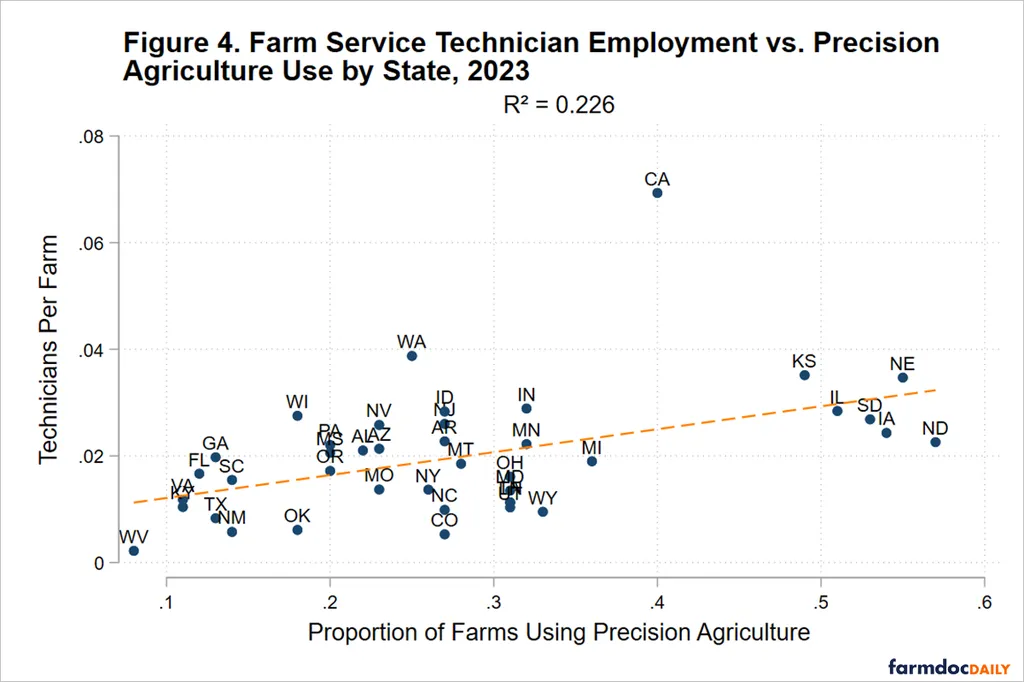
The U.S. Bureau of Labor Statistics (BLS) reports that 36,830 farm equipment mechanics and service technicians were employed in the U.S. in 2023, but industry sources report a shortage of qualified technicians, according to Parthu Kalva and Joe Janzen from the University of Illinois. Their article explores the correlation between greater technician employment and higher precision ag usage. “Their (dealerships) role increasingly depends on a specialized workforce of farm service technicians who install sensors, calibrate controllers, troubleshoot communication networks, update software and ensure that increasingly complex machinery runs reliably throughout planting and harvest seasons.”
The demand for precision agriculture technologies is not only driving the need for more technicians but also fostering a new era of efficiency and sustainability in farming. As farms become more technologically advanced, the need for skilled technicians to maintain and repair sophisticated equipment becomes paramount. This shift underscores the importance of investing in education and training programs to bridge the skills gap and meet the growing demands of the agriculture industry.
In a recent episode of the Leap Forward Podcast, farmers Ryan Miller and Jackson Remer shared their experiences using John Deere’s See & Spray technology during the past growing season. The discussion covered a range of topics, including managing speed and lighting conditions, using residuals with targeted spraying, fall burndown, tank management, and no-till practices. The farmers’ insights provide a valuable perspective on the practical applications and benefits of precision agriculture technologies, offering a glimpse into how these tools can enhance farming efficiency and productivity.
Brilliant Harvest CEO Remi Schmaltz offers a forward-looking perspective on the future of ag technology with four big predictions for 2026. Schmaltz’s insights provide a glimpse into the potential advancements and trends that could shape the agriculture industry in the coming years. His predictions highlight the ongoing evolution of ag technology and its potential to revolutionize farming practices, improve sustainability, and drive economic growth.
For those in the sales arena, Haris Halkic, founder of SalesDaily, shares 10 Navy SEAL-inspired tips to harden your sales game. Halkic’s “commandments” emphasize the importance of discipline, precision, and mindset in sales, drawing parallels between the rigor of military training and the challenges of the sales environment. His insights offer valuable lessons for sales professionals looking to enhance their performance and achieve greater success.
A special “Profit Planners” panel featuring Indiana farmers and experts from Purdue University addressed questions about the adoption of precision agriculture technologies. The panel discussed various aspects of technology adoption, including the potential use of SwarmFarm’s autonomous farm bots. The conversation highlighted the importance of staying informed about emerging technologies and their potential impact on farming practices.
As the agriculture industry continues to embrace technology, the need for skilled professionals and innovative solutions becomes increasingly apparent. The stories and insights shared this week underscore the transformative potential of precision agriculture and the importance of adapting to the changing landscape of farming. Whether through advanced equipment, targeted spraying technologies, or forward-looking predictions, the future of agriculture is being shaped by innovation and a commitment to sustainability.