
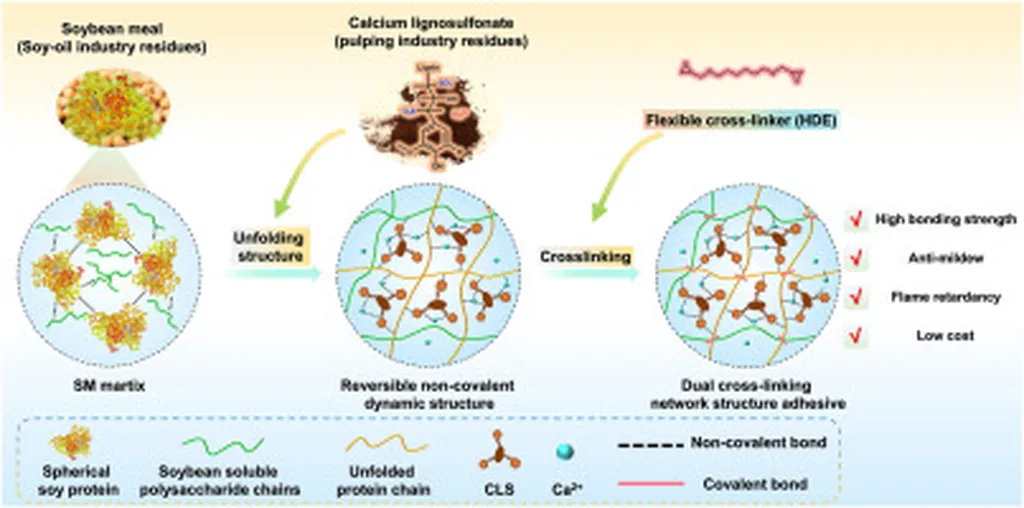
In the quest for sustainable and eco-friendly materials, researchers have turned to an unlikely ally: soybean meal. A recent study published in the Malaysian Journal of Sustainable Agriculture details a novel approach to modifying phenolic resins using soybean meal treated with a urea/sodium hydroxide solution. This innovation could have significant implications for the agriculture sector and beyond.
The research, led by Cheng Li of the College of Forestry at Henan Agricultural University, explores the potential of plant proteins as raw materials for biomass-based eco-friendly adhesives. Plant proteins are celebrated for their environmental benefits, including a low carbon footprint, renewability, abundant availability, and cost-effectiveness. These qualities make them ideal candidates for developing sustainable adhesives that can reduce reliance on petroleum-based products.
The study involved treating soybean meal with a sodium hydroxide/urea aqueous solution to create a modified phenolic resin. Fourier-transform infrared (FTIR) analysis revealed that the peptide chain structure of soybean protein was successfully incorporated into the phenolic resin. This incorporation led to the formation of co-condensed compounds, which are crucial for enhancing the adhesive properties of the resin.
One of the most promising findings was the bonding strength of the modified resin. The 30% U-SMPF resin exhibited the highest bonding strength at 0.92 MPa, indicating that the monosaccharides generated from the treated soybean meal had a limited effect on the bonding strength. This suggests that the modified resin maintains its structural integrity and adhesive properties, making it a viable alternative to traditional adhesives.
“The results are quite encouraging,” said Li. “The incorporation of soybean protein into phenolic resin not only enhances its eco-friendliness but also maintains its performance, which is crucial for commercial applications.”
The commercial impacts of this research are substantial. The agriculture sector, in particular, stands to benefit from the development of sustainable adhesives. These adhesives can be used in various applications, from wood products to packaging materials, reducing the environmental footprint of these industries. Additionally, the use of soybean meal, a byproduct of soybean processing, adds value to an otherwise underutilized resource, creating new economic opportunities for farmers and processors.
“This research opens up new avenues for the agriculture sector,” Li added. “By leveraging plant proteins, we can develop sustainable materials that are both environmentally friendly and economically viable.”
The study’s findings also highlight the potential for further research and development in the field of bio-based adhesives. As the demand for sustainable materials continues to grow, innovations like this modified phenolic resin could pave the way for a more eco-friendly future. The research not only advances our understanding of plant protein-based adhesives but also demonstrates the potential for these materials to meet the performance standards required for commercial use.
In conclusion, the research led by Cheng Li represents a significant step forward in the development of sustainable adhesives. By harnessing the power of plant proteins, we can create materials that are not only environmentally friendly but also economically beneficial. As the agriculture sector continues to explore new ways to reduce its environmental impact, innovations like this modified phenolic resin will play a crucial role in shaping the future of sustainable agriculture.