
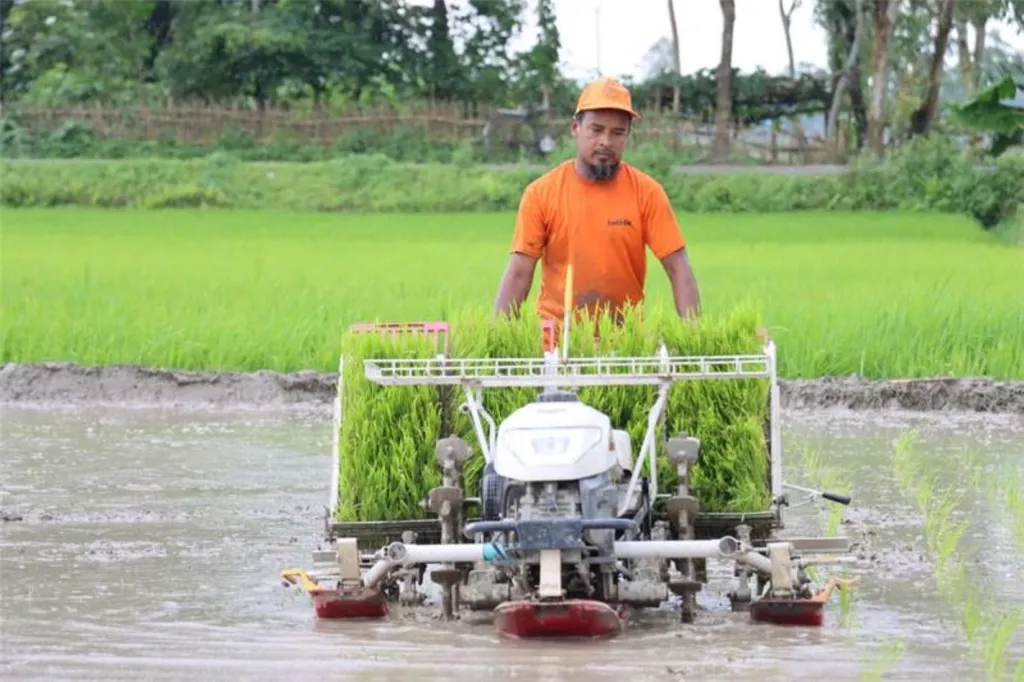
In the heart of Bangladesh, where the fertile lands have long been the backbone of the nation’s economy, a quiet revolution is taking root. Farmers, long reliant on subsidised chemical fertilisers, are beginning to adopt more sustainable practices, and the results are promising. A recent study published in *Agricultural Economics (AGRICECON)* sheds light on the potential of these practices to not only protect the environment but also boost economic efficiency.
The study, led by Faruque As Sunny of the School of Management at Zhejiang University, China, analysed five years of panel data from 2,025 households across three acidic soil regions in Dinajpur. The focus was on the Bangladesh Rice Research Institute’s (BRRI) recommended fertiliser application (RFA) practices. The findings are striking: RFA adoption reduces fertiliser use by 12% while improving cost efficiency by 4.9-5.1%.
“These results highlight the potential of RFA to mitigate environmental degradation while enhancing economic outcomes,” Sunny explained. “This is a win-win situation for both the farmers and the environment.”
The economic implications of these findings are significant. For years, farmers in Bangladesh have grappled with the dual challenges of environmental degradation and economic sustainability. The excessive use of chemical fertilisers, often subsidised by the government, has led to soil acidity and other environmental issues, undermining long-term productivity. Meanwhile, the cost of these fertilisers has put a strain on farmers’ economic sustainability.
The study’s findings suggest that RFA practices could help break this cycle. By reducing fertiliser use, farmers can cut costs and improve their economic efficiency. At the same time, they can protect the environment, ensuring the long-term sustainability of their lands.
The study also offers key insights for policymakers and development practitioners. It underscores the need for targeted interventions to accelerate RFA adoption and promote sustainable agriculture. This could involve everything from education and training programs for farmers to policy changes that incentivise sustainable practices.
Looking ahead, the study’s findings could shape future developments in the field of sustainable agriculture. They provide a strong argument for the adoption of RFA practices, not just in Bangladesh but potentially in other regions facing similar challenges. Moreover, they highlight the importance of data-driven research in guiding policy and practice.
As the world grapples with the challenges of climate change and environmental degradation, the lessons from Bangladesh’s agricultural sector could prove invaluable. They offer a glimpse into a future where economic efficiency and environmental sustainability go hand in hand, paving the way for a more sustainable and prosperous world.