
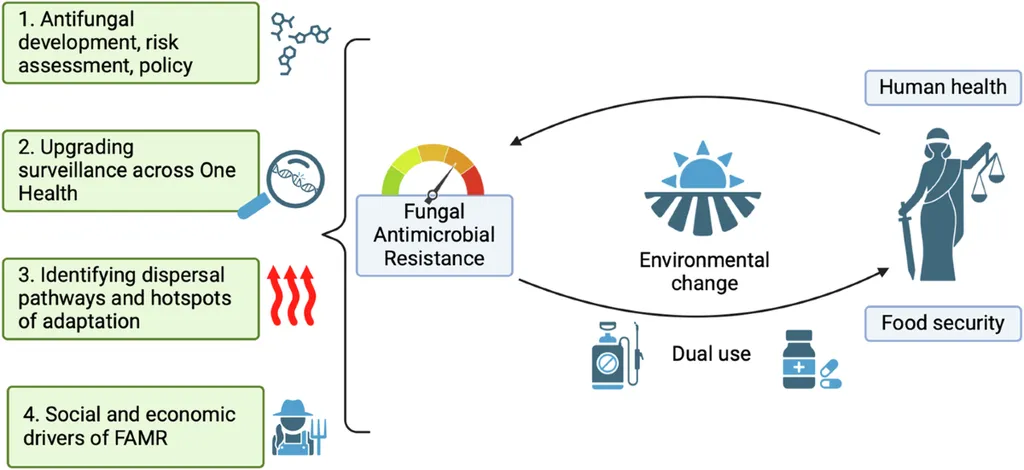
In the intricate dance between fungi and the world, a new review published in *IMA Fungus* sheds light on the evolving battle of fungal defenses and antimicrobial resistance, offering insights that could reshape agricultural practices and healthcare strategies alike. Led by Yuan Sui of the Institute of Special Plants at Chongqing University of Arts and Sciences, the research delves into the cellular, evolutionary, and global dimensions of fungal resistance, providing a roadmap for future innovations and interventions.
Fungi, often overlooked in the broader narrative of antimicrobial resistance, play a pivotal role in both human health and agricultural productivity. The review highlights key factors such as cell wall integrity, efflux pumps, and adaptive responses that enable fungi to evade treatment. “Understanding these mechanisms is crucial for developing targeted therapies and sustainable agricultural practices,” Sui notes, emphasizing the interdisciplinary approach required to tackle this complex issue.
The study explores how natural selection and horizontal gene transfer drive the evolution of fungal resistance, underscoring the need for global coordination and personalized medicine. In agriculture, the implications are profound. Fungal pathogens can devastate crops, leading to significant economic losses and food insecurity. By deciphering the defense mechanisms of fungi, researchers can develop more effective fungicides and resistant crop varieties, thereby safeguarding food production and agricultural livelihoods.
The review also calls for ethical principles and sustainable practices in both healthcare and agriculture. “We must balance the need for effective treatments with the long-term health of our ecosystems,” Sui explains. This holistic approach could lead to innovative solutions that minimize environmental impact while maximizing agricultural yield.
Looking ahead, the research offers recommendations for future initiatives designed to proactively address antimicrobial resistance. By synthesizing existing literature and highlighting gaps in current knowledge, the review provides a foundation for collaborative efforts that could revolutionize the field. As the world grapples with the challenges of fungal resistance, this comprehensive analysis serves as a beacon of hope, guiding researchers and policymakers toward a more resilient and sustainable future.
Published in *IMA Fungus* and led by Yuan Sui of the Institute of Special Plants at Chongqing University of Arts and Sciences, this review is a testament to the power of interdisciplinary research in addressing global challenges. As we navigate the interconnected worlds of fungi and human activity, the insights gleaned from this study will undoubtedly shape the future of agriculture and healthcare, fostering a more harmonious coexistence with the fungal kingdom.