
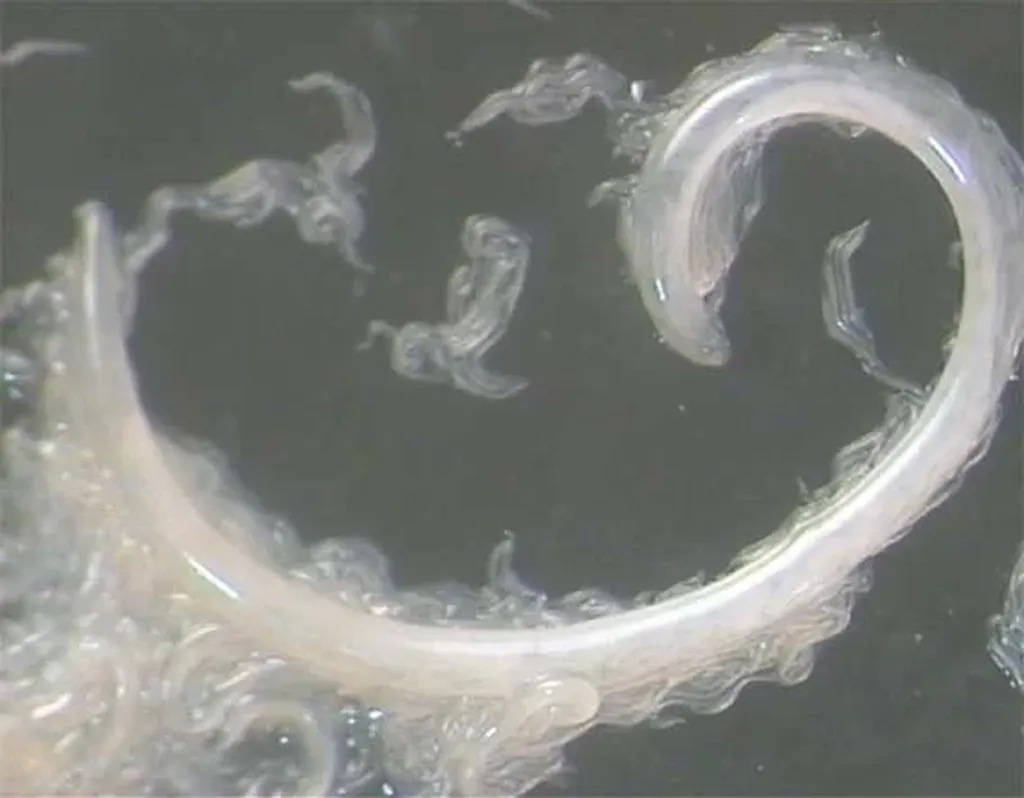
In the quest for sustainable pest management, a tiny but formidable ally has emerged: entomopathogenic nematodes (EPNs). These microscopic worms, belonging to the genera Heterorhabditis and Steinernema, are gaining traction as powerful biological control agents, thanks to their unique ability to infect and kill a wide range of insect pests. A recent review published in *Frontiers in Plant Science* synthesizes the current understanding of EPN biology and highlights the strides made in enhancing their field performance, offering a glimpse into the future of eco-friendly agriculture.
EPNs operate through a symbiotic partnership with insect-pathogenic bacteria, making them a potent tool in the fight against agricultural pests. “The nematodes deliver the bacteria into the insect host, where the bacteria release toxins that kill the insect, and the nematodes feed on the resulting bacterial proliferation,” explains lead author Amandeep Kaur from the Department of Biological Sciences at Texas Tech University. This intricate dance of nature not only suppresses pest populations but also minimizes the need for chemical pesticides, aligning with the growing demand for sustainable agricultural practices.
Over the past few decades, researchers have made significant progress in improving EPN efficacy. Advances in formulation and application methods, the use of biodegradable polymers and nanocarriers, and the elucidation of stress tolerance mechanisms have all contributed to enhancing the performance of these natural pest controllers. However, despite their proven efficacy, large-scale commercialization of EPNs remains hindered by high production costs, formulation instability, and environmental constraints.
The review underscores the need for an integrative approach that links molecular mechanisms with formulation strategies. By understanding the molecular mechanisms governing host localization, invasion, and immune suppression, scientists can develop more effective and resilient EPN-based biocontrol products. “Future research should focus on elucidating the genetic and molecular bases of EPN stress tolerance and host specificity,” Kaur suggests. This deeper understanding could pave the way for innovations in formulation and application techniques, making EPNs a more viable option for farmers worldwide.
The commercial impact of these findings is substantial. As agriculture shifts towards more regenerative and environmentally sustainable systems, the full ecological potential of EPN-bacteria partnerships holds promise not only for effective pest suppression but also for advancing the fundamental understanding of host-microbe interactions and ecosystem resilience. By harnessing the power of these microscopic warriors, the agriculture sector can move closer to achieving sustainable pest management, reducing reliance on chemical pesticides, and promoting healthier ecosystems.
In the words of Kaur, “The future of EPN-based biocontrol lies in our ability to integrate molecular insights with practical applications, creating products that are both effective and ecologically resilient.” As research continues to unravel the complexities of EPN biology, the agricultural sector stands to benefit from a new wave of innovative, sustainable pest management solutions.