
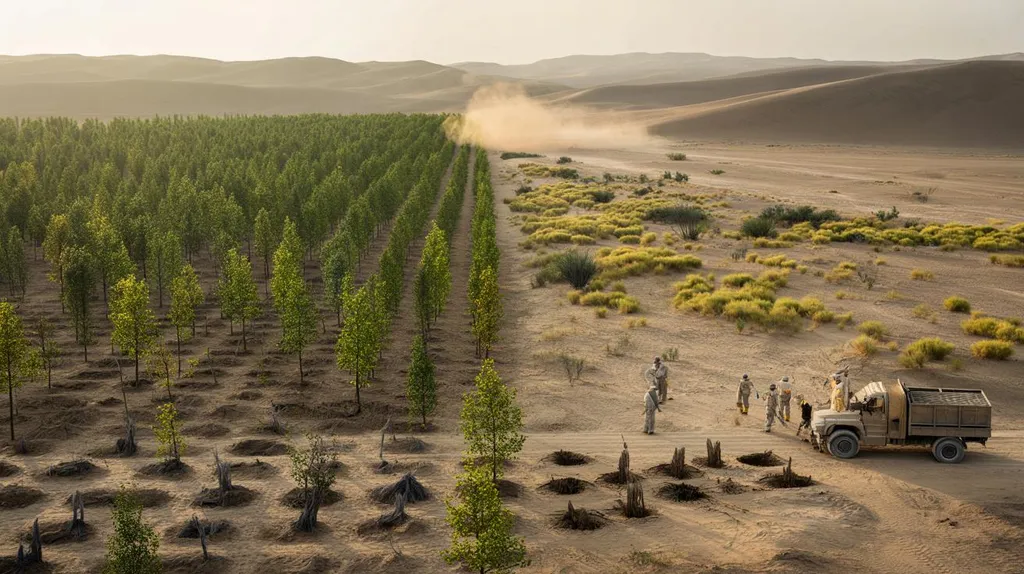
In the heart of subtropical China, a silent revolution is taking root, one that could reshape the future of forestry and agriculture. Researchers have uncovered compelling evidence that mixing tree species in plantations can significantly boost ecosystem functionality, offering a promising path towards sustainable forest management. This isn’t just about planting more trees; it’s about planting smarter.
The study, published in *Forest Ecosystems*, focused on *Cunninghamia lanceolata* plantations, a common sight in subtropical regions. The lead author, Yanfeng Bai from the Research Institute of Forestry at the Chinese Academy of Forestry, explained, “By introducing tree species mixing (TSM) management, we observed a marked improvement in the overall functional efficiency of the ecosystem.” This isn’t just academic jargon; it translates to healthier soils, better nutrient cycling, and ultimately, more productive and resilient forests.
So, what does this mean for the agriculture sector? For starters, it’s a game-changer for sustainable forest management. By enhancing plant diversity and improving soil conditions, TSM can lead to more robust and productive plantations. This could translate to better yields, improved soil health, and increased resilience to environmental stresses, all of which are critical for long-term forest health and commercial viability.
The study revealed that TSM management reduced competition intensity among trees, leading to increased α-diversity within each vegetation layer. This means a richer tapestry of plant life, each playing a unique role in the ecosystem. Moreover, TSM increased litter layer thickness and soil available phosphorus content, further enriching the soil and promoting nutrient cycling.
But the benefits don’t stop at the surface. The research also showed a shift in the soil microbial community, with an enrichment of oligotrophic bacteria and an increase in core fungal taxa. These microbes are the unsung heroes of the ecosystem, driving the decomposition of organic matter and the transformation of nutrients. As Bai put it, “This shift enhances the decomposition of organic matter and the transformation of nutrients, ultimately leading to enhanced overall ecosystem functional efficiency.”
Structural equation modeling confirmed that TSM management primarily drives soil carbon accumulation through the “tree diversity–core bacterial community–microbial biomass” pathway. This is a significant finding, as it highlights the intricate web of interactions that underpin ecosystem functionality.
The implications for the agriculture sector are profound. By adopting TSM practices, farmers and foresters can enhance the diversity and resilience of their plantations, leading to more sustainable and productive systems. This could open up new avenues for commercial forestry, offering a blueprint for balancing microbial community changes in the context of species diversity conservation and soil fertility restoration.
As we look to the future, this research provides a roadmap for optimizing the structure, function, and resilience of degraded plantations. It’s a call to action for the agriculture sector to embrace sustainable practices that not only boost productivity but also safeguard the environment for future generations. In the words of Yanfeng Bai, “This finding provides important guidance for optimizing the structure, function, and resilience of degraded Chinese fir plantations, and offers a scientific basis for future decisions on balancing microbial community changes in the context of species diversity conservation and soil fertility restoration.”
In a world grappling with the challenges of climate change and environmental degradation, this research offers a beacon of hope. It’s a testament to the power of science and innovation in shaping a more sustainable future for agriculture and forestry.