
In the quest for sustainable agriculture, optimizing fertilization strategies has emerged as a critical challenge. A recent study published in *Frontiers in Plant Science* offers promising insights into how integrated fertilization practices can enhance sugarcane productivity while fostering beneficial soil microbial communities. The research, led by Jun Deng from the State Key Laboratory of Nutrient Use and Management at China Agricultural University, provides a compelling case for the agricultural sector to reconsider its approach to soil management.
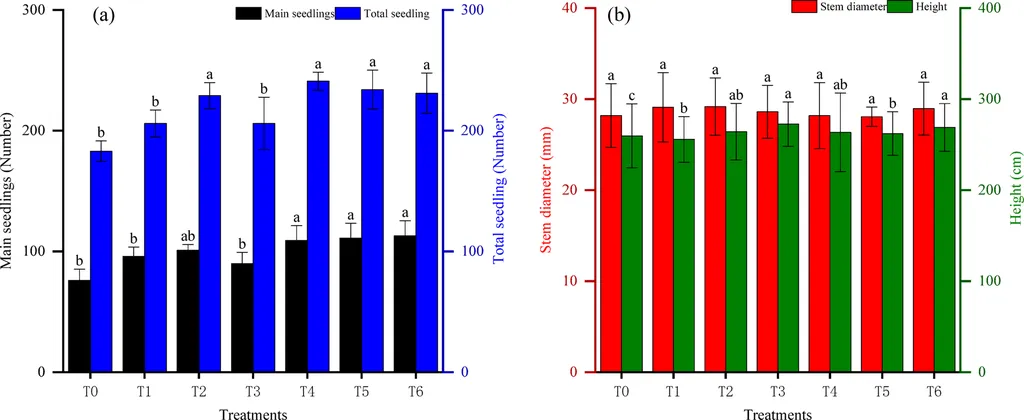
The study, conducted in Yunnan Province, China, compared the effects of three fertilization regimes on sugarcane yield, soil biochemical properties, and rhizosphere bacterial communities. The regimes included no fertilization (CK), chemical fertilization (F), and a combination of chemical and organic fertilization (FM). The findings were striking: the FM treatment significantly boosted sugarcane yield at both experimental sites compared to the other two treatments. This yield improvement was not just a matter of chance but was underpinned by a complex interplay of soil nutrient availability, enzyme activities, and microbial community dynamics.
“Our results indicate that the combined use of chemical and organic fertilizers creates a synergistic effect that enhances soil health and microbial diversity,” explained lead author Jun Deng. “This, in turn, leads to improved plant growth and productivity.”
The study employed high-throughput 16S rRNA sequencing to delve into the microbial communities. The FM treatment was found to selectively enrich specific bacterial taxa, such as Actinobacteriota and Proteobacteria, and promoted the development of a more modular and stable microbial co-occurrence network. This suggests that organic fertilization can act as a catalyst for assembling a core microbiota that is beneficial for plant growth.
The commercial implications of this research are substantial. For the agriculture sector, the findings highlight the potential of integrated fertilization strategies to not only increase crop yields but also to enhance soil health and sustainability. As the global demand for sugarcane continues to rise, driven by its use in biofuels, food, and other industrial applications, the need for sustainable production methods becomes ever more pressing.
“By understanding and leveraging the microbial networks in the rhizosphere, we can develop more effective and sustainable fertilization practices,” Deng added. “This could revolutionize the way we approach crop production, making it more resilient and productive in the face of climate change and other environmental challenges.”
The study also employed correlation analysis and structural equation modeling to reveal that the FM treatment improved sugarcane yield primarily through microbiome-driven pathways that indirectly enhanced soil biochemical functions. This mechanistic understanding provides a solid foundation for future research and practical applications in the field.
As the agricultural sector grapples with the dual challenges of feeding a growing population and mitigating environmental impact, the insights from this study offer a beacon of hope. By integrating organic and chemical fertilizers, farmers can potentially achieve higher yields while also fostering healthier soils and more resilient microbial communities. This holistic approach to soil management could pave the way for a more sustainable and productive future in agriculture.
Published in *Frontiers in Plant Science*, the research led by Jun Deng from the State Key Laboratory of Nutrient Use and Management at China Agricultural University provides a compelling case for rethinking fertilization strategies. As the agricultural sector continues to evolve, the findings from this study could shape the development of new, more sustainable practices that benefit both farmers and the environment.