
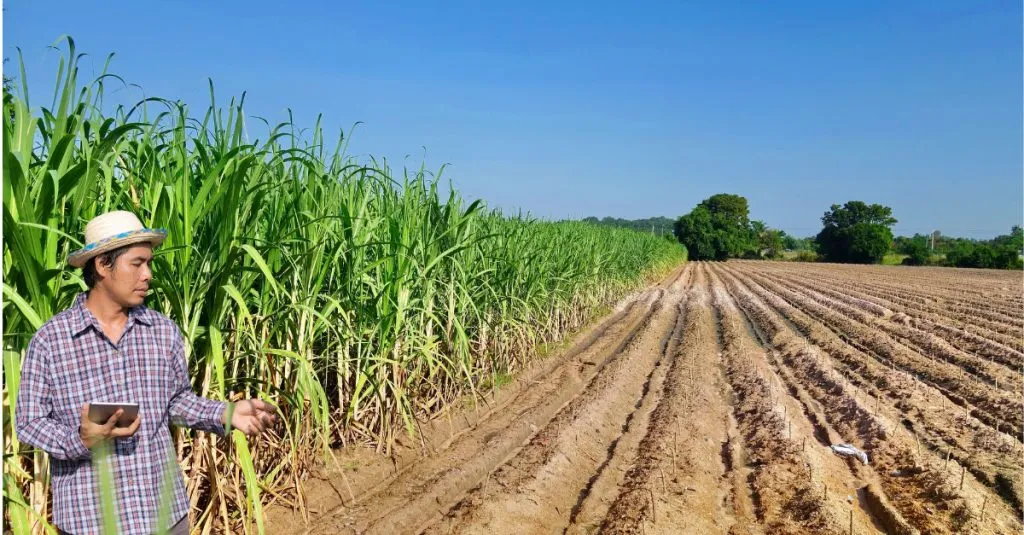
In the heart of Iran’s Khuzestan province, a groundbreaking solution is taking root, promising to revolutionize sugarcane farming. A team led by Saman Abdanan Mehdizadeh from the Agricultural Sciences and Natural Resources University of Khuzestan has developed an energy-autonomous IoT-based wireless sensor network that could redefine precision agriculture. Published in *Smart Agricultural Technology*, this research offers a glimpse into the future of sustainable farming, where data-driven decisions lead to healthier crops and more efficient water use.
Sugarcane, a thirsty crop, requires meticulous irrigation and constant health monitoring to thrive. Traditional methods, however, often struggle with scalability and efficiency. Mehdizadeh’s system addresses these challenges head-on. By deploying a network of wireless sensors, the system continuously tracks soil moisture, plant temperature, environmental conditions, groundwater levels, and even crop height. This real-time data is processed locally and sent to a cloud server, enabling automated irrigation decisions based on the Crop Water Stress Index (CWSI) and advanced image analysis for growth tracking.
The results are impressive. The system achieved a soil moisture measurement accuracy with a strong correlation (R² = 0.96) to gravimetric methods and a plant height measurement accuracy with a mean absolute error of just 1.8 cm. “This level of precision is a game-changer,” Mehdizadeh explains. “It allows farmers to make informed decisions that can significantly improve crop yield and water efficiency.”
The system’s energy autonomy is particularly noteworthy. Designed to operate seamlessly in off-grid environments, it ensures continuous operation for over 180 days on battery backup. Field tests demonstrated 98.7% data transmission reliability, early stress detection 24–48 hours before visible symptoms, and a 15% reduction in water usage through precision irrigation. These findings position the solution as a practical advancement for modern, sustainable sugarcane cultivation.
The commercial implications for the agriculture sector are substantial. With water scarcity and climate change posing increasing challenges, technologies that enhance water efficiency and crop health are invaluable. Mehdizadeh’s research could pave the way for similar systems in other crops, fostering a new era of data-driven, sustainable farming.
As the world grapples with the need for more efficient and sustainable agricultural practices, innovations like this offer hope. By integrating IoT, cloud computing, and advanced analytics, farmers can achieve unprecedented levels of precision and efficiency. Mehdizadeh’s work, published in *Smart Agricultural Technology*, underscores the potential of these technologies to transform the agriculture sector, making it more resilient and productive in the face of global challenges.
This research not only highlights the immediate benefits for sugarcane farmers but also sets a precedent for future developments in precision agriculture. As technology continues to evolve, the integration of IoT and data analytics will likely become a cornerstone of modern farming, driving sustainability and efficiency across the board.