
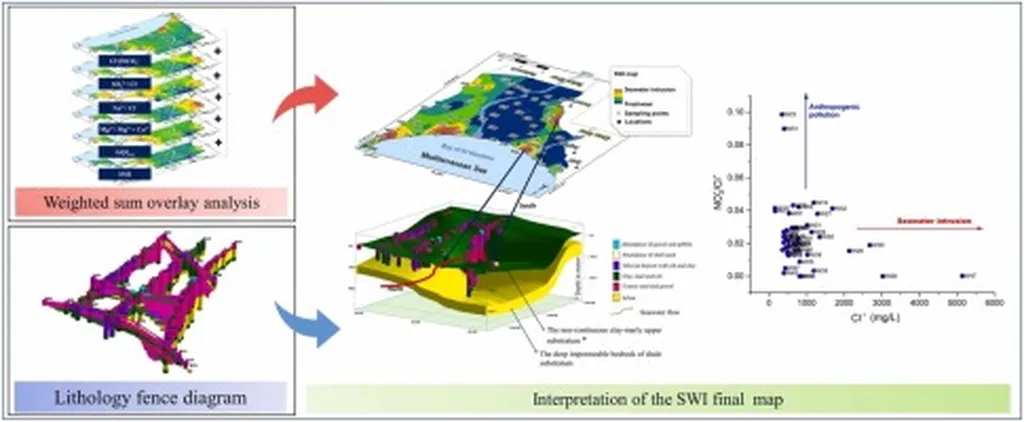
In the sun-drenched plains of northeastern Morocco, where the Mediterranean Sea meets the land, a critical water source is under scrutiny. The Nekor-Ghiss aquifer, a lifeline for the city of Al Hoceima and its surrounding agriculture, is facing significant challenges. A recent study published in *BIO Web of Conferences* sheds light on the hydrogeochemical characteristics of this vital resource, offering insights that could shape future water management strategies in the region.
The study, led by Regragui Imane of the Applied Chemistry Research Unit at the Faculty of Sciences and Techniques Al Hoceima, Abdelmalek Essaadi University, analyzed 25 groundwater samples collected in May 2022. The findings reveal a complex interplay between natural geochemical processes and human activities, with significant implications for agriculture and domestic water use.
The waters of the Nekor-Ghiss aquifer are highly mineralized, with electrical conductivity ranging from 1825 to 12720 µS/cm. This high mineral content is primarily due to the dissolution of evaporites and marine intrusion, particularly affecting wells W16 and W17. “The high concentrations of Na+ and Cl- in these wells indicate significant marine influence,” explains Regragui Imane. “This is a clear sign of saltwater intrusion, which can severely impact the quality of water used for irrigation and domestic purposes.”
The study identified three distinct hydrochemical facies: a predominant sodium chloride (NaCl) facies, a sodium sulfate facies, and a mixed calcium-magnesium-chloride facies. The dominance of the NaCl facies suggests that marine intrusion is a significant factor in the aquifer’s chemistry. This is a critical finding for the agriculture sector, as high levels of sodium and chloride can lead to soil salinization, reducing crop yields and damaging agricultural infrastructure.
Agricultural contamination was also detected in several wells. Well W21 showed nitrate concentrations exceeding the World Health Organization’s limit of 50 mg/L, while well W23 had critical nitrite pollution, with concentrations reaching 25.56 mg/L. “These findings indicate localized contamination, likely from agricultural runoff and improper waste disposal,” says Regragui Imane. “This is a pressing issue that needs to be addressed to ensure the long-term sustainability of the aquifer.”
The study’s findings have significant implications for the agriculture sector, which relies heavily on the Nekor-Ghiss aquifer for irrigation. High mineral content and contamination can lead to reduced crop yields, increased production costs, and long-term damage to the soil. Moreover, the findings highlight the need for sustainable water management strategies that balance the needs of agriculture with the protection of the aquifer.
As the region faces increasing water scarcity and climate change, the findings of this study are particularly timely. They underscore the importance of understanding the complex interactions between natural geochemical processes and human activities in shaping the quality and availability of groundwater resources. By providing a comprehensive hydrogeochemical characterization of the Nekor-Ghiss aquifer, this study offers a crucial baseline for developing effective water management strategies that can ensure the long-term sustainability of this vital resource.
In the words of Regragui Imane, “This study is just the beginning. It provides a foundation for further research and action, but it is up to policymakers, farmers, and communities to use this information to make informed decisions and implement sustainable practices.” As the world grapples with the challenges of water scarcity and climate change, the insights from this study offer a beacon of hope for the future of water management in the Nekor-Ghiss plain and beyond.