
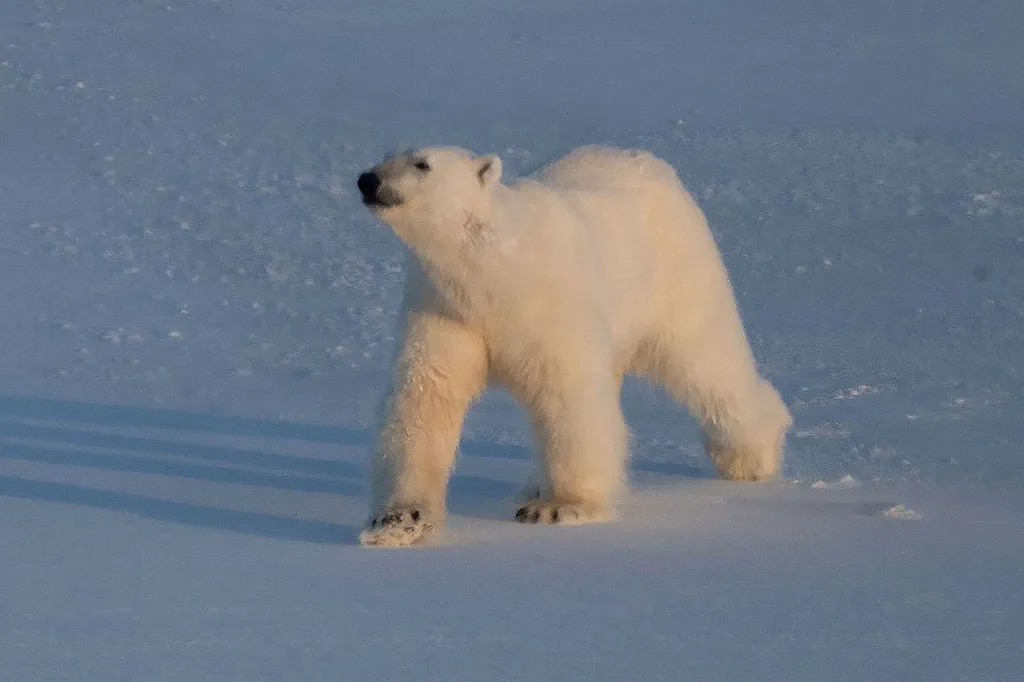
In the vast, icy expanse of the Arctic, polar bears are facing a grim reality as sea ice, their hunting platform of choice, recedes due to climate change. This is particularly evident in places like the western edge of Hudson Bay, Canada, where the polar bear population has dwindled by nearly half over the past fifty years, and the bears themselves have lost a significant amount of weight. However, in the remote Norwegian island of Svalbard, a surprising trend has emerged: polar bears are actually gaining weight, even as sea ice disappears.
The reasons behind this anomaly are not entirely clear, but researchers have put forth two plausible explanations. The first is that seals, the primary prey of polar bears, are concentrating around the shrinking sea ice, making them easier targets. The second is that polar bears are diversifying their diet, increasingly feasting on walruses and reindeer, which have made a comeback in the region due to protective hunting laws.
The implications of this finding are significant for the agriculture sector and investors. The resilience of Svalbard’s polar bears in the face of climate change could potentially pave the way for innovative strategies in other sectors. For instance, the agriculture industry could explore ways to adapt to changing climates by diversifying crops or livestock, much like the polar bears have done with their diet.
Moreover, the recovery of walrus and reindeer populations in Svalbard, thanks to protective measures, highlights the potential benefits of sustainable practices. Investors could be encouraged to support environmentally-friendly agricultural projects, which not only help mitigate climate change but also ensure long-term profitability.
However, it’s crucial to remember that the situation in Svalbard is unique and may not be easily replicable elsewhere. The agriculture sector and investors should approach this finding with caution, using it as a source of inspiration rather than a blueprint for action. The fight against climate change and its impacts on wildlife and agriculture is complex and multifaceted, requiring a combination of innovative strategies, sustainable practices, and global cooperation.