
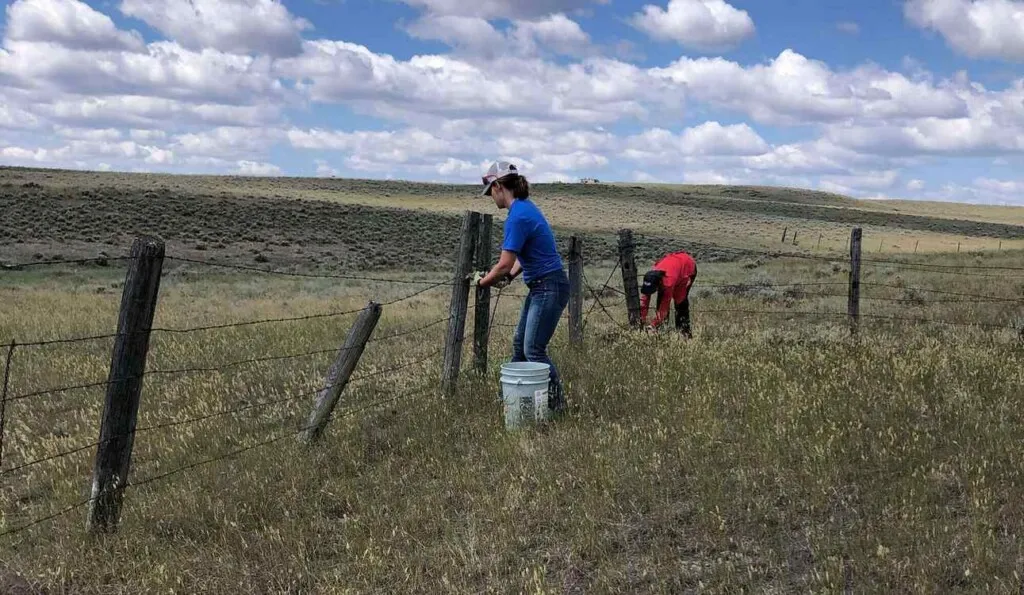
In the vast expanse of southern Africa, a delicate dance between wildlife conservation and agricultural interests plays out daily. The Kavango Zambezi Transfrontier Conservation Area (KAZA TFCA) is a stage for this dance, where veterinary fences, erected to curb the spread of transboundary animal diseases, often disrupt the natural movement of wildlife. A recent study published in *Frontiers in Veterinary Science* challenges the status quo, suggesting that removing certain fence sections might not only restore habitat connectivity but also benefit the agricultural sector.
The study, led by Laura E. Rosen from the Victoria Falls Wildlife Trust in Zimbabwe, focuses on specific sections of the Northern Buffalo fence near the Okavango Delta and the Zambezi Border and Western Border fences along the Botswana-Namibia borders. These fences, though intended to prevent the spread of diseases like foot and mouth disease, contagious bovine pleuropneumonia, and peste des petits ruminants, are often in disrepair, with elephants causing significant damage.
Rosen and her team conducted qualitative risk assessments under three scenarios: the status quo, hypothetical removal of specific fence sections, and hypothetical removal with risk mitigation measures. The findings were surprising. “Our study found that hypothetical removal of these fence sections did not increase the risk of the transboundary animal diseases of interest,” Rosen explains. Moreover, with specific risk mitigation measures, such as strategic livestock herding, the overall risk of some diseases would be lower compared to the status quo.
The implications for the agricultural sector are significant. Veterinary fences, while protective, can also limit the natural movement of wildlife, leading to increased human-wildlife conflict. By removing specific fence sections and implementing risk mitigation measures, farmers could potentially reduce these conflicts, leading to lower losses and increased productivity.
The study also highlights the importance of stakeholder consensus. Key stakeholders agreed to move forward with consultations with local communities and to offer assistance with the implementation of risk mitigation measures, such as improved herding and kraaling, conditionally associated with potential removal of key fence sections.
This research could shape future developments in the field by promoting a more integrative approach to livestock disease control. As Rosen puts it, “This new, more sectorally integrative approach to livestock disease control is vital to wildlife’s ability to access key resources over space and time and thus to the sustained success of KAZA.”
The study, published in *Frontiers in Veterinary Science* and led by Rosen from the Victoria Falls Wildlife Trust, offers a promising path forward, one that balances the needs of wildlife conservation and agricultural interests. As we look to the future, this research could serve as a blueprint for similar initiatives, fostering a more harmonious coexistence between humans and wildlife.