
In a breakthrough that could revolutionize the way we think about sustainable materials, researchers have uncovered the secrets behind the enhanced transparency of wood treated with alkali solutions. The study, led by Hitomi Yagyu from SANKEN at the University of Osaka, sheds light on the intricate mechanisms that transform wood into a highly transparent material, offering promising implications for the agriculture and materials science sectors.
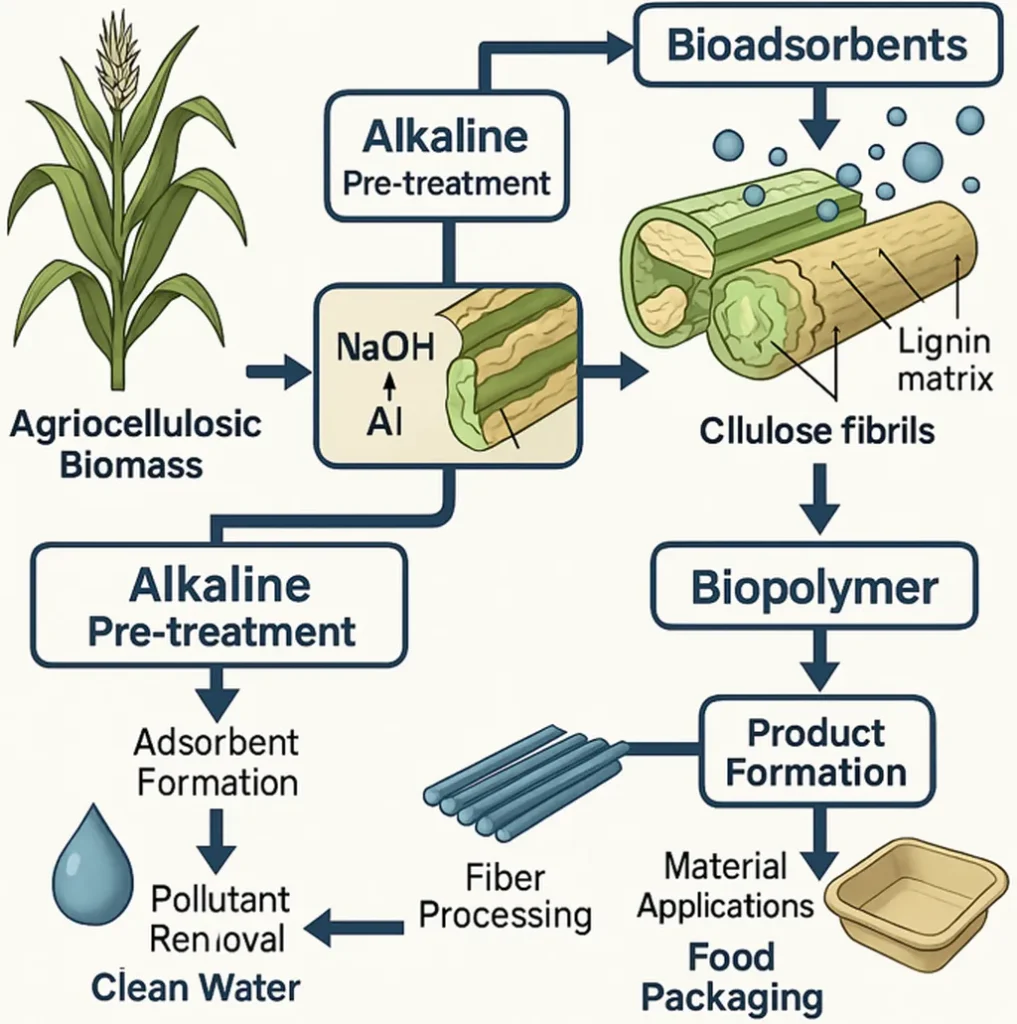
The research, published in *Macromolecular Materials and Engineering*, focuses on the cellulose microfibril skeleton of wood. By delignifying the wood and then treating it with potassium hydroxide (KOH), the team discovered that the process removes hemicellulose and exchanges carboxyl-group counterions. This softens the cell walls, allowing the cellulose skeleton to densify during drying, which significantly reduces light scattering and enhances transparency.
One of the most intriguing findings is the anisotropic nature of the wood’s structure. The tangential sections of the wood, which have a lower swelling ratio, undergo a more complete collapse of cell lumens during drying. This results in a higher density and superior transparency compared to the radial sections. “The anisotropic structure of the wood’s skeleton causes differential swelling between the tangential and radial sections,” explained Yagyu. “This leads to a more complete collapse of cell lumens in the tangential sections, enhancing their transparency.”
The implications of this research are far-reaching, particularly for the agriculture sector. Transparent wood, with its unique combination of strength, sustainability, and optical properties, could become a game-changer in various applications. From sustainable construction materials to innovative packaging solutions, the potential uses are vast. The study also highlights the importance of understanding the underlying structure of natural materials to optimize their properties for specific applications.
The findings could pave the way for future developments in the field of transparent wood and other bio-based materials. By leveraging the inherent anisotropic structure of wood, researchers can explore new methods to enhance its optical and mechanical properties. This could lead to the development of advanced materials that are not only sustainable but also highly functional and versatile.
As the world continues to seek sustainable alternatives to traditional materials, the insights gained from this research could play a crucial role in shaping the future of the agriculture and materials science industries. The study underscores the importance of interdisciplinary research in driving innovation and addressing global challenges. With further exploration and development, transparent wood could become a cornerstone of sustainable material science, offering a greener and more efficient alternative to conventional materials.