
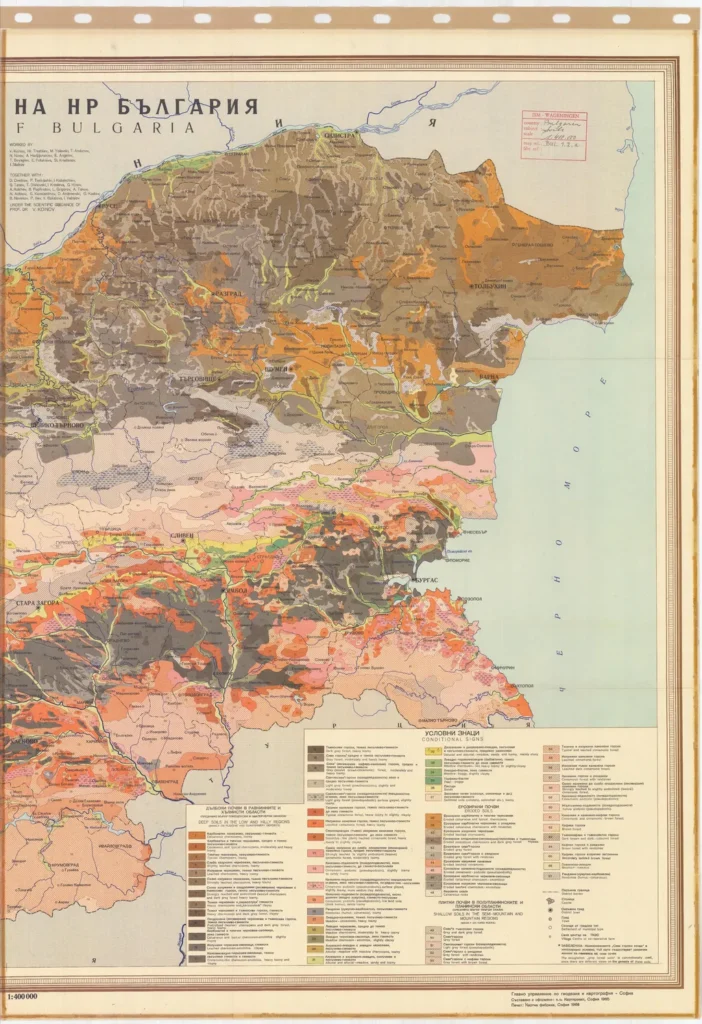
In the heart of Southern Bulgaria, a groundbreaking study is reshaping how we understand and utilize agricultural lands. The research, published in the *Bulgarian Journal of Soil Science*, led by Ivanka Lyubenova from the “N. Poushkarov” Institute of Soil Science, Agrotechnologie, and Plant Protection, delves into the intricate relationship between soil, climate, and crop suitability, offering a blueprint for optimizing agricultural productivity.
The study focuses on the village of Tsalapitsa in the Plovdiv region, where Lyubenova and her team conducted an agro-ecological assessment of agricultural lands. By calculating Field Ratings (FR) for various crops under both non-irrigated and irrigated conditions, they provided a detailed map of land suitability. “The values of the FR indicate the suitability of the land for growing the specified crop,” Lyubenova explains. This meticulous evaluation reveals that under non-irrigated conditions, 99.6% of the agricultural lands are classified as good or medium-good, falling into the 3rd, 4th, 5th, and 6th categories. A mere 0.4% is deemed unsuitable.
However, the story doesn’t end there. When irrigation is introduced, the landscape of possibilities expands significantly. “The suitability of the land and the possibilities for growing certain crops change in a positive direction,” Lyubenova notes. With irrigation, 62.5% of the lands are categorized as very good, fitting into the 1st and 2nd categories, while 37.1% are good and average, falling into the 3rd and 4th categories. This shift underscores the transformative potential of irrigation in enhancing land productivity.
The study also harmonizes its findings with the recommendations of the Food and Agriculture Organization (FAO), ensuring global relevance and applicability. By analyzing the data in a Geographic Information System (GIS) environment, the researchers have created visually and spatially interpreted maps and graphs. This zoning effort identifies the most suitable crops for the region, including wheat from cereals, tobacco from technical crops, and a variety of fruits and vineyards from perennial crops. With mandatory irrigation, tomatoes and rice also emerge as viable options.
The commercial implications of this research are profound. For farmers, the detailed land evaluation provides a strategic advantage, enabling them to make informed decisions about crop selection and resource allocation. By identifying the most suitable crops for specific land types, farmers can maximize yields and minimize risks, ultimately enhancing their profitability. “This research offers a roadmap for farmers to navigate the complexities of land suitability and crop selection,” Lyubenova states.
Moreover, the integration of GIS technology adds a layer of precision and efficiency to agricultural planning. The spatial interpretation of data allows for targeted interventions and optimized resource management, reducing waste and increasing productivity. This approach not only benefits individual farmers but also contributes to the broader goal of sustainable agriculture.
Looking ahead, this research sets the stage for future developments in the field. The methodology employed can be replicated in other regions, providing a standardized approach to land evaluation and crop zoning. As climate change continues to impact agricultural landscapes, such studies become increasingly vital. They offer a proactive strategy for adapting to changing conditions and ensuring food security.
In conclusion, the study by Lyubenova and her team is a testament to the power of scientific research in driving agricultural innovation. By bridging the gap between soil science, climate analysis, and GIS technology, they have created a comprehensive framework for optimizing land use and enhancing agricultural productivity. As the world grapples with the challenges of feeding a growing population, such research offers hope and a clear path forward.