
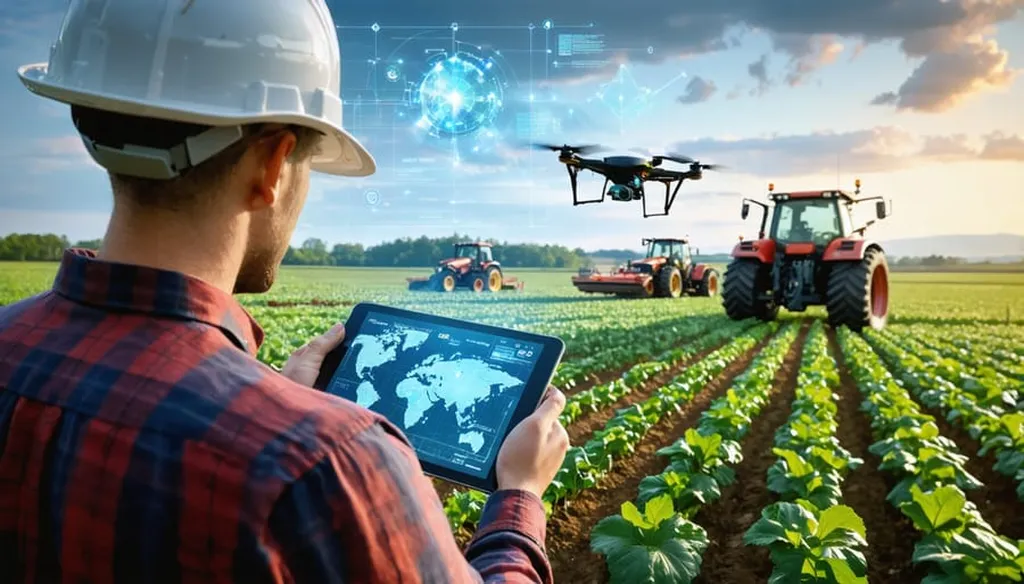
In the vast fields of Canadian crop production, a digital revolution is quietly unfolding, promising to reshape the way farmers work and businesses operate. A recent scoping review published in *Smart Agricultural Technology* sheds light on the current state of digital agricultural technologies (DATs) in Canada, highlighting both the opportunities and challenges that lie ahead.
The review, led by Hanan Ishaque from The Simpson Centre for Food and Agricultural Policy at the University of Calgary, synthesizes evidence from 64 studies to identify the DATs developed, piloted, or validated in major Canadian field crops. The findings reveal a landscape rich with innovation, particularly in sensing-based and analytics-driven applications. These technologies, often leveraging machine learning and data from proximal or remote sensing, have shown strong predictive performance for soil properties, soil moisture, and yield estimation. However, their effectiveness is often limited to localized conditions, with cross-regional calibration and long-term validation remaining significant hurdles.
One of the most compelling aspects of this research is its focus on stakeholder perspectives. The review identifies cost–benefit considerations, data governance and privacy concerns, interoperability challenges, and uneven advisory capacity as key determinants of technology adoption. “The evidence base is dominated by studies on oilseed and grain systems, reflecting Prairie and Ontario field crop production, with comparatively limited attention to specialty crops and robotics-intensive operations,” notes Ishaque. This regional imbalance underscores the need for a more coordinated and distributed approach to validation and implementation.
The commercial impacts of these findings are substantial. For the agriculture sector, the adoption of DATs could lead to improved productivity, profitability, and environmental performance. However, realizing these benefits will require addressing the systemic barriers highlighted in the review. Concentrated public funding, limited commercialization pathways, and underdeveloped data governance frameworks are among the structural constraints shaping Canada’s digital agriculture trajectory.
Looking ahead, the review calls for a Responsible Research and Innovation approach. This involves coordinated and regionally distributed validation, stronger advisory and training systems, clearer data governance, and responsible innovation practices. As Ishaque emphasizes, “These findings underscore the need for a more equitable and effective digital transformation of Canadian crop production.”
The research provides a crucial evidence base to inform policy and investment strategies. By addressing the identified barriers, stakeholders can pave the way for a more sustainable and prosperous future in Canadian agriculture. As the digital revolution continues to gain momentum, the insights from this review will be invaluable in shaping the trajectory of the sector.