
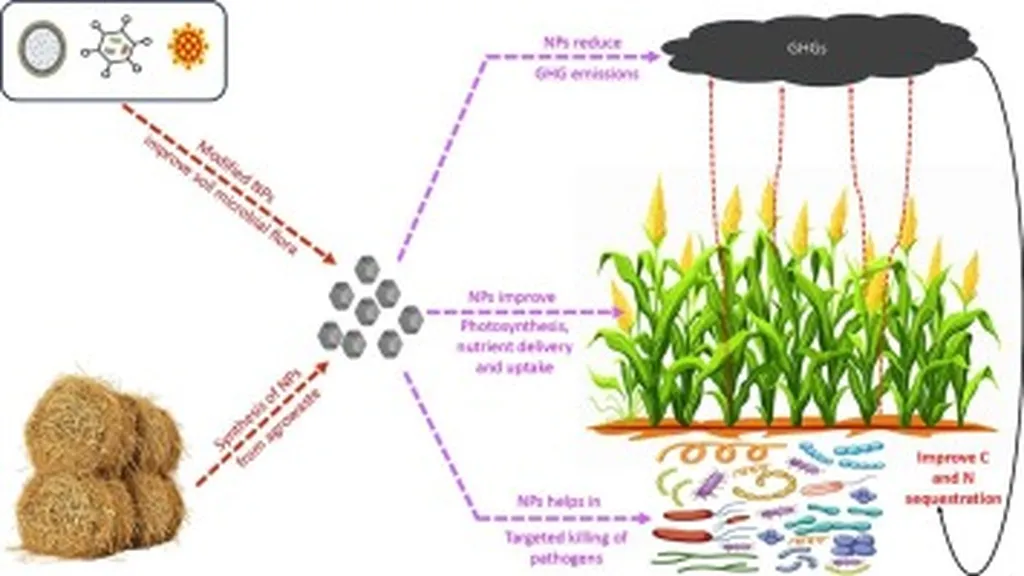
In the quest to mitigate global warming, accurate detection and management of greenhouse gas (GHG) emissions from agricultural practices have become increasingly crucial. A recent study published in *Engineering* sheds light on the performance of various sensing materials and mechanisms, offering promising avenues for enhancing the efficiency of GHG detection in agriculture.
The study, led by Mostafa Rastgou from the Department of Biosystems Engineering at Zhejiang University, conducted an extensive literature review of 95 studies to compare the performance of different sensing materials for detecting methane (CH4), nitrous oxide (N2O), and carbon dioxide (CO2). The findings reveal that certain nanomaterials outperform conventional options, potentially revolutionizing how farmers and agritech companies monitor and manage emissions.
Palladium-tin dioxide (Pd-SnO2) nanoparticles, indium oxide (In2O3) nanowires, and gold-lanthanum oxide-doped tin dioxide (Au-La2O3/SnO2) nanofibers emerged as the top performers for detecting CH4, N2O, and CO2, respectively. These materials demonstrated superior sensitivity, response ratio, response time, and recovery time compared to traditional sensing materials. “Nanoporous structures, nanowires, and nanofibers have a larger specific surface area, which allows for faster response and recovery times,” Rastgou explained. This enhanced performance could translate into more efficient and accurate monitoring systems for agricultural emissions, ultimately supporting sustainable farming practices.
The study also highlighted the effectiveness of ternary hybrid structures in CO2 gas detection, outperforming double hybrid structures. However, for CH4 and N2O detection, the double hybrid structure proved more effective. This nuanced understanding could guide future research and development in sensor technology, tailoring materials to specific GHG detection needs.
The commercial implications for the agriculture sector are significant. With more precise and reliable sensors, farmers and agritech companies can better track and reduce their carbon footprint, comply with regulatory standards, and adopt more sustainable practices. “Improved sensor technology can empower farmers to make data-driven decisions, optimizing their operations for both productivity and environmental stewardship,” Rastgou noted.
The research also underscores the need for continued innovation in sensing materials and mechanisms. Rastgou suggested that future studies should focus on optimizing the design and composition of sensing materials to enhance their performance further. Additionally, integrating advanced data analytics and machine learning could amplify the impact of these sensors, providing real-time insights and predictive capabilities.
As the agriculture sector grapples with the challenges of climate change and sustainability, this research offers a beacon of hope. By leveraging cutting-edge sensing technologies, the industry can move towards more precise, efficient, and environmentally friendly practices. The findings from this study not only advance our understanding of GHG detection but also pave the way for a greener future in agriculture.