
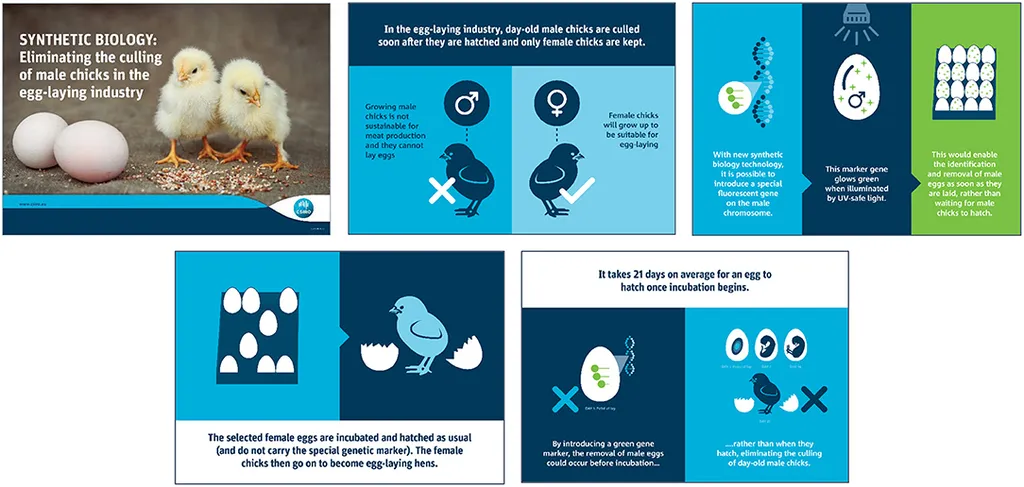
In a significant stride towards improving animal welfare and addressing ethical concerns in the poultry industry, a recent study published in the *Journal of Applied Poultry Research* sheds light on the contentious practice of day-old chick culling. The research, led by Josefine Stuff from the Precision Livestock Farming division at Osnabrueck University of Applied Sciences, delves into the complexities surrounding the banning of this practice and explores feasible alternatives.
Each year, billions of day-old male chicks are culled in the egg industry due to their low market value. This practice has sparked widespread public outcry, prompting several countries to implement bans and push for changes in animal welfare legislation. The study highlights two primary alternatives: the use of dual-purpose chickens, which can be raised for both egg and meat production, and the development of in-ovo sex determination technologies. These technologies aim to identify and cull male embryos early in the incubation process, before they can potentially experience pain.
However, the temporal onset of pain perception in chick embryos remains a critical unknown. “Neither the depiction of nociceptive pathways nor an EEG, which includes signals of general muscle contraction, provide definitive proof of the perception of pain,” Stuff explains. The study underscores the need for further research to understand the development of pain perception in chick embryos, a knowledge gap that is crucial for shaping ethical frameworks and informing policy decisions.
The commercial implications of these findings are substantial. The poultry industry faces significant pressure to adopt more humane practices while maintaining economic viability. Dual-purpose chickens offer a straightforward solution, but their adoption requires a shift in breeding practices and market strategies. In-ovo sex determination, on the other hand, presents a technological challenge that demands investment in research and development.
As the industry grapples with these changes, the study calls for a collaborative effort among policymakers, researchers, and industry stakeholders. “More knowledge about the development of pain perception in chick embryos is key to the ethical framework that should underpin policy decisions,” Stuff emphasizes. This research not only highlights the ethical dimensions of day-old chick culling but also paves the way for innovative solutions that balance animal welfare with commercial interests.
The findings published in the *Journal of Applied Poultry Research* provide a comprehensive review of existing literature on in-ovo pain research, set against the backdrop of country-specific discussions and culling alternatives. As the industry moves towards more ethical practices, this study serves as a crucial guide for future developments in poultry farming and animal welfare.