
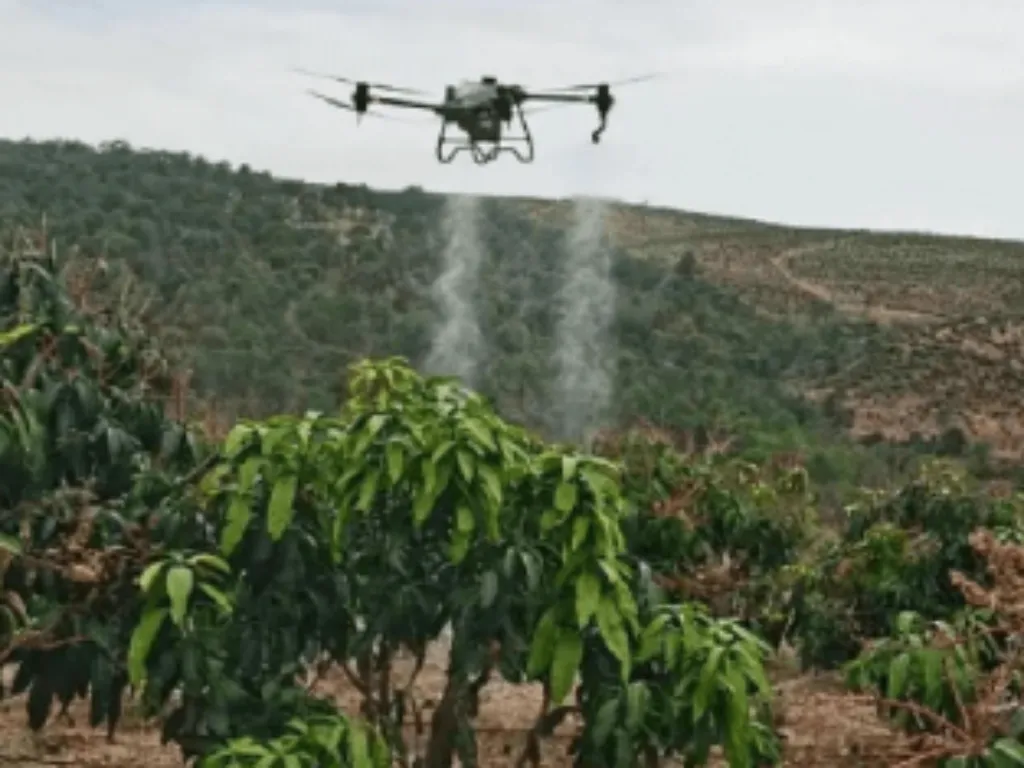
In the heart of tropical agriculture, a silent revolution is brewing, one that promises to safeguard the beloved mango (Mangifera indica L.) from the escalating threats of diseases like anthracnose, bacterial canker, and powdery mildew. As climate change disrupts traditional growing patterns, innovative technologies are stepping in to transform disease management and surveillance in mango cultivation.
A recent study published in *Phytopathogenomics and Disease Control* sheds light on the cutting-edge approaches that are set to redefine the future of mango farming. The research, led by Umer Farooq, explores how the integration of unmanned aerial vehicles (UAVs), remote sensing, the Internet of Things (IoT), Artificial Intelligence (AI), and Machine Learning (ML) can create a robust, climate-resilient framework for mango cultivation.
“Traditional practices are no longer sufficient,” Farooq asserts. “Pathogens are evolving rapidly due to climate change, unpredictable rains, and extended rainy seasons. We need innovative, science-based solutions to stay ahead of these threats.”
The study highlights the potential of UAVs and remote sensing technologies to conduct non-invasive, large-area health assessments of mango plants. These technologies enable farmers to monitor their crops in real-time, identifying diseases at their earliest stages and applying targeted treatments. This precision not only improves yield but also reduces the environmental impact of agriculture by minimizing the use of pesticides.
Moreover, the integration of IoT provides real-time microenvironment monitoring, allowing farmers to make data-driven decisions. “By understanding the microenvironment, we can better predict disease outbreaks and take proactive measures,” explains Farooq.
AI and ML technologies are also playing a pivotal role in predictive analytics, automated diagnostics, and metagenomics. These tools enable researchers to study the microbiomes and pathogens of diseases in unprecedented detail, uncovering the roots of diseases and developing more effective treatments.
The commercial implications of these technologies are vast. Precision agriculture and digital farming techniques can significantly enhance the productivity and profitability of mango cultivation. By adopting these innovations, farmers can reduce losses due to diseases, improve the quality of their produce, and meet the growing demand for sustainable, high-quality mangoes.
However, the adoption of these technologies is not without challenges. High costs, lack of technical knowledge, and gaps in policy, particularly for resource-poor farmers, pose significant barriers. “We need to address these challenges to ensure that these technologies are accessible to all farmers,” Farooq emphasizes.
The integration of these technologies will be critical for the development of climate-resilient systems for growing mangoes, helping with food security and the sustainable future of agriculture. As the agriculture sector continues to evolve, the insights from this research will shape future developments, paving the way for a more resilient and productive mango industry.
With the combined efforts of researchers, policymakers, and farmers, the future of mango cultivation looks promising. The integration of these innovative technologies will not only safeguard the beloved fruit but also ensure the sustainability and profitability of the agriculture sector.