
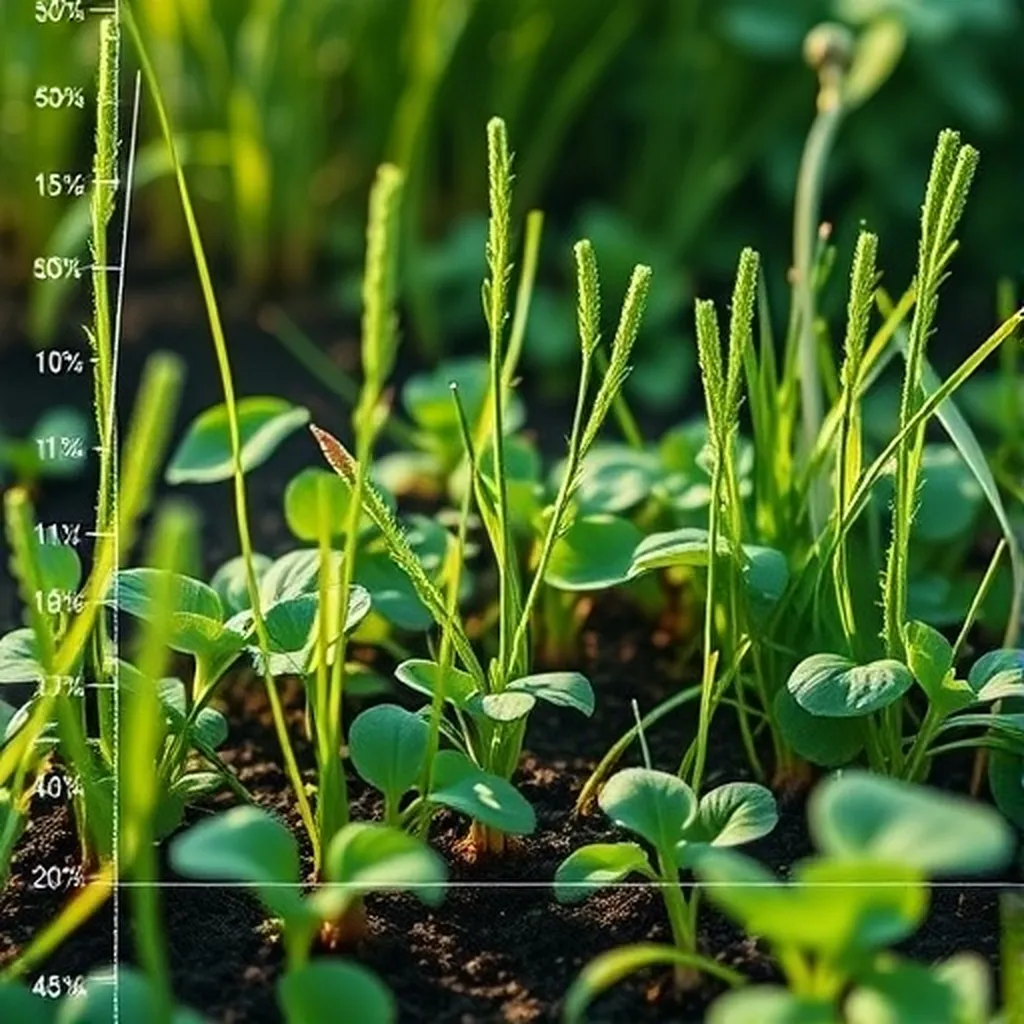
In the quest to make agriculture more precise and sustainable, researchers have turned to artificial intelligence to tackle a persistent challenge: accurately identifying weed seedlings at their earliest stages. A recent study published in *Scientific Reports* introduces a novel approach that could revolutionize weed management and reduce reliance on pesticides.
The study, led by Hans-Olivier Fontaine from the Department of Applied Geomatics at Université de Sherbrooke, presents the Weed Phenological Dataset (WPD), a unique collection of annotated images capturing the early growth stages of weeds. This dataset is paired with a new deep learning taxonomic loss function designed to enhance few-shot learning—a technique where models are trained with limited data.
“Our goal was to improve the classification of weed seedlings by leveraging the hierarchical structure of plant taxonomy,” Fontaine explained. “By introducing dynamic margins during the computation, we aimed to achieve better clustering and identification of weeds at their earliest growth stages.”
The research evaluated the effectiveness of this taxonomic loss function using the ResNet-50 architecture across various plant image datasets. The results were promising: the taxonomic approach outperformed triplet loss in clustering accuracy, as measured by Silhouette scores, when trained with just 100 images per class. This improvement translates to more accurate identification of weed seedlings, a critical step in precision agriculture.
While the new taxonomic loss did not consistently improve classification results across all deep learning model architectures, it opens new avenues for research in agricultural robotics. The potential commercial impacts for the agriculture sector are significant. Accurate weed identification at early growth stages can lead to targeted herbicide application, reducing chemical use and environmental impact. It also paves the way for automated weed management systems, which could enhance efficiency and productivity in farming.
“This research is a step forward in the robotization of agriculture,” Fontaine noted. “By improving the accuracy of weed identification, we can develop more intelligent and sustainable farming practices.”
The study’s findings highlight the importance of integrating taxonomic knowledge into machine learning models. As agriculture continues to evolve, the fusion of biological insights with advanced technologies will be key to addressing the challenges of modern farming. The research not only advances the field of precision agriculture but also sets the stage for future innovations in agricultural robotics and sustainable farming practices.