
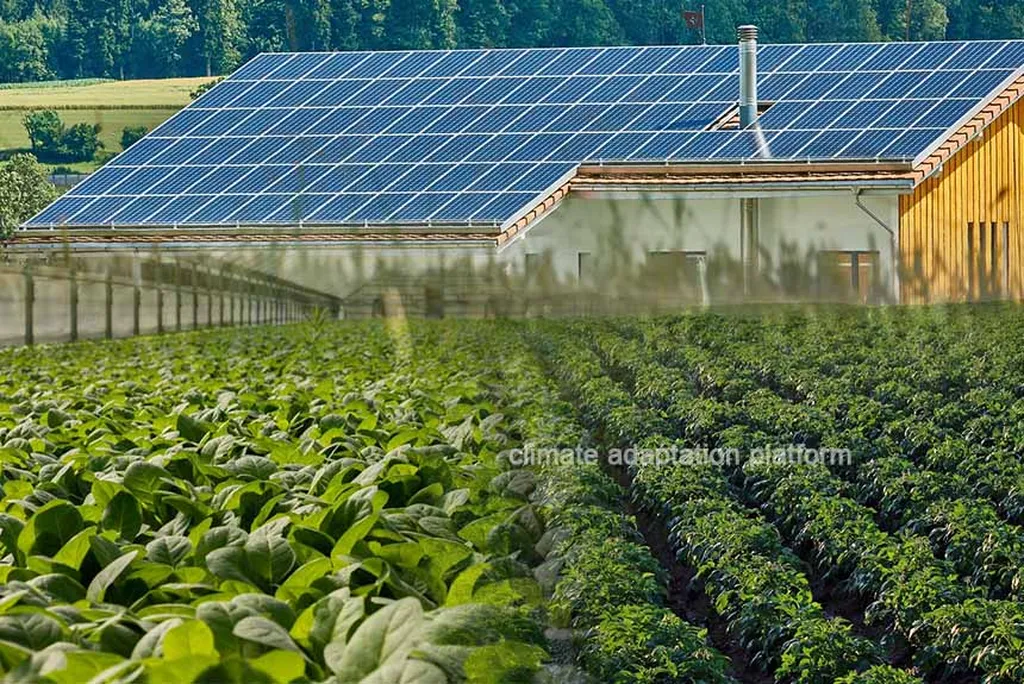
In a groundbreaking development for the agriculture and renewable energy sectors, researchers have compiled the first comprehensive vectorized dataset of agrivoltaics projects in China, offering a detailed map of how solar panels are being integrated with farming practices across the country. Published in the journal *Scientific Data*, this dataset provides a robust foundation for understanding the distribution and types of agrivoltaics systems, potentially reshaping how farmers and policymakers approach sustainable agriculture.
Agrivoltaics, a farming method that combines solar energy production with agricultural activities, has gained traction as a dual-use system that enhances food production while generating clean energy. China, a leader in this innovative approach, has seen a significant rise in agrivoltaics projects over the past decade. However, until now, there has been no comprehensive dataset to verify the distribution of these projects nationwide.
The study, led by Xueyan Zhang from the Key Laboratory of Land Surface Pattern and Simulation at the Institute of Geographic Sciences and Natural Resources Research, Chinese Academy of Sciences, identified 1,678 agrivoltaics projects in China by 2022, with a total installation capacity of 134.55 GW. The dataset, which boasts an overall accuracy of 89.71%, reveals that China launched its first commercial agrivoltaics project in 2010, with the number of new projects peaking at 347 in 2017. Since then, the annual number of new projects has consistently remained above 140.
“The dataset not only provides a clear picture of the current state of agrivoltaics in China but also offers valuable insights into the types of projects that are most prevalent,” Zhang explained. “Crop-based, fishery-based, and greenhouse-based agrivoltaics are the most common, indicating a diverse range of applications that can be tailored to different agricultural needs.”
The implications for the agriculture sector are profound. By integrating solar panels with farming, agrivoltaics can increase land use efficiency, reduce water evaporation, and create a microclimate that benefits certain crops. This dual-use approach can also provide farmers with an additional revenue stream from solar energy production, enhancing the economic viability of their operations.
“The potential for agrivoltaics to transform agriculture is immense,” said a spokesperson for a leading agritech company. “This dataset will be instrumental in guiding future investments and policy decisions, ensuring that agrivoltaics projects are implemented in a way that maximizes benefits for both farmers and the environment.”
As the agriculture sector continues to grapple with the challenges of climate change and the need for sustainable practices, the insights provided by this dataset could pave the way for innovative solutions that support both food security and renewable energy goals. With the data now available, researchers, policymakers, and industry stakeholders can collaborate to develop strategies that harness the full potential of agrivoltaics, driving forward the sustainable development of agriculture in China and beyond.