
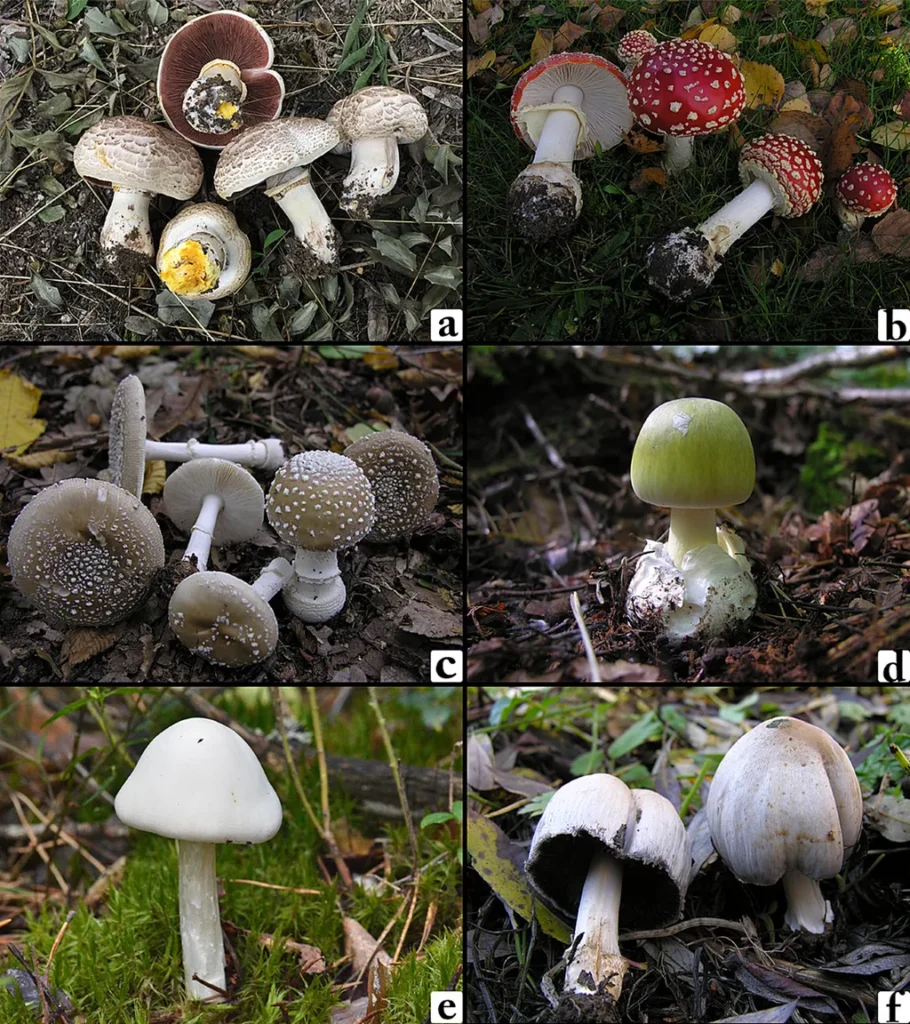
In a significant stride towards enhancing food safety and agricultural efficiency, researchers have developed an advanced deep learning framework capable of accurately classifying wild poisonous mushroom species. This innovation, published in *BMC Biotechnology*, leverages cutting-edge computer vision and ensemble modeling techniques to address a critical challenge in fungal taxonomy and food safety.
The study, led by Aras Fahrettin Korkmaz from the Faculty of Health Sciences at İstanbul Kültür University, introduces an explainable deep learning framework that not only achieves high accuracy in mushroom classification but also provides insights into the decision-making process of the model. This transparency is crucial for building trust in AI-driven solutions within the agricultural sector.
The research utilized a balanced dataset of 3600 high-resolution images representing 18 species of wild mushrooms. To enhance the robustness of the model, the dataset was augmented using techniques such as rotation, flipping, brightness adjustments, and noise injection, effectively doubling the training samples to 7200. Four pretrained convolutional neural network (CNN) architectures—DenseNet121, EfficientNet-B3, MobileNet-V3, and ShuffleNet-V2—were fine-tuned via transfer learning. Among these, EfficientNet-B3 achieved the highest individual accuracy of 93.0%.
However, the real breakthrough came with the implementation of ensemble strategies. By combining the strengths of the four models, the researchers achieved a remarkable accuracy of 95.67%, along with a Matthews correlation coefficient (MCC) of 95.42% and a log loss of 0.175. “The ensemble approach not only improved accuracy but also provided a more reliable and interpretable model,” Korkmaz explained. “This is crucial for applications where misidentification can have serious consequences.”
The integration of explainable AI methods, such as Grad-CAM and Grad-CAM++, further enhanced the model’s reliability by highlighting biologically meaningful regions that influenced the classification decisions. This transparency is particularly valuable in the agricultural sector, where the identification of toxic species can prevent poisoning incidents and ensure food safety.
The implications of this research extend beyond immediate food safety concerns. By providing a robust framework for fungal taxonomy, the study paves the way for future advancements in ecological, agricultural, and biotechnological research. “This framework can be adapted to other areas of fungal identification, supporting everything from crop protection to biodiversity studies,” Korkmaz noted.
For the agriculture sector, the potential commercial impacts are substantial. Accurate and reliable identification of poisonous mushrooms can streamline supply chain processes, reduce contamination risks, and enhance consumer trust in agricultural products. As AI continues to evolve, the integration of such models into agricultural practices could revolutionize food safety protocols and improve overall efficiency.
This research not only highlights the potential of deep learning in addressing critical challenges but also underscores the importance of explainable AI in building trust and reliability. As the agricultural sector increasingly adopts AI-driven solutions, the framework developed by Korkmaz and his team could serve as a blueprint for future innovations, shaping the way we approach food safety and fungal taxonomy.