
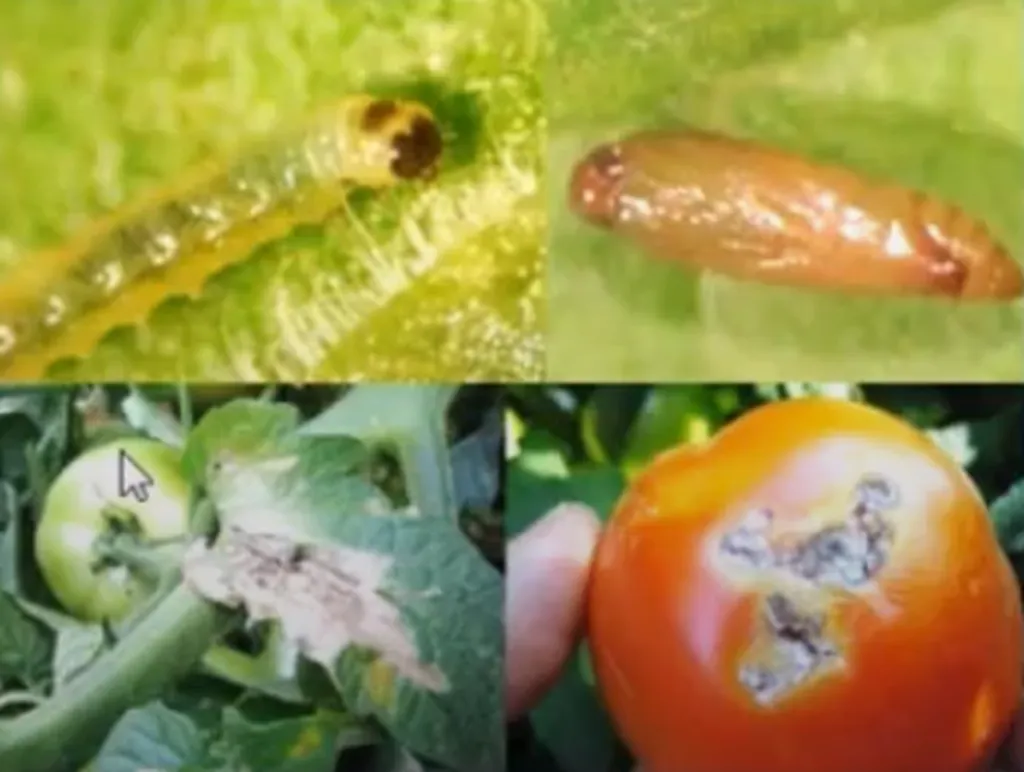
In the relentless battle against the devastating tomato leafminer, Phthorimaea absoluta, a global threat to Solanaceae crops, researchers are making strides in integrated pest management (IPM) strategies. A recent review published in *Discover Agriculture* consolidates the latest advancements and prospects in combating this pervasive pest, offering hope for farmers worldwide.
Phthorimaea absoluta, present in over 90 countries, has wreaked havoc on crops like tomatoes, potatoes, and eggplants, causing significant economic losses. Despite the urgency, an effective IPM program for this pest has remained elusive. The review, led by Lindiwe Mahlangu from the Department of Agriculture and Animal Health at the University of South Africa, highlights the progress and challenges in chemical, biological, and botanical controls, as well as emerging molecular and nanotechnological interventions.
“While chemical pesticides have been the go-to solution, their overuse has led to resistance and environmental concerns,” Mahlangu explains. “Alternative methods, such as biological controls and botanical pesticides, show promise but require more field validation to ensure their efficacy and scalability.”
The review underscores the potential of innovative approaches like RNA interference (RNAi), metabolomics, and the development of resistant cultivars. RNAi, for instance, offers a targeted method to disrupt the pest’s genetic machinery, reducing its ability to cause damage. Metabolomics, on the other hand, provides a comprehensive analysis of the pest’s metabolic processes, paving the way for more effective control strategies.
However, the implementation of these advanced techniques is hindered by several factors, including the need for farmer education and policy support. “Efforts to educate farmers about the importance of IPM programs need further attention,” Mahlangu emphasizes. “Policy support is crucial for promoting sustainable practices and ensuring the widespread adoption of these innovative methods.”
The commercial impact of Phthorimaea absoluta on the agriculture sector is substantial. The pest’s ability to quickly adapt and resist conventional pesticides has led to significant crop losses, affecting both small-scale farmers and large-scale agricultural operations. The development and dissemination of comprehensive IPM solutions could mitigate these losses, enhancing food security and economic stability.
Looking ahead, the review calls for multidisciplinary efforts to create and disseminate effective IPM solutions. The integration of chemical, biological, and technological approaches, coupled with farmer education and policy support, could revolutionize pest management practices. As Mahlangu notes, “The future of IPM lies in collaboration and innovation. By combining our efforts, we can develop sustainable solutions that protect our crops and ensure a stable food supply.”
This research not only highlights the current advancements in IPM but also sets the stage for future developments in the field. By addressing the challenges and leveraging the potential of emerging technologies, the agricultural sector can better combat Phthorimaea absoluta and other pests, ensuring a more sustainable and resilient future for global agriculture.