
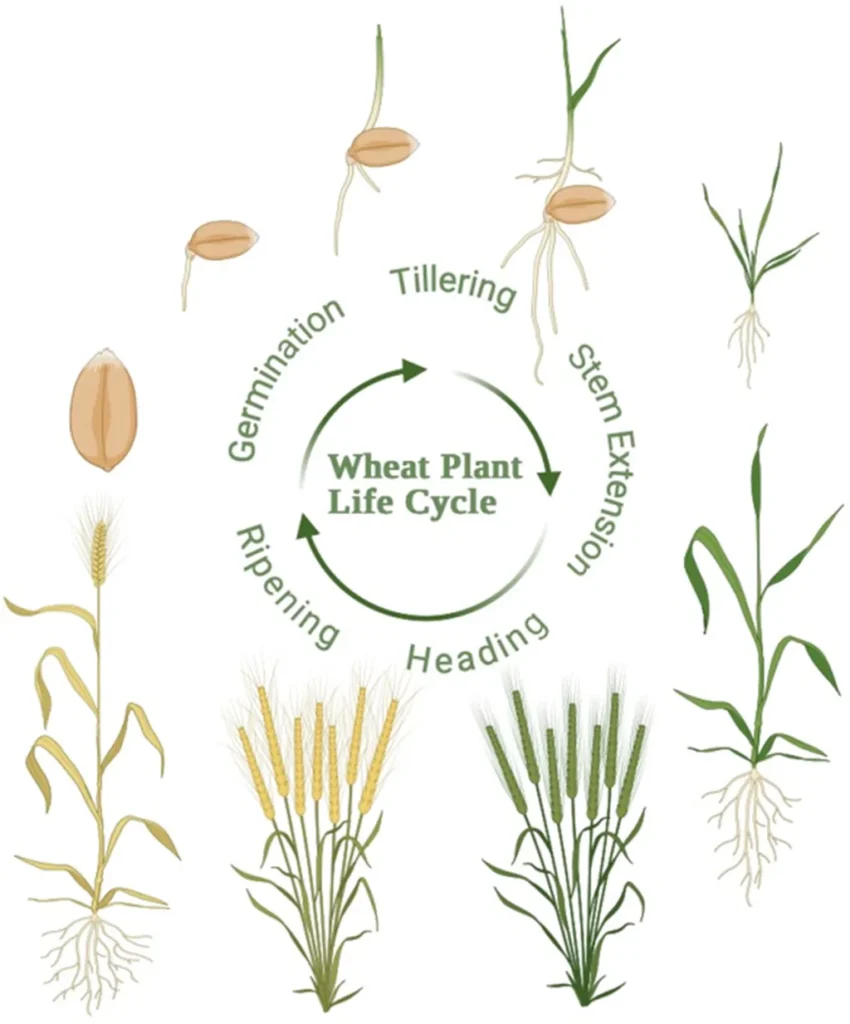
In the ever-evolving landscape of precision agriculture, a groundbreaking study published in *Scientific Reports* offers a promising solution to one of the sector’s most persistent challenges: early and accurate disease detection in wheat crops. Led by Aqsa Mahmood from the Department of Computer Science & IT at Government Sadiq College Women University, the research introduces a hybrid deep learning framework that leverages UAV (Unmanned Aerial Vehicle) imagery to identify multiple wheat diseases with remarkable accuracy.
Wheat, a staple cereal crop that sustains nearly half of the global population, is highly vulnerable to biotic stresses such as pathogens and pests, as well as adverse environmental conditions. These factors significantly impact yield and quality, posing critical threats to food security and economic resilience. Traditional disease detection methods, often labor-intensive and subjective, fall short in the face of these challenges. The proposed Multi-Disease Detection Framework for Wheat Diseases (MDDM-WD) aims to bridge this gap by offering an automated, accurate, and real-time monitoring system.
The MDDM-WD framework employs a pre-trained VGG-16 convolutional neural network for deep feature extraction via a transfer learning approach. These features are then classified using a suite of machine learning algorithms, including Support Vector Machine (SVM), Random Forest (RF), Decision Tree (DT), XGBoost, and Bernoulli Naïve Bayes (BNB). The model was trained and evaluated on a custom-curated dataset containing images of wheat diseases such as stripe rust, powdery mildew, scab (Fusarium head blight), and yellow dwarf.
The results are impressive. The SVM-based variant of the model achieved the highest performance, yielding 96% precision, 95.7% recall, 96% F1-score, and 97% accuracy. “The classification performance is enhanced significantly through our hybrid approach,” Mahmood explains, highlighting the potential of the framework to revolutionize disease detection in wheat crops.
The commercial implications of this research are substantial. By enabling early and accurate disease detection, the MDDM-WD model can support informed decision-making for farmers, agronomists, and policymakers. This, in turn, can lead to more targeted and efficient use of resources, reducing the economic impact of disease outbreaks and promoting sustainable agriculture.
Moreover, the scalability of the framework makes it a viable solution for large-scale agricultural operations. As Mahmood notes, “The proposed two-phase fine-tuned system demonstrates its effectiveness and efficiency in detecting multiple wheat diseases.” This could pave the way for widespread adoption of similar technologies in the agriculture sector, ultimately enhancing food security and economic resilience.
Looking ahead, this research could shape future developments in precision agriculture by inspiring similar applications of deep learning and machine learning in other areas of crop management. As the technology continues to evolve, we can expect to see even more sophisticated and efficient systems for monitoring and managing agricultural crops, further advancing the field of precision agriculture.
In conclusion, the MDDM-WD framework represents a significant step forward in the fight against wheat diseases. By leveraging the power of deep learning and machine learning, this innovative approach offers a resource-efficient and scalable solution for early disease detection, supporting the agriculture sector in its quest for sustainability and productivity.