
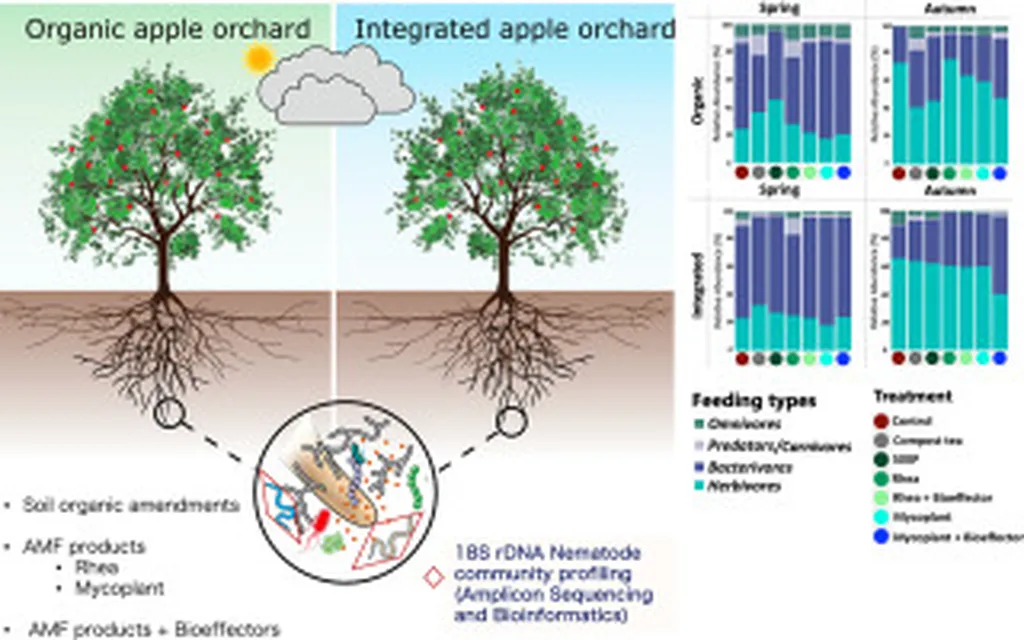
In the heart of Iran’s Damavand orchards, a silent battle is unfolding beneath our feet, one that could reshape the future of organic and conventional fruit production. A recent study published in ‘پژوهشهای حفاظت گیاهان ایران’ has shed light on the intricate world of plant parasitic nematodes, revealing how different farming systems influence their abundance and diversity.
The research, led by Z. Akbari from the Department of Agroecology at Shahid Beheshti University, compared organic and conventional apple and peach orchards with pasture systems. The findings are compelling, with significant implications for the agriculture sector.
Nematodes, microscopic worms that inhabit soil ecosystems, play a crucial role in nutrient cycling and soil health. However, some species are parasitic, feeding on plant roots and causing damage to crops. The study identified 20 genera of plant-parasitic nematodes, with their frequencies varying based on the type of cropping system and crop.
“Organic systems showed a higher abundance and diversity of nematodes compared to conventional and pasture systems,” Akbari explained. This is a double-edged sword for organic farmers. While organic systems support greater biodiversity, they also face higher pest pressure from nematodes.
The study found that the organic peach system had the highest nematode abundance, while the conventional apple system was closest to pasture in terms of nematode numbers. This suggests that long-term conventional farming, with its tillage and chemical inputs, may reduce nematode populations but also degrade soil health.
The type of host plant also significantly affected nematode frequency and diversity. Apple orchards showed better resistance to nematode infestation compared to peach orchards, a finding that could influence growers’ crop choices in the future.
The study also highlighted the impact of soil factors on nematode populations. Microbial respiration, electrical conductivity, organic carbon, potassium, phosphorus, and soil texture all played significant roles in shaping nematode communities.
So, what does this mean for the future of agriculture? The research underscores the need for integrated nematode management strategies, particularly in organic systems where management options are more limited. It also calls for a reevaluation of crop choices, with apple orchards showing greater resilience to nematode infestation.
As the demand and price of organic products continue to rise, these findings could guide farmers in making informed decisions about their farming practices. By understanding the complex interactions between farming systems, host plants, and nematode communities, we can strive towards more sustainable and productive horticultural practices.
In the words of Akbari, “Soil nematodes are useful indicators to evaluate the intensity of management and sustainable management of horticultural ecosystems on soil ecosystem performance.” This research is a step towards harnessing this potential, shaping the future of agriculture, one worm at a time.