
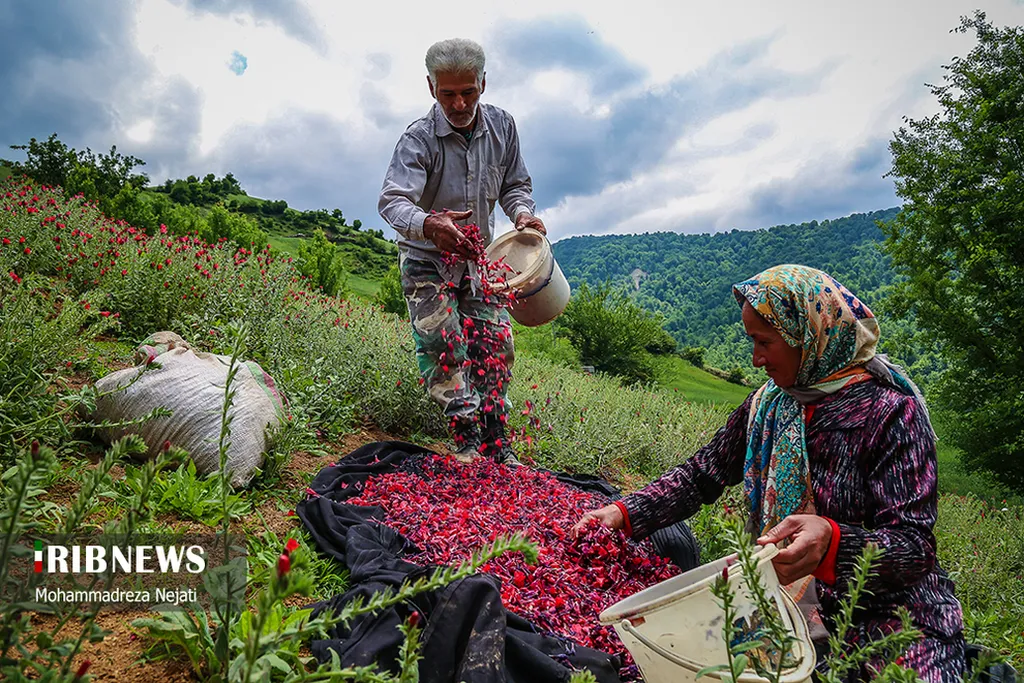
In the heart of Iran’s Azadshahr County, a silent battle is being waged in the fields of Iranian borage (Echium amoenum Fisch & Mey.), a plant cherished for its medicinal properties and economic value. A recent study published in ‘پژوهشهای حفاظت گیاهان ایران’ has shed light on the weed species invading these fields, offering crucial insights that could revolutionize weed management strategies and boost agricultural productivity.
The research, led by Valiollah Mirdar from the Department of Agronomy at Sari Agricultural Sciences and Natural Resources University, identified 19 weed species belonging to 12 plant families in the borage fields. The most prevalent families were Poaceae, Asteraceae, and Polygonaceae, with Cynodon dactylon, Convolvulus arvensis, and Chenopodium album emerging as the most dense and dominant weeds.
“Understanding the weed flora and community structure is the first step in developing effective weed management strategies,” Mirdar explained. The study revealed that 68% of the weed species were annual, while the remaining 32% were perennial. Moreover, dicotyledonous species outnumbered monocotyledonous ones, with a ratio of 2:1.
The commercial implications of this research are substantial. By identifying the most problematic weed species and their distribution, farmers can adopt targeted management practices, reducing weed density and preventing the spread of weeds to other areas. This precision approach can lead to increased crop yield and quality, directly impacting the economic viability of borage cultivation.
The study also highlighted the potential of Geographic Information System (GIS) technology in precision agriculture. By mapping the distribution of weeds, farmers can make more informed decisions about weed control, optimizing resource use and enhancing agricultural sustainability.
The research underscores the importance of integrated weed management, combining different methods to tackle the weed problem effectively. “By studying the weather, climate, and soil conditions, as well as common management practices, we can understand the reasons behind the presence and density changes of some species in certain regions,” Mirdar noted. This understanding can pave the way for tailored weed control solutions, further boosting agricultural productivity.
As the agricultural sector grapples with the challenges posed by climate change and the need for sustainable practices, this research offers a beacon of hope. By providing a comprehensive overview of the weed flora in Iranian borage fields, it equips farmers with the knowledge they need to make informed decisions, ultimately shaping the future of agriculture in the region.