
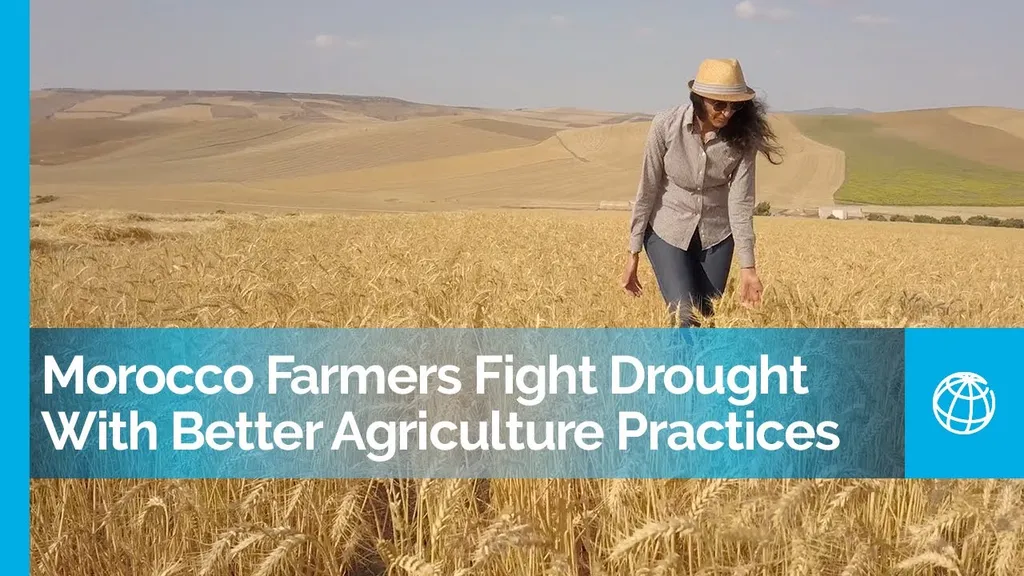
In the sun-scorched expanses of Morocco’s Mediterranean region, farmers have long turned to groundwater to quench the thirst of their crops. But as the land’s resources dwindle and soils degrade, a pressing question emerges: how can agriculture adapt to the challenges of water scarcity and poor water quality? A recent study published in *Applied Water Science* offers some sobering insights and practical solutions for the Triffa plain, a critical agricultural hub.
The research, led by Ayoub Lazaar from the Center of Excellence for Soil and Fertilizer Research in Africa (CESFRA) at Mohammed VI Polytechnic University (UM6P), delves into the hydrogeochemistry of the region’s groundwater. The findings paint a stark picture: the water is dominated by chloride and sodium ions, with most samples classified as very hard and unsuitable for irrigation. “The salinity and ionic composition of groundwater in the Triffa plain are primarily influenced by evaporite dissolution minerals, carbonate weathering, and ion exchange processes,” Lazaar explains. This means that farmers are grappling with water that can limit crop choices, reduce yields, and degrade soil quality over time.
The study employs a comprehensive approach, combining the Irrigation Water Quality Index (IWQI) with traditional indices and statistical analyses to evaluate the suitability of groundwater for irrigation. The results are clear: 88.88% of shallow and deep borehole groundwater falls within high to severe restriction use categories. This is a significant challenge for the agriculture sector, which relies heavily on irrigation to sustain productivity.
The spatial analysis reveals a troubling trend: water quality deteriorates from the southern and southeastern zones to the central and northern regions of the plain. This geographic variation underscores the need for localized solutions. “To address salinity and sodicity risks, especially in Mollisols and Ultisols, this study advises soil-specific management,” Lazaar notes. This includes periodic leaching, frequent irrigation, gypsum amendments, low-volume irrigation, and the use of polyacrylamides (PAMs) to mitigate salinity effects and preserve soil structure.
The commercial impacts of these findings are substantial. Farmers in the region may need to invest in new technologies and practices to adapt to the poor water quality. This could include adopting more efficient irrigation systems, such as drip irrigation, and implementing soil amendments to improve water retention and reduce salinity. Additionally, the study’s approach offers a promising framework for assessing water irrigation quality in semi-arid areas, which could be applied to other regions facing similar challenges.
The research also highlights the importance of sustainable water management practices. As groundwater depletion continues to be a pressing issue, it is crucial for farmers and policymakers to work together to develop long-term solutions. This could include investing in water recycling and reuse technologies, promoting water conservation practices, and exploring alternative water sources, such as desalination.
In the broader context, this study serves as a wake-up call for the agriculture sector. As climate change and population growth put increasing pressure on water resources, it is essential to adopt innovative and sustainable practices to ensure food security and environmental sustainability. The findings from the Triffa plain offer valuable insights and practical solutions that can be applied to other regions facing similar challenges.
As the agriculture sector grapples with the realities of water scarcity and poor water quality, research like this provides a roadmap for adaptation and resilience. By embracing innovative technologies and sustainable practices, farmers can overcome these challenges and secure a prosperous future for their communities and the environment.