
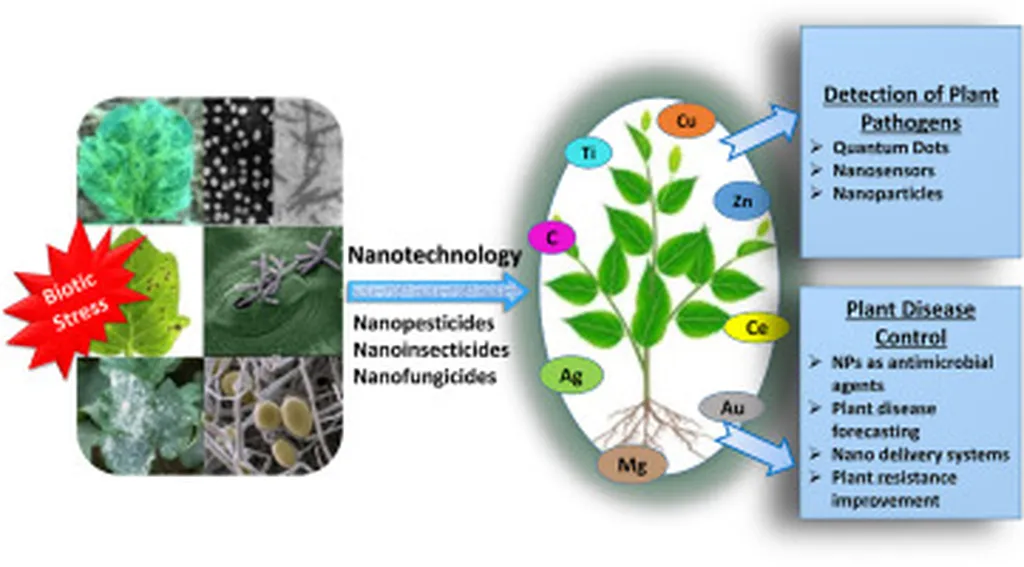
In the ever-evolving landscape of agricultural technology, a groundbreaking study published in *Discover Nano* is shedding light on the transformative potential of nanoparticles (NPs) in plant disease identification and control. Led by Chimdi Mang Kalu from the Department of Environmental Science at the University of South Africa, this research delves into the multifaceted applications of NPs, offering a promising avenue for sustainable crop production.
Nanoparticles, with their unique properties, are emerging as a powerful tool in the fight against plant diseases. The study highlights their dual role as both a delivery system for fungicides and an enhancer of cell-to-cell interactions in plants. “The ease of use and versatility of nanoparticles make them an attractive option for disease control and identification in crop production,” explains Kalu. This versatility is not just theoretical; it has been demonstrated in practical applications. For instance, zinc oxide nanoparticles (ZnO-NPs) have shown a remarkable ability to reduce Fusarium wilt symptoms in tomatoes by 28.57% and provide 67.99% protection. Similarly, silver nanoparticles (Ag-NPs) have been effective in reducing bacterial leaf blight disease in rice by 49.2%.
The implications for the agriculture sector are substantial. With the global population expected to reach 9.7 billion by 2050, the demand for sustainable and efficient crop production methods is more pressing than ever. Nanotechnology offers a glimpse into a future where plant diseases can be identified and controlled with unprecedented precision. This could lead to significant reductions in crop losses, increased yields, and a more sustainable agricultural landscape.
However, the journey towards widespread adoption of NP-based solutions is not without its challenges. The study identifies several knowledge gaps that need to be addressed, including the timeliness of disease identification, the lack of standardized toxicity assessment protocols for NPs, and the paucity of information on NPs-microbiome-plant tri-interactions under field conditions. “Further study is required to develop a novel technique for real-time identification of plant disease and to accurately identify and quantify the appropriate NPs for specific plant diseases,” notes Kalu.
The integration of NPs biosensing with remote sensing or innovative agricultural tools is another area ripe for exploration. This could revolutionize the way farmers monitor and manage their crops, providing real-time data and insights that were previously unavailable. Additionally, understanding the impact of NPs accumulation on soil enzyme activity and nutrient cycling is crucial for ensuring the long-term sustainability of these technologies.
As the agriculture sector continues to evolve, the role of nanotechnology is set to become increasingly significant. The research published in *Discover Nano* offers a compelling glimpse into the future of plant disease control and identification, highlighting the potential of NPs to shape a more sustainable and productive agricultural landscape. With further research and development, these innovative technologies could become a cornerstone of modern farming practices, benefiting farmers and consumers alike.