
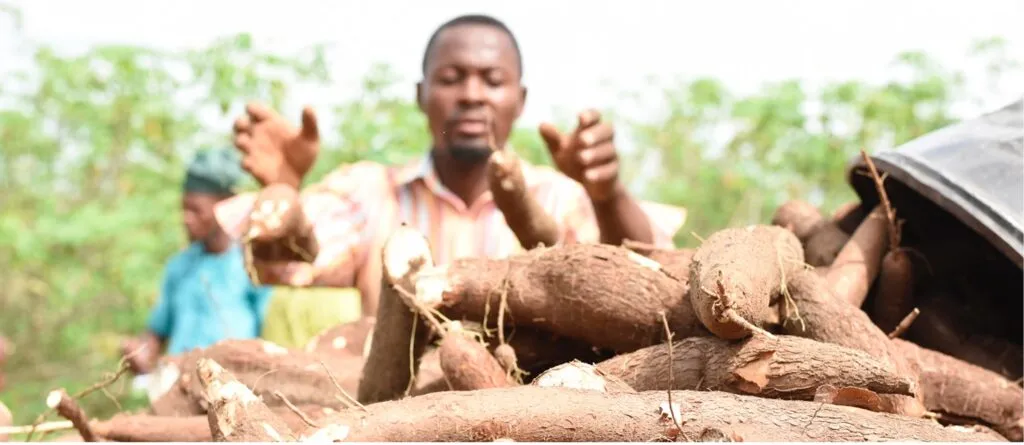
In the heart of Southeastern Nigeria, cassava farmers are grappling with the realities of climate change, seeking ways to adapt and thrive. A recent study published in the *Journal of Agricultural Extension* sheds light on the factors influencing the adoption of climate-smart agricultural practices (CSAP) among these farmers, offering insights that could reshape the future of cassava farming and the broader agriculture sector.
The study, led by Christopher Eze from the University of Agriculture and Environmental Sciences, Umuagwo Imo State, Nigeria, delves into the complexities of CSAP adoption. Using data from the Nigeria General Household Survey (GHS) Panel, Eze and his team applied descriptive statistics and a multivariate Probit model to analyze the determinants of CSAP adoption among cassava farmers.
The findings reveal a nuanced picture. The average cassava farmer in the region is 44 years old, with approximately nine years of schooling. Notably, about 85.45% of farmers have adopted at least one CSAP. The study identifies several key determinants of this adoption, including age, education, farm size, access to fertilizer subsidies, and credit.
“Age plays a significant role in the adoption of intercropping and the use of inorganic fertilizers,” Eze explains. “Education also influences the adoption of inorganic fertilizers and improved varieties, while farm size impacts the adoption of improved varieties and inorganic fertilizers.” Access to fertilizer subsidies and credit further enhances the adoption of intercropping and inorganic fertilizers.
These findings have profound implications for the agriculture sector. By understanding the factors that drive CSAP adoption, policymakers and agricultural extension services can tailor their interventions to boost cassava productivity and climate resilience. For instance, enhancing farmer education, improving access to agricultural inputs, and providing targeted training and subsidies can significantly impact smallholder farmers.
The study also highlights the need for effective CSAP combinations and addresses adoption barriers such as limited land and inadequate extension services. “Our findings underscore the importance of a holistic approach to promoting climate-smart agriculture,” Eze notes. “This includes not only providing access to inputs but also ensuring that farmers have the knowledge and support they need to implement these practices effectively.”
As the agriculture sector continues to evolve, the insights from this study could shape future developments in climate-smart agriculture. By focusing on the determinants of CSAP adoption, stakeholders can develop targeted strategies to enhance agricultural productivity and resilience in the face of climate change. The research published in the *Journal of Agricultural Extension* by Christopher Eze and his team offers a crucial step in this direction, providing a roadmap for fostering sustainable and productive cassava farming in Southeastern Nigeria and beyond.