
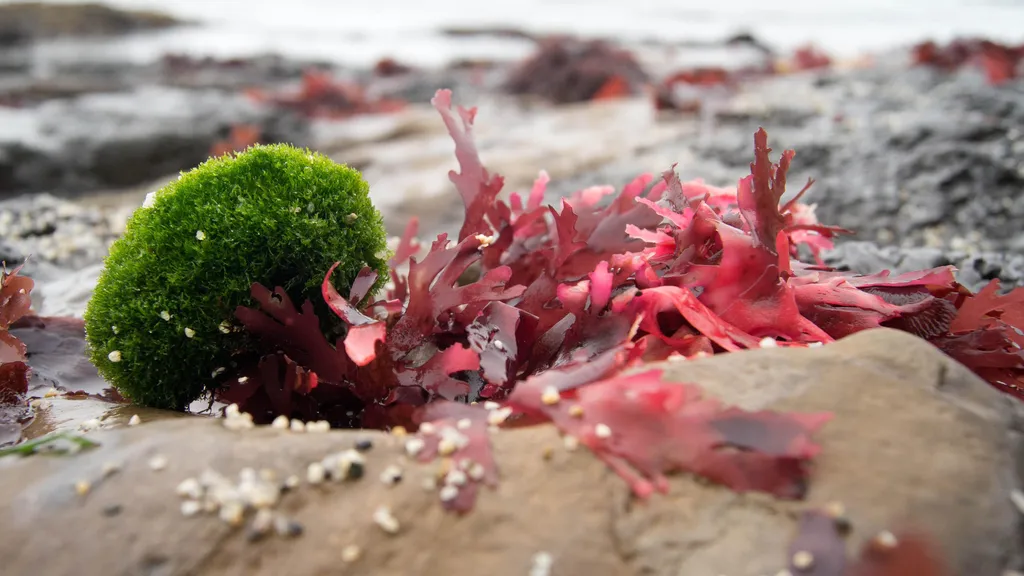
In the vast, undulating fields of the ocean, a humble red seaweed is making waves in the world of agriculture and food technology. Hydropuntia edulis, a species native to the coastal waters of Southeast Asia, is gaining attention for its potential to revolutionize industries through its unique polysaccharides. A recent mini-review published in PeerJ, led by Tracy Saptu from the Department of Crop Science at Universiti Putra Malaysia, Sarawak Campus, delves into the multifaceted applications of this marine marvel and its derivatives, particularly agar.
H. edulis stands out among its seaweed cousins due to its ease of cultivation and high concentration of sulfated polysaccharides, making it an exceptional source for agar production. Agar, a biopolymer composed of agarose and agaropectin, is renowned for its thickening, gelling, and stabilizing properties. “The pretreatments and extraction conditions play a pivotal role in determining the final gel strength and yield of agar,” Saptu explains. This critical insight opens doors to optimizing agar production processes, potentially leading to more efficient and cost-effective industrial applications.
The review highlights agar’s versatility in the food industry, where it serves as an ingredient, coating, and packaging material. But the applications don’t stop there. Agar’s interaction with non-agar biopolymers diversifies its utility, paving the way for innovations in various sectors. “By understanding these interactions, we can explore new avenues for agar, enhancing its value and expanding its use,” Saptu notes.
Beyond food, the bioactive derivatives of H. edulis hold promise for pharmaceuticals, agriculture, and aquaculture. In agriculture, these compounds could lead to more sustainable practices, from enhanced soil health to improved crop protection. The potential commercial impacts are substantial, with opportunities for new products and markets that cater to the growing demand for eco-friendly and effective agricultural solutions.
However, the journey is not without challenges. The review also addresses some limitations, such as the need for further research to fully harness the potential of H. edulis and its derivatives. Despite these hurdles, the detailed investigation aims to encourage increased cultivation of the species, supporting sustainable industries and fostering innovation.
As we look to the future, the research on H. edulis and agar derivatives offers a glimpse into a world where marine resources play a pivotal role in shaping agriculture and food technology. The findings could inspire new developments, from novel agricultural products to innovative packaging solutions, all rooted in the humble red seaweed. With continued research and investment, the potential of H. edulis and its derivatives is vast, promising a brighter, more sustainable future for industries and the environment alike.