
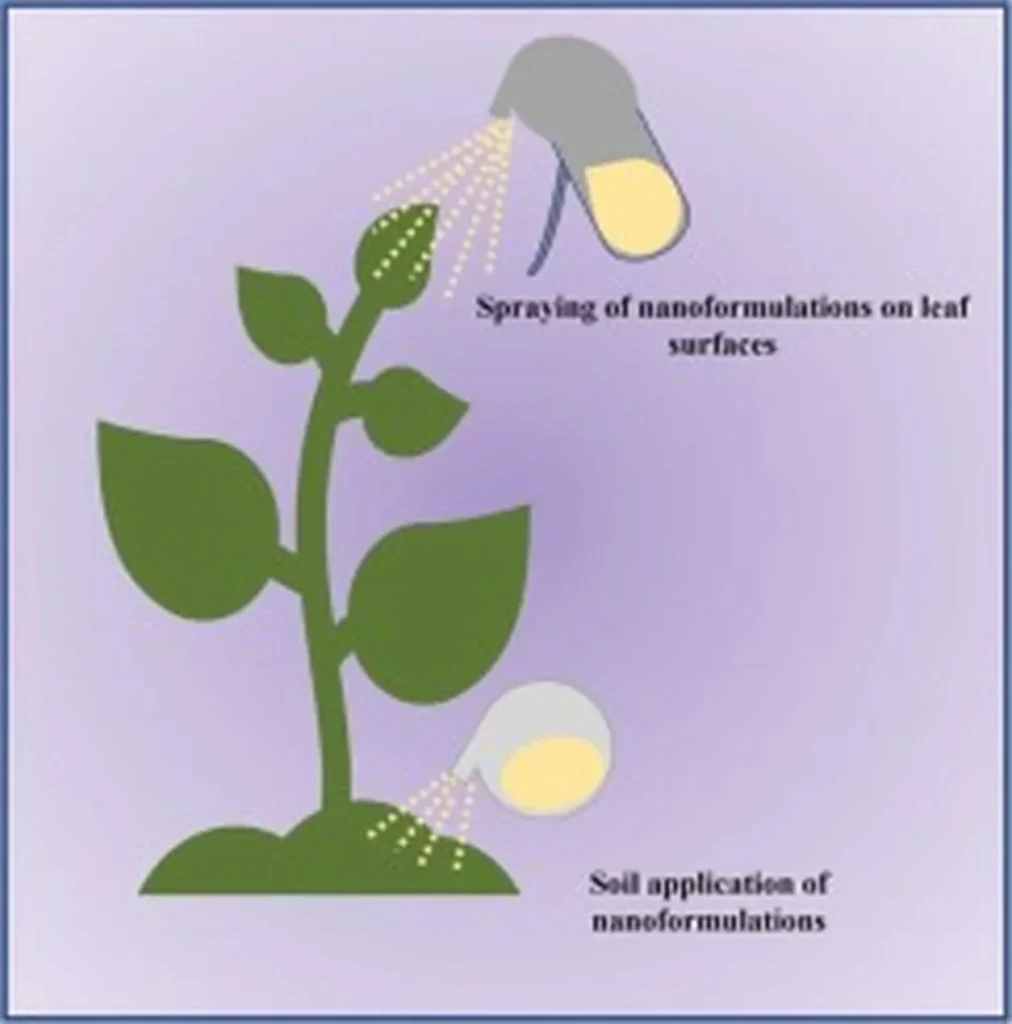
In a groundbreaking development that could revolutionize agricultural practices, researchers have engineered a novel nanomaterial that enhances photosynthesis and crop growth. The study, published in *Chemical and Biological Technologies in Agriculture*, introduces a multifunctional nano-platform that not only optimizes the light environment on leaf surfaces but also supplies essential nutrients, addressing critical constraints in crop productivity.
The research, led by Xie Yin from the College of Tobacco Science at Guizhou University, focuses on a layered double hydroxide (LDH) nanomaterial doped with europium (Eu3+) and intercalated with molybdate (MoO4 2−). This innovative material, referred to as MgAlEu-MoO4 2−-LDH, exhibits strong absorption in the ultraviolet region and efficiently converts this absorbed energy into red emissions at 610 nm and 706 nm. This spectral conversion optimizes the leaf-surface light environment, aligning it more closely with the absorption peaks of chlorophyll, thereby enhancing photosynthetic efficiency.
“Our findings demonstrate that MgAlEu-MoO4 2−-LDH significantly improves plant height, leaf area, net photosynthetic rate, and chlorophyll content in tobacco plants,” Yin explained. “Moreover, the nanomaterial effectively supplies magnesium (Mg) and molybdenum (Mo), which are often deficient in acidic soils, without causing any phytotoxicity.”
The study revealed that the treated plants showed marked increases in Mg and Mo content in their leaves, while malondialdehyde (MDA) levels and antioxidant enzyme activities remained unchanged, indicating no adverse effects on the plants. This dual functionality of spectral conversion and nutrient supply makes MgAlEu-MoO4 2−-LDH a promising tool for enhancing crop productivity.
Transcriptomic and metabolomic analyses further elucidated the underlying mechanisms. The nanomaterial upregulated multiple genes involved in photosystem electron transport and reprogrammed the phytohormone network, downregulating indole-3-acetic acid (IAA) and abscisic acid (ABA) while upregulating salicylic acid (SA). These changes collectively contribute to improved photosynthetic efficiency and overall plant growth.
The implications of this research are profound for the agriculture sector. By addressing the mismatch between the solar spectrum and chlorophyll absorption peaks, and by supplying essential nutrients, this nanomaterial could significantly boost crop yields. “This technology has the potential to transform agricultural practices, particularly in regions with nutrient-deficient soils,” Yin noted. “It offers a sustainable and efficient way to enhance crop productivity, which is crucial for meeting the growing global food demand.”
As the world grapples with the challenges of climate change and food security, innovations like MgAlEu-MoO4 2−-LDH represent a beacon of hope. The study not only advances our understanding of photosynthesis and nutrient supply but also paves the way for future developments in nanomaterial-driven agriculture. By integrating spectral conversion and nutrient delivery, this research sets a new standard for agricultural technologies, promising a more sustainable and productive future for the sector.