
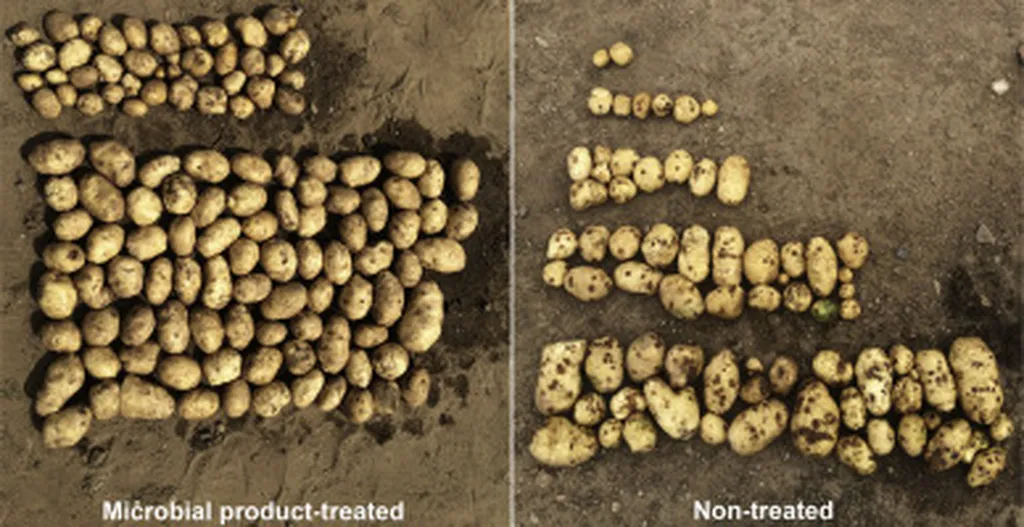
In the heart of Pakistan’s Punjab region, potato farmers are facing a formidable foe: powdery scab, a disease that’s been chipping away at yields and profits. But a recent study published in *Phytopathogenomics and Disease Control* offers a glimmer of hope, showcasing a promising integrated approach to combat this persistent problem.
Powdery scab, caused by the soil-borne pathogen *Spongospora subterranea* f. sp. *subterranea* (Sss), doesn’t just mar the appearance of potatoes; it also transmits the Potato mop-top virus, further hampering plant growth. With susceptible cultivars widely used and resistant varieties scarce, the disease has been running rampant, leading to yield losses of 18–22% in severely infested fields. “The situation is dire,” says lead author Muhammad Mubashir Nadeem, “but our findings suggest that a combination of biological and chemical methods can significantly mitigate the damage.”
The study, conducted under sick-plot conditions at the University of Agriculture, Faisalabad, put five treatments to the test: a *Trichoderma* consortium (comprising *T. harzianum*, *T. viride*, and *T. asperellum*), *Bacillus subtilis*, *Pseudomonas* spp., Mancozeb, and an untreated control. Each treatment was applied through seed-tuber coating and soil drenching, with disease incidence, severity, and plant growth parameters assessed biweekly.
The results were encouraging. All treatments significantly reduced disease severity, but the *Trichoderma* consortium emerged as the standout performer, not only curbing the disease but also boosting plant growth. Mancozeb, a conventional chemical treatment, provided moderate control. “The *Trichoderma* consortium’s dual action—disease suppression and growth promotion—makes it a valuable tool for farmers,” Nadeem explains.
The study underscores the importance of Integrated Disease Management (IDM), combining biological agents, cultural practices, and selective chemical use. It also highlights the need for strengthened resistance breeding and rapid diagnostic tools tailored to regional Sss populations. As Nadeem puts it, “Long-term, sustainable potato production hinges on a multi-pronged approach that addresses the unique challenges posed by powdery scab.”
For the agriculture sector, these findings could be a game-changer. By adopting IDM strategies, farmers can protect their yields and profits, while also promoting environmental sustainability. Moreover, the study’s emphasis on regional solutions could pave the way for tailored, effective disease management strategies worldwide.
As the global population grows, the demand for potatoes—and other staple crops—is set to skyrocket. Research like this, published in *Phytopathogenomics and Disease Control* and led by scientists such as Muhammad Mubashir Nadeem from the University of Agriculture, Faisalabad, is not just shaping the future of potato farming; it’s helping to secure our global food supply. The path forward is clear: by embracing innovation and collaboration, we can cultivate a more resilient, productive, and sustainable agricultural landscape.