
In the face of escalating fungal threats to global food security, a comprehensive new study offers a roadmap for leveraging Trichoderma fungi as a sustainable biocontrol solution. Published in the Journal of Agriculture and Food Research, the research synthesizes decades of scientific literature to reveal how this microbial ally could transform plant disease management.
The study, led by Anthony Apolinario Cortez-Lázaro of the Grupo de Investigación de Microbiología Agroambiental, analyzed over 3,000 scientific publications to track the evolution of Trichoderma research from mechanistic studies to complex ecological networks. “We’ve seen an exponential growth in research output, particularly in the last two decades,” Cortez-Lázaro explains. “This reflects both the urgency of the problem and the promise of Trichoderma as a solution.”
The findings highlight two major research hubs: one connecting India with the Eastern Mediterranean, and another linking China with the United States. These networks align with national bioinput strategies, suggesting that international collaboration is driving innovation in this field. The study also reveals a shift from studying individual Trichoderma strains to more holistic approaches incorporating omics technologies, microbial ecology, and advanced formulation design.
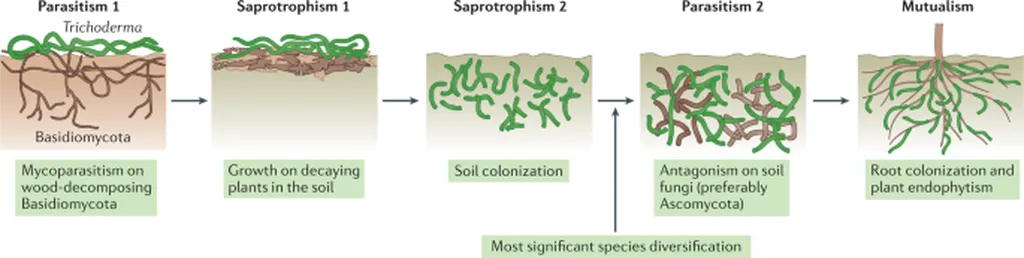
This evolution is crucial for agriculture. Trichoderma species work by outcompeting pathogens, producing antimicrobial compounds, and triggering plant defense mechanisms. However, their effectiveness in the field has historically been inconsistent. The research identifies key factors that enhance performance, including encapsulation technologies and osmoprotectants that improve persistence in challenging environments.
“Standardized reporting and omics-informed strain selection could revolutionize how we develop and deploy these biocontrol agents,” Cortez-Lázaro notes. This could lead to more predictable and scalable solutions, addressing a major barrier to commercial adoption.
The study also underscores the need for regulatory-aligned formulation strategies, ensuring that Trichoderma-based products meet safety and efficacy standards across different markets. As the agriculture sector increasingly prioritizes sustainability, these insights could accelerate the transition from chemical fungicides to biological alternatives.
By bridging bibliometric trends with practical applications, this research provides a blueprint for the future of plant disease management. As Cortez-Lázaro and his colleagues demonstrate, the path forward lies in integrating diverse scientific disciplines and fostering global collaboration—efforts that could ultimately secure food production in an era of growing environmental challenges.