
In the heart of Pakistan’s agricultural landscape, a silent battle rages on—one that threatens the livelihoods of smallholder farmers and the country’s thriving guava industry. The culprit? A relentless pathogen known as Fusarium oxysporum f.sp. psidii, the cause of guava wilt disease. But a beacon of hope has emerged from the labs of Muhammad Tauseef Tariq Kisana, whose recent research published in *Phytopathogenomics and Disease Control* offers a promising alternative to chemical fungicides.
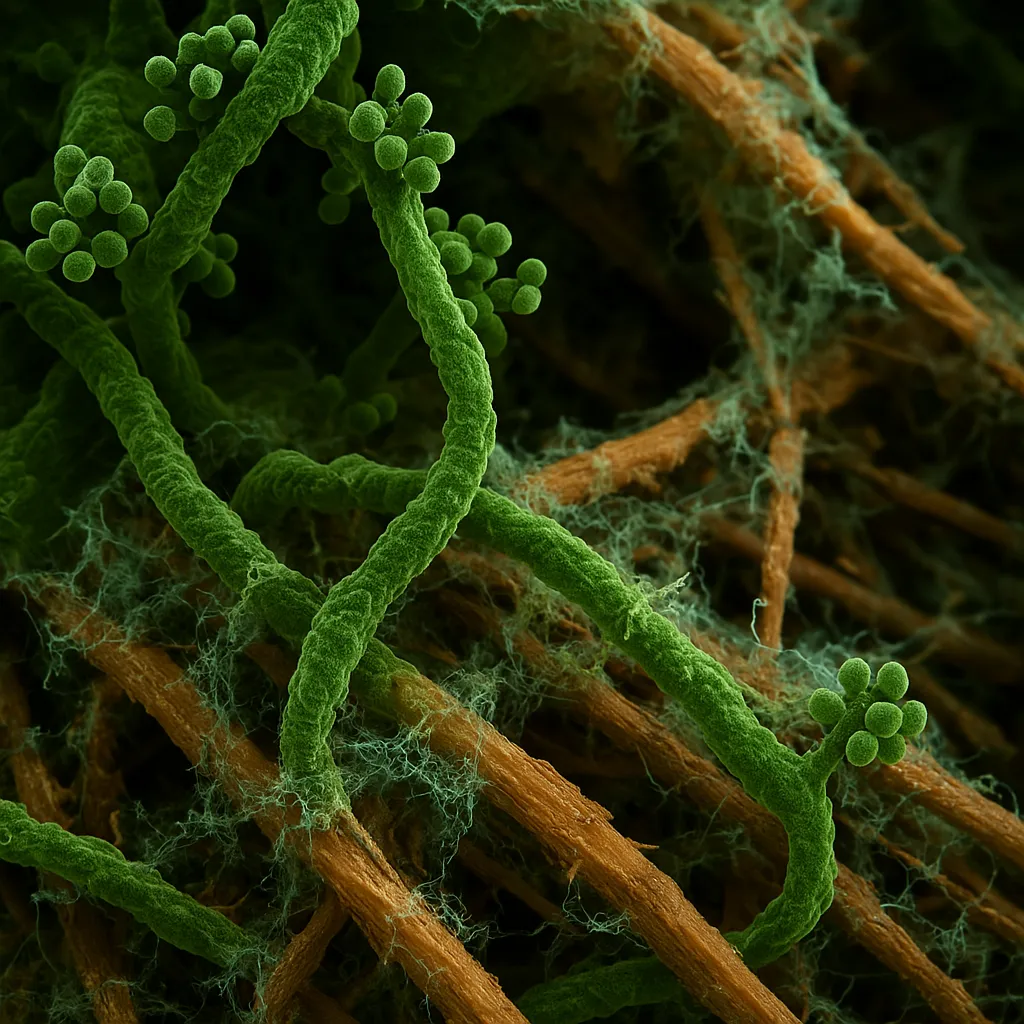
For years, farmers have relied on chemical treatments to combat this devastating disease, but these solutions have proven to be only temporary fixes. Enter Trichoderma spp., a genus of fungi that has shown remarkable potential as a biocontrol agent. Kisana’s study, which involved both in vitro assays and field experiments, revealed that Trichoderma harzianum, a species within this genus, could boost plant growth and reduce disease incidence by up to 70% compared to untreated controls.
The implications for the agriculture sector are substantial. “The economic evaluations further revealed that Trichoderma-based products could use up to 60 percent less fungicide treatment than standard chemical fungicides,” Kisana explained. This reduction in chemical dependency not only cuts costs for smallholder farmers but also opens up new avenues for commercializing their produce.
Beyond the immediate economic benefits, the adoption of Trichoderma-based biocontrol agents could have long-term positive impacts on soil health and microbial diversity. “It was also demonstrated that adoption of these biocontrol agents increased the microbial diversity, overall soil fertility, and sustainability of the agroecosystem in the long run besides leaving a check on the pathogen,” Kisana noted. This holistic approach to pest management aligns with the growing global trend towards sustainable agriculture.
The research conducted by Kisana, whose affiliation is not specified in the study, suggests that Trichoderma spp. could be a game-changer in the fight against guava wilt disease. The findings are not only relevant to the effective management of this particular disease but also hint at the potential for scaling up these biocontrol formulations to other high-value agricultural crops.
As the world grapples with the challenges of climate change and the need for sustainable practices, innovations like these offer a glimmer of hope. They remind us that sometimes, the solutions to our most pressing problems lie not in the latest technological gadgets, but in the natural world around us. With further research and development, Trichoderma-based biocontrol agents could very well shape the future of agriculture, ensuring food security and economic stability for generations to come.