
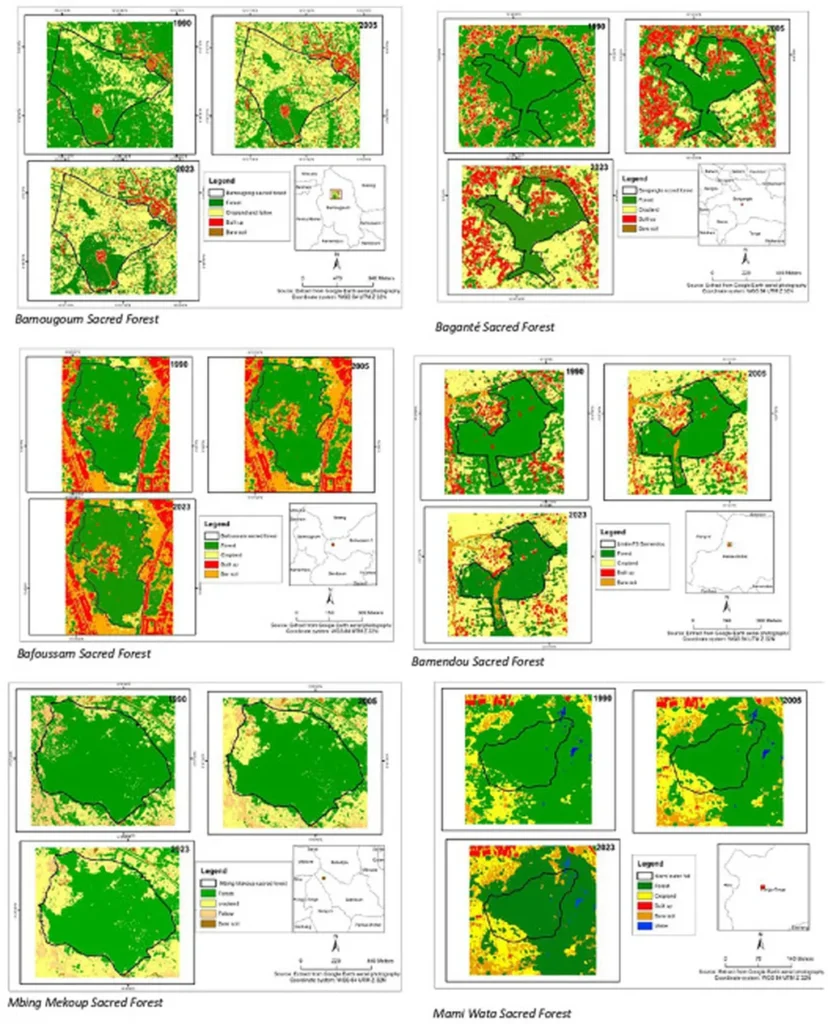
In the lush, verdant landscapes of West Cameroon, a silent transformation is underway. Sacred forests, once revered and protected by traditional beliefs, are shrinking at an alarming rate. A recent study published in *Trees, Forests and People* reveals that these biodiversity hotspots have lost nearly 11% of their cover between 1990 and 2023, with some areas experiencing up to 49% deforestation. The research, led by Jessica Cyntia Gansonkeng Zambou of Wageningen University and Research, sheds light on the complex interplay of cultural shifts, agricultural expansion, and unsustainable resource harvesting that are driving this ecological crisis.
Sacred forests in West Cameroon have long served as spiritual sanctuaries and biodiversity refuges. However, the study highlights that agriculture is the primary driver of deforestation, accounting for 34% of the forest loss. Unsustainable harvesting of non-timber forest products and woodfuel further exacerbates the problem, contributing to 31% of the degradation. “The erosion of traditional governance and the rise of Christian and Islamic values have weakened the spiritual beliefs that once protected these forests,” explains Zambou. This cultural shift has left the forests vulnerable to encroachment and exploitation.
The implications for the agriculture sector are significant. As sacred forests diminish, the ecological balance of the region is disrupted, potentially leading to soil degradation, loss of pollinators, and reduced water quality. These factors can undermine agricultural productivity and threaten food security. “Integrating sacred forests into broader land-use planning and conservation policies is crucial,” Zambou emphasizes. By strengthening traditional governance systems and promoting sustainable practices, the agriculture sector can benefit from the continued provision of ecosystem services that these forests offer.
The study also calls for enhanced transmission of the cultural and spiritual values associated with sacred forests. This could involve community education programs and the involvement of local stakeholders in conservation efforts. By fostering a renewed appreciation for these sacred spaces, the region can strike a balance between agricultural development and ecological preservation.
As the world grapples with the challenges of climate change and biodiversity loss, the plight of sacred forests in West Cameroon serves as a poignant reminder of the interconnectedness of cultural, ecological, and economic systems. The research led by Zambou, affiliated with Wageningen University and Research and the University of Dschang, underscores the urgent need for integrated approaches to conservation that respect both cultural heritage and environmental sustainability. By addressing the drivers of deforestation and degradation, the agriculture sector can play a pivotal role in safeguarding these vital ecosystems for future generations.