
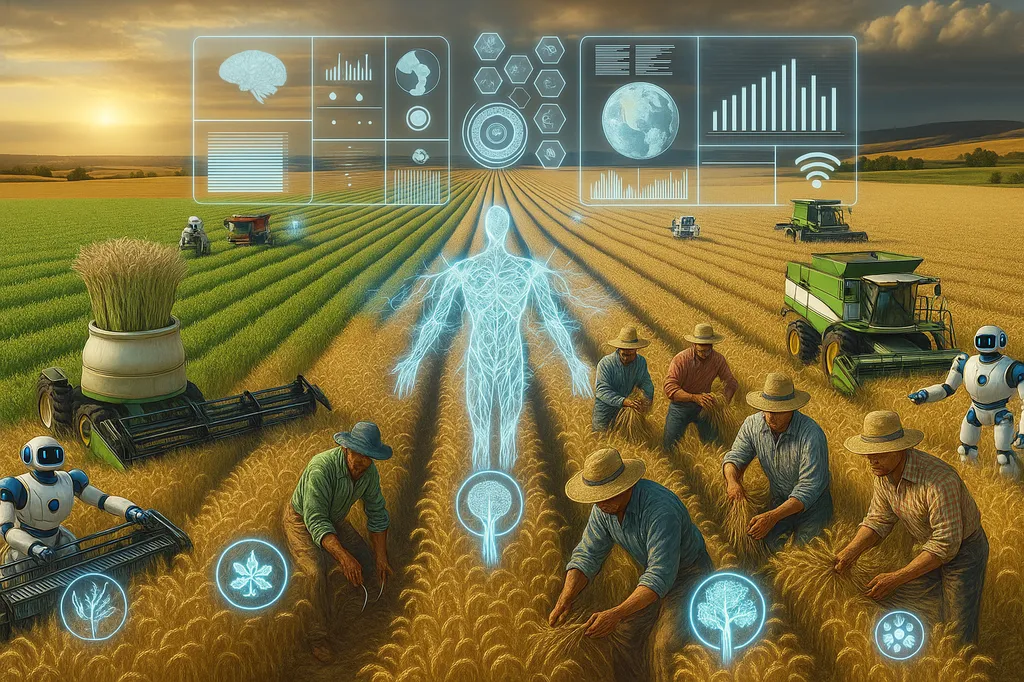
In the heart of Indonesia’s agricultural landscape, a silent revolution is unfolding, driven not by tractors or seeds, but by lines of code and algorithms. Artificial Intelligence (AI), particularly tools like ChatGPT, is reshaping how knowledge is produced, accessed, and negotiated among rural actors. A recent study published in *Environmental Research Communications* sheds light on how this technological shift is perceived by two key groups: agricultural extension workers and millennial farmers.
The study, led by Emi Widiyanti from the Department of Agriculture Extension and Communication at Universitas Sebelas Maret, employed Q-methodology to examine how these groups interpret AI. Participants sorted 40 statements reflecting diverse perspectives on AI, revealing stark contrasts in their views.
Agricultural extension workers, who have long been the backbone of rural knowledge dissemination, value AI for its informational efficiency. However, they emphasize its limitations in providing contextual judgment, emotional understanding, and moral guidance—qualities central to human-centered agricultural communication. “AI can provide information quickly, but it lacks the ability to understand the nuances of our farmers’ lives,” one extension worker noted.
On the other hand, millennial farmers view AI as a responsive and low-barrier information partner. They appreciate its accessibility and speed but also reject the notion that AI can replace empathy or relational trust. “It’s a tool, not a replacement for human interaction,” said one young farmer.
These findings underscore that AI is not perceived as a neutral tool but as a communicative actor whose agency is negotiated differently depending on users’ roles, experiences, and expectations. This perspective is crucial in understanding how humans assign, limit, or resist machine agency in socio-technical agricultural networks.
The commercial impacts of these findings are significant. As AI continues to integrate into agriculture, understanding these differing perspectives can help tailor digital agriculture programs to better meet the needs of both extension workers and farmers. This could lead to more effective AI literacy programs, ensuring that all stakeholders can leverage AI’s benefits while mitigating its limitations.
Moreover, the study highlights the need for AI literacy and rural digital programs that incorporate relational ethics, contextual adaptation, and differentiated user orientations. By doing so, the agriculture sector can harness AI’s potential to enhance productivity, sustainability, and resilience.
As the agriculture sector continues to evolve, this research provides a roadmap for integrating AI in a way that respects and leverages the unique strengths of both human and machine actors. It’s a reminder that in the age of AI, the human touch remains irreplaceable, and the future of agriculture lies in the synergy between human expertise and technological innovation.